
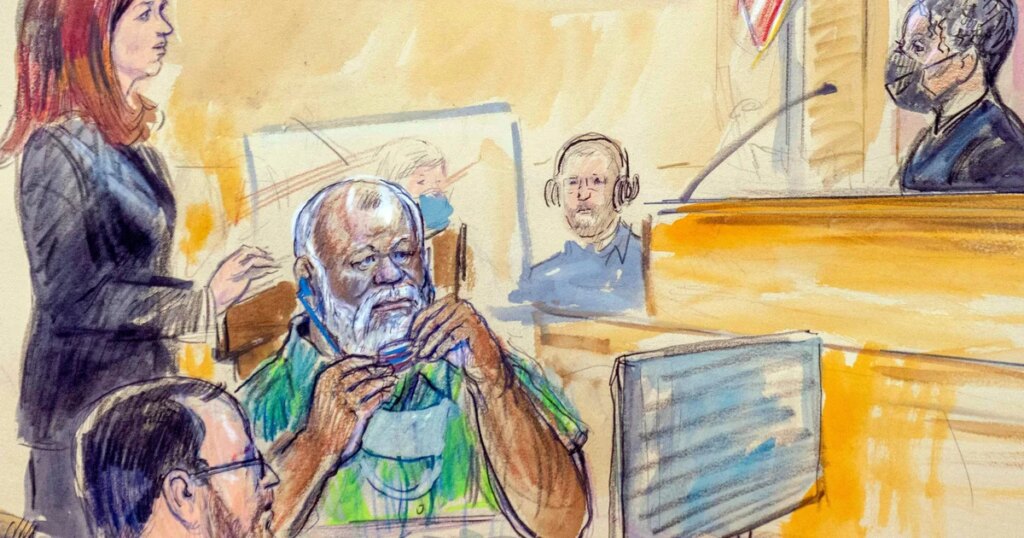
A federal judge in Washington, D.C. has postponed the upcoming trial of Abu Agila Mohammad Mas’ud Kheir Al-Marimi, a former Libyan intelligence officer charged in the 1988 bombing of Pan Am Flight 103, due to the discovery of new evidence. This bombing, which occurred over Lockerbie, Scotland, claimed the lives of 270 people, making it one of the most significant acts of terrorism in aviation history. Defense attorneys argued that the new evidence, disclosed just days before the trial was set to begin, necessitated further investigation to uphold their ethical obligations. A hearing has been scheduled for September 1 to address these developments and the future of the case.
| Article Subheadings |
|---|
| 1) Background of the Bombing and Its Impact |
| 2) Legal Proceedings and the Involvement of Al-Marimi |
| 3) Discovery of New Evidence |
| 4) Reactions from Victims’ Families |
| 5) Future Implications of the Trial Delay |
Background of the Bombing and Its Impact
On December 21, 1988, Pan Am Flight 103 tragically exploded over Lockerbie, Scotland, while en route from London Heathrow to New York’s John F. Kennedy International Airport. Just 38 minutes after takeoff, a bomb in the plane’s forward cargo area detonated, resulting in the death of all 259 individuals aboard the flight and an additional 11 people on the ground. The enormity of this disaster extended across borders, claiming the lives of victims from 21 different countries, notably including 190 Americans and 43 United Kingdom nationals. Among those killed were 35 students from Syracuse University, returning from a semester abroad, highlighting the personal nature of this tragedy for many families.
The impact of the bombing reverberated through investigative agencies worldwide, culminating in one of the largest inquiries into aviation terrorism the world had ever seen. The FBI labeled the bombing as one of the most lethal acts of air terrorism prior to September 11, 2001. It brought together intelligence agencies and law enforcement from multiple nations, working in concert to uncover the perpetrators behind this heinous act. In later years, the trial of two other Libyan intelligence agents, responsible for the bombing, further complicated the narrative, as the identity of the actual bombmaker remained elusive for decades.
Legal Proceedings and the Involvement of Al-Marimi
Following years of investigation, Abu Agila Mohammad Mas’ud Kheir Al-Marimi was identified as a primary suspect in the bombing. He is accused of assembling the bomb used in the attack while serving as a lieutenant colonel in the Libyan intelligence service. According to legal indictments, he played a significant role in orchestrating the attack on behalf of the Libyan regime, led by Muammar Qaddafi, who was later ousted and killed during Libya’s civil unrest in 2011.
Charged with two counts of destruction of an aircraft resulting in death, Al-Marimi could face a maximum sentence of life in prison if convicted. Legal proceedings against him began in earnest after he was indicted in December 2022, following his transfer to the United States. Defense counsel entered a not guilty plea on Al-Marimi’s behalf, asserting a robust defense intended to challenge the prosecution’s claims. However, the case has remained mired in complexity due to the lengthy time elapsed since the bombing, the geopolitical implications, and the various legal maneuvers undertaken.
Discovery of New Evidence
The latest twist in this nearly 40-year-old case emerged when new evidence was disclosed to Al-Marimi’s defense team, prompting the trial’s postponement. The specific nature of this evidence has not yet been publicly detailed and remains undisclosed, leaving many to speculate about its implications. According to defense attorney Laura Koenig, the prosecution revealed this development over the weekend before the scheduled jury selection, thereby triggering their constitutional and ethical obligations to investigate its relevance to the case.
U.S. District Judge Dabney Friedrich ordered the postponement, citing the complex nature of the case and the need for the defense to assess the new information adequately. A hearing is now scheduled for September 1 to discuss the current status of proceedings and the next steps. The emergence of new evidence is not uncommon in legal cases but is particularly significant in this long-awaited trial, drawing attention to potential gaps in previous understandings of the case.
Reactions from Victims’ Families
The delay has sparked a wave of emotions among the families of the victims, many of whom were hoping for justice through the trial that has been decades in the making. Kara Weipz, president of the nonprofit Victims of Pan Am Flight 103, expressed shock at the postponement and anticipated the upcoming trial. With a personal connection to the tragedy—her brother, Richard Monetti, was among the students who perished—Weipz acknowledged the emotional toll of delayed legal actions.
“At the same time, for almost 38 years we’ve been seeking the truth of what happened. If that’s what this is, then that’s a good thing, and this delay is worth it,” Weipz remarked, reflecting the sentiment shared by many families. Each advance in legal proceedings is met with anticipation and anxiety, as victims’ families seek closure and acknowledgment of their profound loss.
Future Implications of the Trial Delay
The postponement of Al-Marimi’s trial underscores the complexities faced in prosecuting a case linked to such a significant and longstanding international tragedy. It raises questions on how new findings could alter the trajectory of the case moving forward. Legal analysts note that if the newly discovered evidence is influential, it may either bolster the defense or provide new avenues for the prosecution’s arguments, further complicating the judicial process.
As the hearing on September 1 approaches, observers of the case remain vigilant. The continued quest for justice illuminates broader themes surrounding terrorism, accountability, and international cooperation in addressing long-standing grievances. The resolution of the trial could have far-reaching repercussions, not just for those directly affected by the bombing, but also in how future terrorist acts are prosecuted in an increasingly interconnected world.
| No. | Key Points |
|---|---|
| 1 | The trial of Abu Agila Mohammad Mas’ud Kheir Al-Marimi has been postponed due to new evidence. |
| 2 | The 1988 bombing of Pan Am Flight 103 resulted in 270 casualties and was a major act of aviation terrorism. |
| 3 | Al-Marimi is charged with two counts of destruction of an aircraft leading to death and faces life imprisonment. |
| 4 | The new evidence disclosed to the defense has prompted a postponement for necessary investigation. |
| 5 | Families of victims are reacting with a mix of shock and hope for uncovering further truth through the legal process. |
Summary
The postponement of Abu Agila Mohammad Mas’ud Kheir Al-Marimi‘s trial represents a significant moment in the enduring quest for justice surrounding the Pan Am Flight 103 bombing. As new evidence comes to light, the legal landscape remains complex, echoing the lengthy journey to accountability that victims’ families have navigated for decades. This case not only reflects the tragic loss of life but also serves as a reminder of ongoing international challenges in addressing terrorism and ensuring justice is served in a timely manner.
Frequently Asked Questions
Question: What was the significance of Pan Am Flight 103?
Pan Am Flight 103 was significant as it was one of the deadliest acts of air terrorism in history, resulting in 270 deaths, which included passengers and ground victims from multiple nations, and has led to extensive international investigations.
Question: What are the implications of the new evidence discovered?
The implications of the new evidence could affect the defense strategy and prosecution’s case, potentially impacting the outcome of the trial and the quest for justice by victims’ families.
Question: How has the postponement of the trial affected victims’ families?
The postponement has created mixed emotions among victims’ families, with some expressing disappointment but also understanding that new evidence may be crucial for uncovering the truth and achieving justice.