
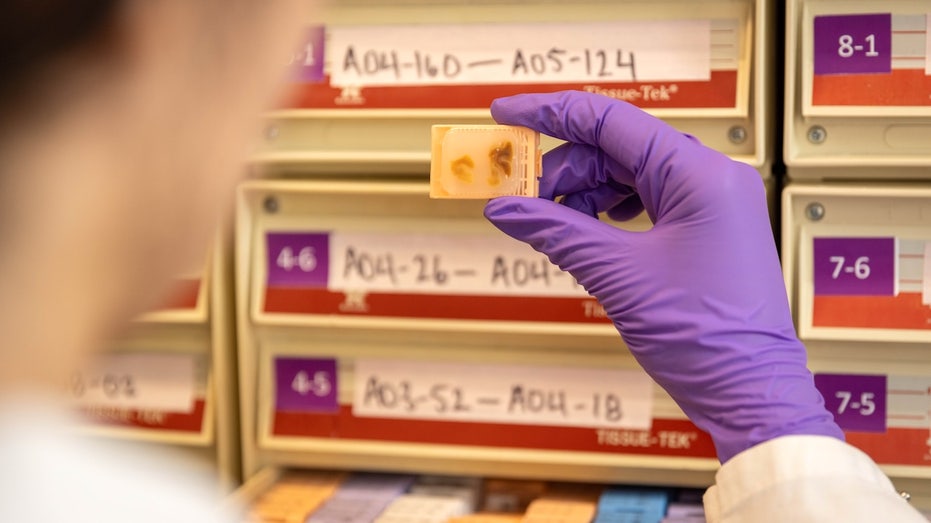
Public records show Cercle Allocation Services billed a UCLA research operation $765 for each individually listed liver and thymus specimen. Cercle said the charges covered procurement services rather than tissue and objected to sales-tax language. The records do not identify the specimens as fetal tissue or establish that UCLA or Cercle violated federal law. They also do not include the invoices or cost calculations needed to determine whether the charges reflected reasonable procurement expenses.
UCLA released the documents in response to a California Public Records Act request made on behalf of an investigator who has examined fetal-tissue procurement. The records include purchase orders and correspondence from 2023 onward. Some researcher identities were redacted because of concerns about threats and harassment involving sensitive research.
| 1) | The $765 charges in UCLA purchase orders |
| 2) | Cercle’s warning about sales language |
| 3) | What the records establish about the tissue |
| 4) | Federal restrictions and unanswered questions |
| 5) | The relationship through 2025 |
The $765 Charges in UCLA Purchase Orders
The purchase orders came from a UCLA research operation associated with the David Geffen School of Medicine’s Division of Hematology-Oncology and its Mouse Core. One order listed seven individually numbered liver and thymus specimens at $765 each, totaling $5,355. Another listed five specimens dated Aug. 18, 2023, for a combined $3,825. Additional orders used the same per-specimen amount.
The documents connect the charges to sample numbers and dates, but they do not include Cercle’s invoices or calculations showing how the $765 figure was determined. An investigator said the uniform amount raised questions, especially when multiple organs appeared on the same date. The records do not establish that the amount exceeded lawful procurement-related expenses.
Cercle’s Warning About Sales Language
Cercle objected to the tax treatment in UCLA’s original purchase orders and asked the university to issue revised documents. The supplier said the charges were for procurement services, so sales tax should not apply. It warned that describing the transactions as sales could suggest that the tissue itself was being sold.
“Due to the nature of our business we must be very careful and clear that we invoice fees for our procurement services,” a Cercle accounts manager wrote in September 2023.
The correspondence said sales-tax references could imply that Cercle was “selling the items received,” which the company described as illegal to sell. UCLA later prepared revised purchase orders. Another email said a July invoice for $5,355 had been processed and paid and requested changes to other orders, including the order for five August procurements.
What the Records Establish About the Tissue
The purchase orders identify materials by organ type, sample number and date. They do not describe the specimens as fetal tissue. An investigator identified the liver and thymus entries as fetal tissue, and scientific literature has separately identified Cercle as a source of human fetal liver tissue used in biomedical research. However, the specific specimens listed in the UCLA documents have not been independently verified as fetal.
The records therefore do not establish that UCLA researchers, procurement personnel or other university employees engaged in illegal or unethical conduct. They also do not show that a particular specimen was transferred in violation of federal law.
Federal Restrictions and Unanswered Questions
Federal law bars knowingly acquiring, receiving or transferring human fetal tissue for valuable consideration when the transaction affects interstate commerce. It permits reasonable payments for services including transportation, implantation, processing, preservation, quality control and storage. Whether a payment falls within those limits depends on the nature and amount of the underlying expenses.
The available records do not provide the cost breakdown needed to evaluate the $765 charges. They do not establish whether the specimens were fetal, whether Cercle’s work involved allowable expenses, or whether any payment represented consideration for tissue itself. Neither UCLA nor Cercle has been accused or charged by authorities over the transactions reflected in these records.
The Relationship Through 2025
The documents indicate that UCLA and Cercle continued communicating after the 2023 purchase orders. A February 2025 Cercle ticket concerning “Liver and brain” was canceled after the company said on March 3 that it could not fulfill the request that day. The records do not say that the requested material was fetal or confirm that any brain tissue was procured or transferred.
UCLA said its departments completed their searches and that the September 2026 release was the final batch of non-exempt responsive records. The request sought materials linked to a UCLA institutional review board file, a specified study and communications involving Cercle and another supplier from 2023 onward. It also sought emails, text messages, notes and fetal-tissue logs.
| No. | Key Point |
|---|---|
| 1 | UCLA purchase orders listed a $765 charge for each specimen. |
| 2 | Cercle said the charges covered procurement services, not tissue sales. |
| 3 | The documents do not identify the listed specimens as fetal tissue. |
| 4 | The records do not establish a violation of federal law. |
Summary
The UCLA records document standardized procurement-related charges and a supplier’s concern that tax and sales terminology could create legal implications. They raise questions about how the payments were calculated, but the released materials lack the invoices, cost data and tissue descriptions needed to determine whether the transactions involved fetal tissue or unlawful consideration. No illegal conduct has been established by the available records.
Frequently Asked Questions
What did Cercle charge UCLA?
The purchase orders listed $765 for each individually identified liver or thymus specimen, including totals of $5,355 for seven specimens and $3,825 for five specimens.
Did the records prove the specimens were fetal tissue?
No. The purchase orders identify organs, sample numbers and dates but do not describe the specimens as fetal tissue.
Do the documents show that federal law was violated?
No. The records do not establish that the payments were illegal, that the $765 amount exceeded reasonable procurement costs, or that any listed tissue was transferred unlawfully.
What happened to the UCLA relationship in 2025?
A February 2025 request for liver and brain tissue was canceled after Cercle said it could not fulfill the request. The records do not confirm that any brain tissue was procured or transferred.