
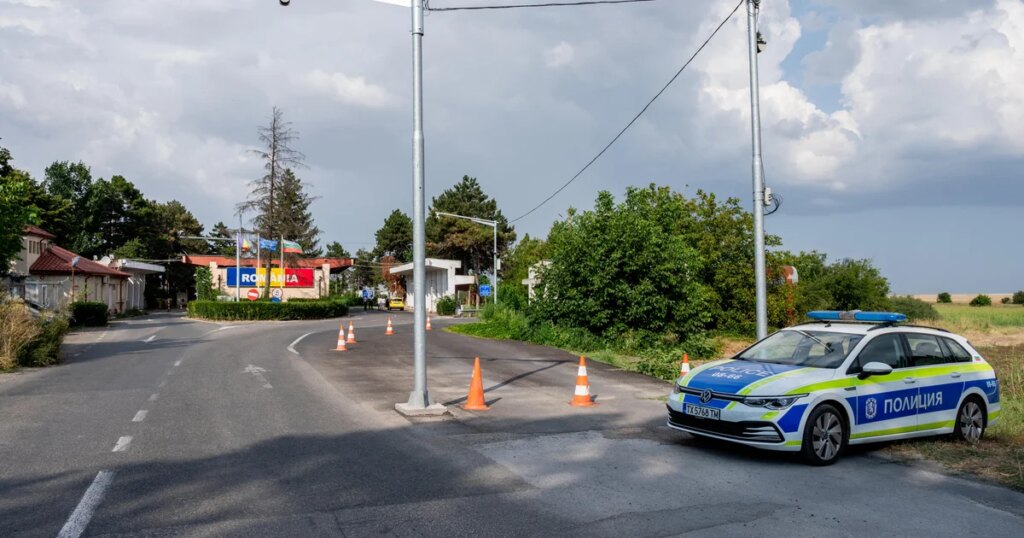
A recent incident involving a drone has raised concerns in Bulgaria after the unmanned aerial vehicle crossed over from Romania into its airspace. The drone exploded approximately 109 yards inside Bulgaria, close to an international gas pipeline, although officials reported no casualties or infrastructure damage. Ukrainian authorities have denied any intention to target Bulgaria and are actively investigating the incident, which authorities believe to be accidental.
| Article Subheadings |
|---|
| 1) Incident Overview |
| 2) Official Responses |
| 3) Implications for National Security |
| 4) Historical Context |
| 5) Future Actions |
Incident Overview
On a recent Saturday morning, a drone reportedly associated with Ukrainian military operations crossed into Bulgarian airspace before detonating shortly after 5 a.m. The Bulgarian defense ministry noted the explosion occurred about 109 yards inside Bulgaria and approximately 200 meters from a compressor station in Romania. Essential details surrounding the drone, including its detection and identification, remain under scrutiny as neither Romanian nor Bulgarian airspace protocols alerted authorities prior to the incident.
The unmanned aerial vehicle (UAV) exploded with significant force, resulting in a column of black smoke visible in the vicinity. Investigators have speculated that the drone was armed with a considerable amount of explosives based on the blast’s impact. Moreover, the diminutive size and low flight altitude of such drones have posed challenges for air defense systems in detecting them.
Official Responses
In the immediate aftermath of the incident, Rumen Radev, the Prime Minister of Bulgaria, expressed the nation’s commitment to monitoring and enhancing security measures in light of this breach. “We will continue to monitor the situation and strengthen surveillance,” Radev stated. He announced the relocation of border police anti-drone detection capabilities from Bulgaria’s border with Turkey to the Romanian border to mitigate future threats.
Furthermore, a Ukrainian foreign ministry spokesperson clarified that Ukraine did not intend to target Bulgaria, labeling the occurrence as an accident. Heorhii Tykhyi, representing Ukraine, emphasized that communication between the two nations is ongoing to comprehend the incident’s context and to coordinate responses appropriately.
Implications for National Security
This incident bears significant implications for national security not only for Bulgaria but also for the broader NATO alliance. Drones infringing on NATO airspace have become increasingly common since Russia’s extensive invasion of Ukraine. In June, for instance, NATO aircraft intercepted a drone entering Latvia’s territory, escalating tensions in the region.
Both Moldova and Romania have dealt with similar instances, attributed largely to Russian electronic warfare capabilities inadvertently causing drones to stray across borders. As the conflict in Ukraine continues to evolve, allied nations must bolster their defenses against the threat of unintentional or deliberate incursions from unmanned aerial vehicles.
Historical Context
The issue of drone warfare has escalated in recent times, especially within the context of the ongoing conflict in Ukraine. As regional tensions heightened, reports of drone-related incidents across member states have increased. For example, Estonia and Lithuania have also reported drones crashing within their borders, further complicating the security landscape in Eastern Europe.
As NATO members, both Bulgaria and Romania find themselves under duress to adapt to new aerial warfare tactics that have emerged as a result of the conflict. The incident involving the stray drone serves as a reminder of the risks posed by the evolving defense technologies that can inadvertently affect peace and security in bordering nations.
Future Actions
In light of this recent incident, Bulgaria is expected to undertake several remedial actions to ensure the integrity of its airspace. Officials are likely to prioritize the enhancement of anti-drone technology and border surveillance mechanisms to better identify and react to potential threats. The relocation of border police resources reflects a proactive approach to fortifying border security.
Collaboration with Ukraine will also be a focal point, as both countries aim to establish a more robust framework for information sharing and preventative measures against similar occurrences. Enhanced communication channels between military and defense officials will be crucial in mitigating risks associated with drone incursions in the future.
| No. | Key Points |
|---|---|
| 1 | A drone from Ukraine entered Bulgarian airspace and exploded, causing no casualties. |
| 2 | Officials maintain the incident was accidental, with ongoing investigations. |
| 3 | The Bulgarian government plans to enhance border surveillance and anti-drone capabilities. |
| 4 | The proliferation of drones presents new security challenges for NATO member states. |
| 5 | Bulgaria and Ukraine are communicating to further understand the incident. |
Summary
The drone incident in Bulgaria underscores the complexities and rising tensions in Eastern Europe amidst the ongoing conflict in Ukraine. While officials assert that the drone’s entry into Bulgarian airspace was unintended, it raises critical questions about airspace security and international relations among NATO nations. With plans for enhanced surveillance and cooperation between Bulgaria and Ukraine, the incident serves as a pivotal moment for addressing the evolving threats posed by drone technology in the conflict.
Frequently Asked Questions
Question: What steps will Bulgaria take following the drone incident?
Bulgaria plans to enhance its border surveillance and anti-drone detection capabilities while relocating resources to strengthen its defenses against future incursions.
Question: How significant is this incident for NATO security?
The incident highlights the increasing challenges NATO faces in securing its airspace amid the evolving tactics used in modern warfare, particularly with drones becoming more prevalent in conflicts.
Question: Has Ukraine acknowledged any fault in this incident?
Ukraine has denied intentionally targeting Bulgaria, indicating the incident was accidental and emphasizing ongoing communication with Bulgarian officials to clarify circumstances.