
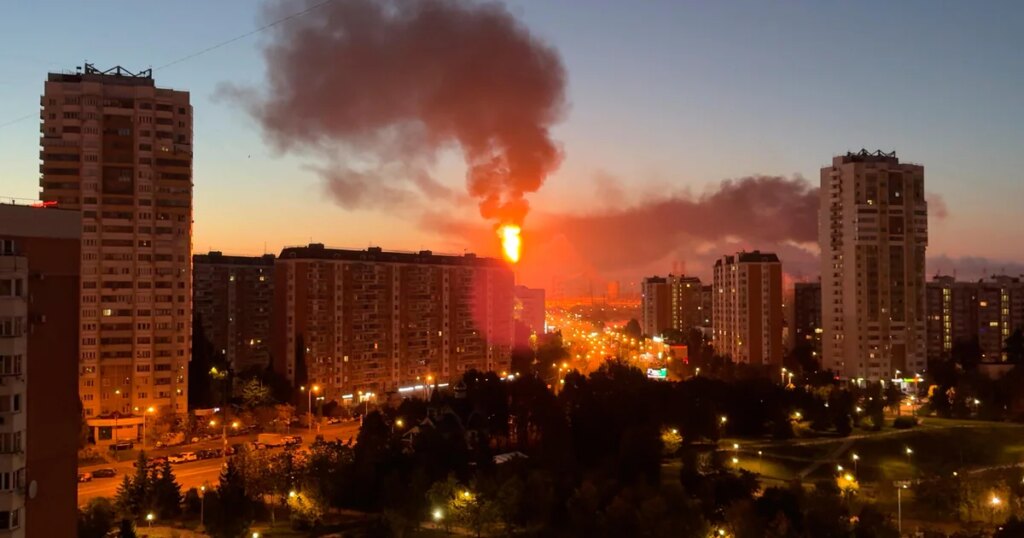
In a significant escalation of the ongoing conflict, Ukrainian forces launched an unprecedented drone attack against Russia, deploying over 1,000 drones, with many targeting Moscow. This assault coincided with the culmination of Russia’s parliamentary elections, described by Moscow’s mayor as the “largest ever” attack on the Russian capital. Casualties were reported in the Moscow region, where two people lost their lives, and damage occurred to crucial infrastructure, including a refinery and a residential building.
Ukrainian President Volodymyr Zelenskyy indicated that Ukraine used an array of missiles and drones during this attack, aiming to inflict economic damage on Russia. As the conflict escalates, the situation remains dire, with ongoing attacks on both sides, leading to deadly consequences for civilians. The confrontation unfolds as diplomatic discussions continue, with hopes of engaging the U.S. in negotiations regarding broader security issues.
| Article Subheadings |
|---|
| 1) Details of the Drone Attack |
| 2) Casualties and Damage Report |
| 3) Ukraine’s Military Strategy |
| 4) Context of Russian Elections |
| 5) The International Response |
Details of the Drone Attack
Ukrainian forces executed a remarkable drone strike, sending over 1,000 drones toward various targets across Russia, with a significant concentration aimed at Moscow. The operation, unfolded overnight, took place just as Russia was concluding its parliamentary elections, showcasing Ukraine’s capabilities in aerial warfare. According to reports from officials, the drone attack represented a strategic maneuver intended to disrupt Russian military operations and convey a message regarding Ukraine’s military strength.
This coordinated strike by Ukrainian forces is a culmination of their growing proficiency in drone warfare, which has become a hallmark of their military strategy. Ukrainian officials confirmed that their forces employed not only drones but also a variety of missiles, including the domestically produced Flamingo and Pelican models, to target critical oil and logistics facilities within Russia. This marked a notable escalation in the conflict, reflecting a shift toward more aggressive tactics aimed at inflicting maximum economic pressure on Russia.
Casualties and Damage Report
The impact of the drone strike was felt in the Moscow region, where local authorities reported significant casualties and damage. Specifically, the attack resulted in the deaths of two individuals: a 74-year-old man and a 44-year-old woman. Additionally, at least 20 others sustained injuries as a consequence of the drone strikes, with damage recorded at both a residential building and the Moscow Oil Refinery. Moscow Mayor Sergei Sobyanin characterized the attack as unprecedented, highlighting the severe implications it had on civilian life and infrastructure.
In addition to the incident in Moscow, there were reports of Russian drone strikes within Ukraine, exacerbating the humanitarian situation further. Specifically, a drone attack on a monastery in Ukraine’s Kherson region led to the tragic death of a clergyman and injuries to four other individuals. Moreover, an assault on the Ukrainian capital resulted in the death of two children and their mother, showcasing the dire consequences of the ongoing conflict on innocent civilians caught in the crossfire.
Ukraine’s Military Strategy
The recent drone attack underscores Ukraine’s evolving military strategy, which effectively integrates advanced technology and a vulnerable approach in the context of ongoing warfare. With the conflict now spanning over four years, Ukraine has transformed into a leader in military drone technology, deploying long-range, domestically produced drones on various missions aimed at disrupting Russian operations.
President Volodymyr Zelenskyy articulated that the goal of such strikes is to apply significant pressure on the Russian economy, indicating that disrupting oil supply lines is crucial for undermining Moscow’s war machine. In various statements, Zelenskyy emphasized the strategic rationale behind targeting key logistical and operational nodes, expressing confidence that these efforts would have a long-term impact on Russia’s military capabilities and domestic morale.
Context of Russian Elections
The timing of the drone attack coincides precisely with Russia’s parliamentary elections, manifesting a conscious attempt to disrupt the voting process amidst a context perceived to lack genuine political competition. The recent elections unfolded against the backdrop of ongoing military tensions, with many observers speculating that the Kremlin aimed to solidify its control amidst opposition suppression and conflict.
In a notable incident, voting also occurred in the four Ukrainian regions that Russia annexed, despite persistent international condemnation alleging that these actions violate Ukrainian sovereignty. The Kremlin’s Ministry of Defense reported downing over 1,100 Ukrainian drones during the attacks, indicating a high-stakes battle over air space and strategically important installations. Moscow Mayor Sobyanin indicated that these attacks aimed to undermine the electoral process, ultimately asserting that Russian security measures successfully mitigated the strike’s potential effectiveness.
The International Response
In conjunction with the military developments, the United States has taken steps to bolster Ukraine’s defensive capabilities in light of the escalating conflict. Recently, a potential $2.68 billion sale of air defense equipment to Ukraine received approval from the U.S. State Department, which aims to enhance Ukraine’s ability to repel future drone strikes and attacks. This development aligns with broader international efforts to counter Russia’s aggression and bolster Ukraine’s military preparedness.
Diplomatic negotiations are underway, with indications that President Volodymyr Zelenskyy and U.S. officials are discussing de-escalation strategies and addressing pressing security concerns. Zelenskyy indicated optimism about future discussions, expressing that these meetings could lead to steps aimed at achieving a favorable resolution to the ongoing crisis. The complex interplay of military actions and international diplomacy continues to unfold against the backdrop of a profoundly impacted civilian populace.
| No. | Key Points |
|---|---|
| 1 | Ukrainian forces launched over 1,000 drones targeting Russia, focusing on Moscow. |
| 2 | Two fatalities occurred during the drone attack in the Moscow region, highlighting civilian casualties. |
| 3 | The assault was aimed at crippling Russian logistics and inflicting economic damage. |
| 4 | Russian elections conducted during the drone strike faced criticism for lack of competition. |
| 5 | The U.S. approved a significant air defense equipment sale to Ukraine, bolstering military support. |
Summary
The recent drone attack by Ukrainian forces on Russia highlights a significant escalation in the ongoing conflict, casting a long shadow over Russia’s parliamentary elections while resulting in tragic civilian casualties. The operation underscores Ukraine’s strategic shift toward utilizing advanced drone technology to target critical infrastructure and logistics, illustrating a calculated approach to weaken Russia’s military and economic standing. Against this backdrop, international support, especially from the United States, continues to bolster Ukraine’s defense initiatives, even as diplomatic efforts seek pathways toward peace amidst rampant hostility.
Frequently Asked Questions
Question: What triggered the recent drone attack on Moscow?
The drone attack was triggered by ongoing military tensions and aimed to disrupt Russian parliamentary elections while applying economic pressure on Russia by targeting crucial logistical facilities.
Question: What kind of drones did Ukraine use during the attacks?
Ukraine utilized a variety of drones, including domestically produced models such as the Flamingo and Pelican, alongside other missile systems targeting strategic infrastructure.
Question: How has the United States responded to the conflict?
The United States has responded by approving a significant sale of air defense equipment to Ukraine, aiming to strengthen its military capabilities and enhance its ability to defend against further attacks.