
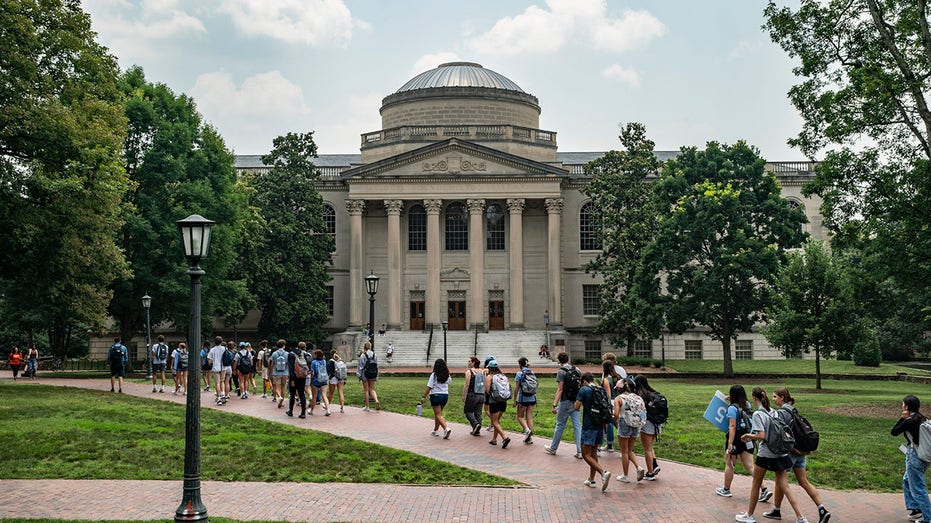
The University of North Carolina at Chapel Hill has reached a voluntary settlement with the Trump administration over allegations of campus antisemitism and race discrimination in admissions and university programs. The agreement closes 18 Education Department investigations and a separate Justice Department compliance review. UNC will not pay a monetary penalty and does not admit wrongdoing or liability. The settlement remains in effect through the end of 2028 and preserves the university’s eligibility for federal funding.
| 1) | Settlement closes federal investigations without an admission of wrongdoing |
| 2) | UNC creates new civil rights oversight roles |
| 3) | Training and conduct rules target alleged antisemitism |
| 4) | Agreement requires race-neutral admissions and student benefits |
| 5) | Settlement reflects broader federal pressure on universities |
Settlement closes federal investigations without an admission of wrongdoing
The agreement resolves 18 active investigations by the Education Department’s Office for Civil Rights and a separate Justice Department compliance review. The investigations concerned allegations involving antisemitism and race discrimination at UNC. The Justice Department review lasted 18 months and began in April 2025.
The voluntary settlement requires no financial payment. UNC does not acknowledge wrongdoing or legal liability. In return for the compliance measures, the university will retain federal funding eligibility while the agreement remains effective through the end of 2028.
UNC creates new civil rights oversight roles
UNC will appoint a Merit and Civil Rights Administrator and establish a Title VI Coordinator position within its compliance office. Elizabeth Hall, the university’s associate vice chancellor for university compliance, will perform both roles while keeping her existing responsibilities.
Hall will serve as UNC’s contact for the Justice Department and oversee reporting. The university must submit complaints involving antisemitism and race discrimination to the Justice Department and Education Department every quarter. Chancellor Lee H. Roberts said the agreement reaffirms fair and equal treatment throughout the university community.
Training and conduct rules target alleged antisemitism
The agreement requires mandatory antisemitism training for students, faculty and staff. Student organizations may face discipline for antisemitic discriminatory conduct. UNC must also restrict face coverings used to conceal identity, subject to exceptions. The measures address federal concerns about the university’s response to alleged antisemitism during campus demonstrations.
The administration has connected some pro-Palestinian demonstrations to antisemitism. Protesters, including some Jewish organizations, have argued that criticism of Israel’s military campaign in Gaza and advocacy for Palestinian rights are not inherently antisemitic. The settlement does not resolve that broader political dispute, but it establishes university compliance requirements.
Agreement requires race-neutral admissions and student benefits
UNC must adopt what the Justice Department describes as a color-blind admissions system. The university may not use race or modify admissions to change the racial composition of the student body. The requirement follows the Supreme Court’s 2023 decision rejecting affirmative action programs at UNC and Harvard.
The settlement permits UNC to consider how an applicant overcame personal adversity. It also allows family circumstances, including poverty, to be considered when those factors are applied consistently and are not substitutes for racial preferences. Race-blind policies must also govern student benefits, scholarships, financial aid and programming.
Settlement reflects broader federal pressure on universities
The UNC agreement is part of a broader federal campaign involving colleges and universities over campus protests, diversity programs and transgender policies. Investigations and potential funding consequences have been used to pressure institutions to change policies viewed as inconsistent with federal civil rights law.
Assistant Attorney General for Civil Rights Harmeet Dhillon said federally funded institutions must provide equal treatment regardless of ancestry or race. Other universities have also reached settlements. Columbia University agreed to pay more than $200 million last year to resolve federal investigations, while Brown University agreed to provide $50 million over 10 years to Rhode Island workforce-development organizations. Harvard University had not reached a settlement at the time of the UNC agreement.
| Number | Key Point |
|---|---|
| 1 | The settlement closes 18 Education Department investigations and a separate Justice Department review. |
| 2 | UNC will pay no monetary penalty and does not admit wrongdoing or liability. |
| 3 | Mandatory antisemitism training and quarterly reporting will apply across the university. |
| 4 | Admissions, scholarships, aid and programming must follow race-neutral policies. |
Summary
The settlement closes major federal civil rights investigations while preserving UNC’s federal funding eligibility. It adds oversight, training and reporting duties and bars race-based decision-making across admissions and several student services. It also reflects the administration’s broader effort to influence how universities address antisemitism, campus protests and racial preferences.
Frequently Asked Questions
What investigations does the UNC settlement close?
It closes 18 Education Department investigations and a separate 18-month Justice Department compliance review.
Will UNC pay a financial penalty?
No. The agreement requires no monetary payment, and UNC does not admit wrongdoing or liability.
What changes will UNC make to admissions?
UNC must use a race-neutral admissions system and may not use race to alter its student-body composition. It may consider personal adversity and consistently applied circumstances such as poverty.
What antisemitism measures are required?
UNC must provide mandatory training, address antisemitic discriminatory conduct, report relevant complaints quarterly and restrict identity-concealing face coverings subject to exceptions.