
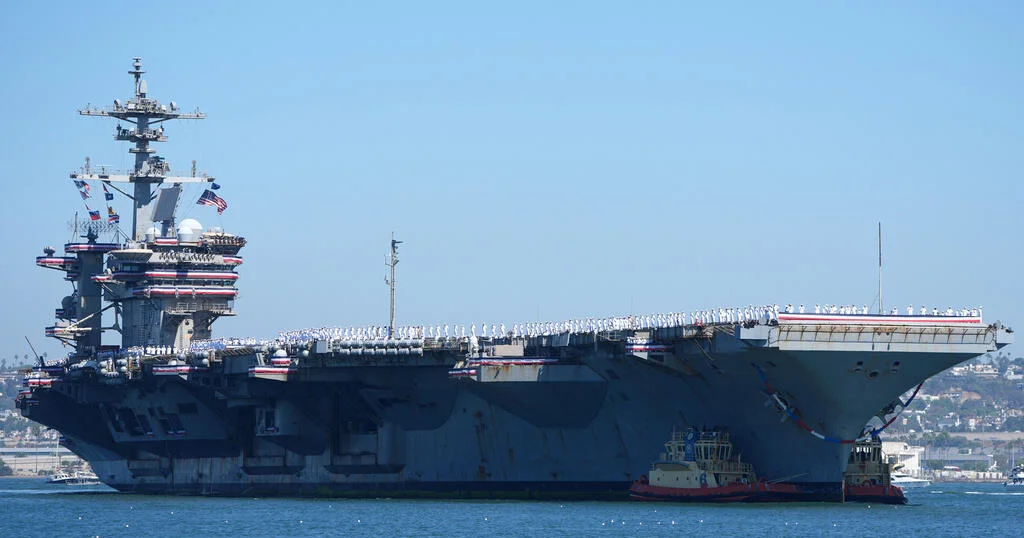
In a highly anticipated homecoming ceremony, the USS Abraham Lincoln, accompanied by over 4,500 sailors and Marines, returned to San Diego after an extensive deployment lasting almost a year. This return marks the end of a challenging period that included more than ten months away from home, with significant operational time spent in the Middle East. The homecoming was filled with emotional reunions, as family members gathered to greet their loved ones, many of whom had faced considerable hardships during the deployment.
| Article Subheadings |
|---|
| 1) The Journey Home: USS Abraham Lincoln’s Return |
| 2) Emotional Reunions as Families Gather |
| 3) Operational Overview of Lincoln’s Deployment |
| 4) Concerns and Challenges Faced During Deployment |
| 5) Congressional Response and Pentagon Defense |
The Journey Home: USS Abraham Lincoln’s Return
The USS Abraham Lincoln, a Nimitz-class aircraft carrier, completed its nearly one-year deployment and returned to its home port at Naval Air Station North Island in San Diego on Thursday. The return of the Lincoln marks a significant moment not only for the sailors and Marines onboard but also for their families who have endured the long separation. The ship’s deployment lasted for 321 days, with over 250 days spent continuously at sea, emphasizing the extensive commitment and operational capabilities of the U.S. Navy.
Emotional Reunions as Families Gather
As the USS Abraham Lincoln approached the harbor, anticipation filled the air on the pier where countless family members and friends awaited their loved ones. Under the warm sun, the joyful screams and cheers erupted as the vessel docked, signaling the end of a long wait. Families gathered together, waving flags and holding signs in celebration of their heroes’ return. One poignant moment captured during this homecoming was when McKenzie Adkins held her ten-week-old son, Declan, as she waved to her husband, Alexander, for the first time, allowing the new father to meet his son.
Operational Overview of Lincoln’s Deployment
Throughout its deployment, the Lincoln played a crucial role in U.S. military operations, primarily focusing on supporting efforts in the Middle East. The deployment commenced with significant operational readiness, with the carrier supporting U.S. military interests in the region. Replacing the Lincoln in the Middle East was the Japan-based USS George Washington, which took over responsibilities in August, allowing the Lincoln to navigate back to San Diego after a grueling year. The carrier not only showcased its military capabilities but also its resilience, as it traversed thousands of nautical miles, including stops in Thailand and Guam during the return journey.
Concerns and Challenges Faced During Deployment
Despite the remarkable achievements during its deployment, the USS Abraham Lincoln faced scrutiny concerning conditions on board. Reports suggested a series of issues, including supply shortages and concerns over the mental health of crew members. Families of sailors expressed deep worry regarding the reported lack of resources, which they believed could significantly affect the well-being of those serving aboard. With the ship’s remarkable duration at sea, these concerns highlighted the difficulties faced by naval personnel during extended deployments and drew the attention of officials and advocacy groups.
Congressional Response and Pentagon Defense
In response to the troubling reports from the Lincoln’s deployment, Congressional Democrats raised concerns and called for further information regarding the conditions experienced by the sailors. The Pentagon officials defended the operational status on the carrier, asserting that the ship’s conditions adhered to Navy standards and that services were rendered to address personnel needs. The dialogue surrounding the Lincoln encapsulated the challenges faced by military personnel as they balance operational demands with the necessity of ensuring a supportive and safe environment for those serving the nation.
| No. | Key Points |
|---|---|
| 1 | The USS Abraham Lincoln returned to San Diego after 321 days of deployment. |
| 2 | Over 4,500 sailors and Marines disembarked to joyful reunions with family and friends. |
| 3 | The carrier spent over 250 days at sea, primarily focused on operations in the Middle East. |
| 4 | Concerns arose regarding conditions aboard the ship, including supply shortages and mental health issues. |
| 5 | Congressional Democrats called for an investigation into the reported conditions aboard the Lincoln. |
Summary
The return of the USS Abraham Lincoln signifies not only the end of a grueling deployment but also shines a light on the critical issues faced by military personnel during extended service. The emotional reunions experienced on the pier in San Diego highlight the sacrifices made by these brave men and women and their families. Moving forward, continued attention is required to address the challenges reported during the deployment, as the Navy strives to ensure the well-being of its personnel while fulfilling its operational commitments.
Frequently Asked Questions
Question: What are the main operational duties of the USS Abraham Lincoln?
The USS Abraham Lincoln primarily serves as an aircraft carrier, supporting military operations and demonstrating naval presence in international waters, particularly in strategic regions such as the Middle East.
Question: How does the Navy address mental health concerns aboard its ships?
The Navy has established protocols to monitor and address mental health, including access to counselors and mental health professionals, which aim to support sailors and ensure they receive necessary care during and after deployments.
Question: What measures are taken when supply shortages occur on naval ships?
In cases of supply shortages, the Navy implements emergency protocols to redistribute available supplies, request additional shipments when necessary, and ensure that crew members’ basic needs are met to maintain operational effectiveness.