
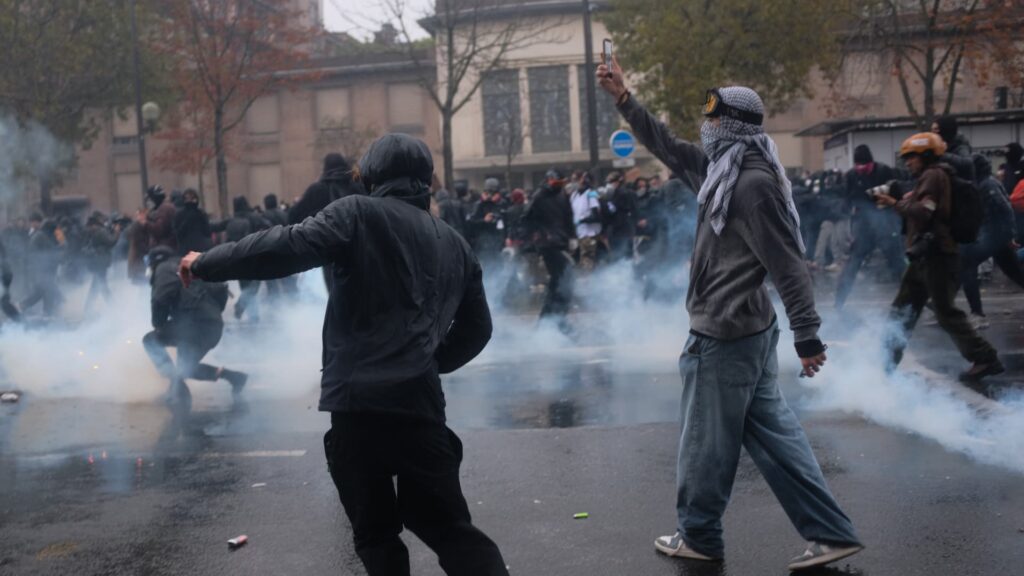
Protests in France have escalated over the worsening cost-of-living crisis and rising inequality, leading to violent clashes and increased police presence in major cities. With approximately 410,000 participants reported by the Interior Ministry, cities like Paris and Marseille witnessed intense demonstrations, resulting in confrontations between rioters and law enforcement. This wave of unrest, which began with high school student complaints about educational conditions, has developed into a broader movement reflecting deep-seated economic frustrations across the nation.
| Article Subheadings |
|---|
| 1) Overview of Recent Protests |
| 2) Escalation of Violence |
| 3) The Initial Spark |
| 4) Economic Implications of the Crisis |
| 5) Broader Social Impact and Response |
Overview of Recent Protests
The protests in France, which have garnered national attention, stem from widespread discontent with rising living costs and the growing gap between the wealthy and the less fortunate. Protesters have taken to the streets, rallying against what they view as systemic injustices exacerbated by economic policies perceived as neglecting the needs of ordinary citizens. According to France’s Interior Ministry, around 410,000 people joined the protests, making it one of the largest demonstrations in recent history.
Cities such as Paris, Marseille, and Lyon were particularly affected, where demonstrators voiced their grievances. Though these protests started small, they have gained momentum, becoming a focal point for various socio-political issues. The involvement of students, workers, and activists has amplified calls for change across multiple sectors, spotlighting a range of demands from education reform to better economic conditions.
Escalation of Violence
Following significant protests, the level of violence has escalated, particularly during the most recent demonstrations. Reports highlighted confrontations between protesters and police, leading to the deployment of riot forces, tear gas, and water cannons. In Paris, riot police were seen clashing with a group of approximately 500 hooded youths who engaged in violent behavior, which included throwing stones at officers on duty. This marked a continuation of a troubling trend from previous weekends, where significant property damage occurred.
In Marseille, some demonstrators set up makeshift barricades and engaged in similar violent acts. Looting incidents were reported, with thieves targeting jewelry shops amidst the chaos. Local authorities have described the confrontations as dynamic, with violence erupting even as night fell.
While the recent clashes showed signs of a vigilant police response, observers noted that this level of violence had not reached the intensity of the previous weekend’s mayhem, which had seen widespread vandalism and looting across multiple French cities. Nonetheless, the current unrest underscores the continuing frustrations among large segments of the population.
The Initial Spark
The roots of the protests can be traced back to a movement initiated by high school students in suburban Paris. These students expressed dissatisfaction with their educational environment, highlighting inadequate facilities, teacher shortages, and a lack of resources. This initial focus on education resonated broadly, quickly evolving into a broader call for action against the rising cost of living and a perceived decline in quality of life.
Students rallied around these themes, encouraging families to join them in demanding systematic reforms. The outcry for education reform attracted the attention of labor unions and various political groups, transforming a localized protest into a nationwide movement. Over time, the demonstrations have become an umbrella for many discontented groups, all facing the impact of economic hardship.
Economic Implications of the Crisis
The economic landscape in France has been notably fragile, marked by rising government borrowing costs. Recent data showed that the yield on the nation’s 10-year bonds surged above 5%, a significant increase not seen since 2002. This spike has raised concerns among economists and investors, prompting fears that France’s financial troubles could have far-reaching effects on the broader Eurozone.
As government borrowing becomes more expensive, questions arise about fiscal stability, public confidence, and the potential for prolonged economic malaise. Analysts speculate that if unrest continues, it could hinder government efforts to address underlying economic issues, leading to a protracted cycle of instability.
In the context of these protests, economic concerns intertwine closely with social dissatisfaction, creating a complex environment where immediate grievances fuel broader concerns about economic resilience and governance. Many participants in the demonstrations have linked the escalating cost of living and government austerity measures to policy decisions perceived as favoring the elite over the working class.
Broader Social Impact and Response
The protests represent more than just a reaction to economic grievances; they encapsulate a growing frustration with the state of democracy and public representation in France. The movement has sparked discussions about the rights of citizens to voice their dissatisfaction openly, with many participants emphasizing the importance of maintaining democratic protest as a means to influence policy decisions.
With diverse groups uniting under a common cause, the demonstrations illuminate the significance of collective action in the face of dissatisfaction. Younger generations are increasingly vocal about their role in shaping societal discourse and policymakers’ responses. Their attitudes reflect a shift towards active participation in governance and the belief that grassroots movements can exert pressure for change.
As the protests continue, the social implications could resonate beyond immediate demands, influencing public sentiment toward democracy, governance, and the responsibility of leadership in times of crisis. The power of unified voices in advocacy serves as a reminder of the ongoing struggle for social justice and equitable treatment within society.
| No. | Key Points |
|---|---|
| 1 | Protests in France have surged against rising living costs and inequality. |
| 2 | Violence has escalated during recent demonstrations, prompting a strong police response. |
| 3 | The initial protests were sparked by high school students advocating for better education conditions. |
| 4 | Economic factors, including increasing government borrowing costs, have heightened concerns about financial stability. |
| 5 | The protests reflect a broader social movement advocating for democracy and citizen engagement in governance. |
Summary
The recent protests in France underline a critical juncture in the country’s socio-economic landscape, where dissatisfaction with living conditions catalyzes collective action among diverse groups. As demonstrators advocate for their rights and demand accountability, the significant participation indicates a growing unease with institutional responses to economic hardship. The potential for continued unrest poses challenges for policymakers as they navigate public sentiment while addressing pressing economic issues that threaten the nation’s stability.
Frequently Asked Questions
Question: What are the main causes of the protests in France?
The protests are primarily driven by rising living costs, economic inequality, and a call for educational reform, initiated by high school students and expanded to encompass wider socio-political issues.
Question: How has the government’s response to the protests affected the situation?
The government has increased police presence and intervention during protests, employing methods such as tear gas to disperse crowds, which has led to escalated violence but also a sense of urgency in addressing protesters’ concerns.
Question: What are the broader implications of these protests for France?
The protests signify a growing disenchantment with the government and highlight demands for increased democratic engagement, potentially influencing future policy and the political landscape in France.