
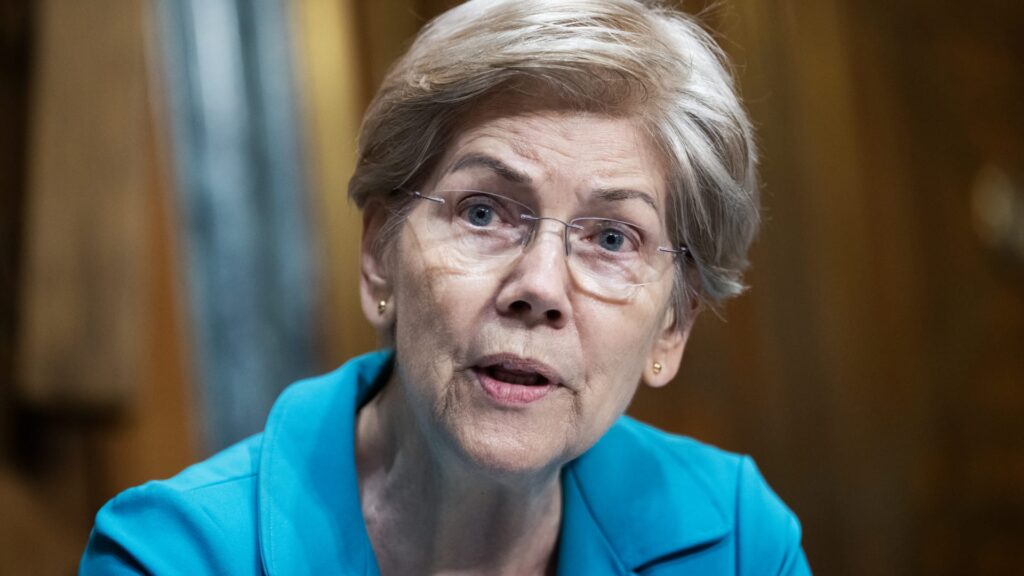
Senator Elizabeth Warren of Massachusetts is set to deliver a scathing critique of the Clarity Act, a cryptocurrency market structure bill, during her upcoming speech on Monday night. With a crucial preliminary vote taking place on Tuesday, Warren intends to underscore what she deems significant weaknesses in the legislation, particularly its ethics provisions. These assertions come as the bill, supported by Republican leadership and the White House, seeks bipartisan backing to advance regulations for the burgeoning cryptocurrency industry.
| Article Subheadings |
|---|
| 1) Senator Warren’s Critique of the Clarity Act |
| 2) The Role of Ethics Provisions in the Clarity Act |
| 3) Republican Strategy and Legislative Support |
| 4) Proposed Legislation and its Implications |
| 5) The White House’s Position on the Clarity Act |
Senator Warren’s Critique of the Clarity Act
In her upcoming speech, Senator Elizabeth Warren will take aim at the Clarity Act, which is currently under consideration in the Senate. Described as a pivotal framework for the cryptocurrency market, the bill is drawing mixed reactions from lawmakers. Warren, as the ranking member of the Senate Banking Committee, is expected to highlight the inadequacies of the proposed legislation, particularly its lack of sufficient ethics checks on high-ranking government officials engaged in the cryptocurrency realm. She asserts that the bill serves merely as a facade, offering little genuine oversight and enabling rich political actors like former President Donald Trump to benefit further from crypto transactions.
The Role of Ethics Provisions in the Clarity Act
The Clarity Act has introduced new ethics provisions that, according to Warren, are fundamentally flawed. These provisions are designed to prevent the president and senior officials from engaging in digital assets. However, Warren argues that these rules create “significant loopholes” that will allow Trump to continue profiting from his business ventures in the cryptocurrency sector. During her critiques, she plans to assert that these provisions grant enforcement power to political appointees, thereby making it near impossible to hold Trump accountable for potential ethical breaches. As she elaborates in her remarks, Warren will contend that the intent behind the ethics rules appears less about accountability and more about protecting influential figures.
Republican Strategy and Legislative Support
In an attempt to secure bipartisan support for the Clarity Act, Republican leaders have been working overtime, hoping to sway some Democrats to back the bill. At least 60 votes are required for the legislation to move forward in the Senate. The GOP maintains that they have made concessions to address the concerns of Democrats, particularly regarding the outlined ethics provisions. A significant aspect of their strategy involves highlighting aspects of the bill that aim to foster innovation and establish the U.S. as a leader in the global cryptocurrency market. However, the extent to which these efforts will resonate with Democrats remains uncertain, especially with vocal critics like Warren raising alarm over potential conflicts of interest and corruption.
Proposed Legislation and its Implications
In addition to her criticisms of the Clarity Act, Senator Warren intends to advocate for an entirely different piece of legislation: the “Ending Presidential Corruption in Banking Act.” This proposal seeks to bar various banking applications for senior officials including the president, vice president, and their immediate family members. Warren’s bill aims to prohibit any involvement these officials might have in banking activities that could be seen as a conflict of interest. Not only does this measure reflect her commitment to preventing unethical financial practices, but it also underscores her intention to bring transparency and accountability to an arena she alleges has been tainted by corruption. Although the likelihood of garnering support in the Republican-controlled Senate seems low, it highlights the broader discussions around government ethics and financial practices.
The White House’s Position on the Clarity Act
In response to criticisms from Senator Warren and other Democrats, the White House has remained firm in its support for the Clarity Act. White House spokesperson Liz Huston has reiterated President Trump’s stance, asserting the bill’s necessity for maintaining American competitiveness in the cryptocurrency arena. According to Huston, passing the Clarity Act would not only protect American entrepreneurs but also counterbalance efforts by foreign competitors. The administration has emphasized that the act should be viewed as a critical step toward leading global innovation. However, such declarations of support from the White House only add fuel to Warren’s fire, as she suggests that the Clarity Act serves the interests of a select few rather than the average American citizen.
| No. | Key Points |
|---|---|
| 1 | Senator Warren plans to deliver a critical speech about the Clarity Act, focusing on its ethics provisions. |
| 2 | The Clarity Act aims to regulate the cryptocurrency market to provide more oversight. |
| 3 | Warren argues that the proposed ethics provisions have significant loopholes that protect government officials. |
| 4 | Republican leaders are seeking bipartisan support for the legislation as it requires at least 60 votes to advance. |
| 5 | The White House supports the Clarity Act, believing it is essential for maintaining U.S. leadership in global crypto innovation. |
Summary
Senator Elizabeth Warren’s forthcoming remarks on the Clarity Act emphasize the significance of ethical governance in the burgeoning cryptocurrency landscape. As passionate debates unfold in the Senate, the discussions surrounding this bill reflect broader concerns regarding financial oversight and corruption within political structures. Warren’s insistence on stringent ethical standards challenges lawmakers to rethink their regulatory approaches, making a case for accountability in an industry that continues to grow. The outcome of this legislative moment will be closely watched, as it could set critical precedents for both cryptocurrency regulations and political ethics.
Frequently Asked Questions
Question: What is the Clarity Act?
The Clarity Act is a proposed piece of legislation aimed at establishing a regulatory framework for the cryptocurrency market in the United States.
Question: Why is Senator Warren opposed to the Clarity Act?
Senator Warren opposes the act primarily due to concerns over its ethics provisions, which she believes contain loopholes that protect individuals like former President Trump from accountability.
Question: What does the Ending Presidential Corruption in Banking Act aim to do?
The Ending Presidential Corruption in Banking Act seeks to prevent top government officials, including the president and vice president, from involvement in certain banking applications that could pose conflicts of interest.