
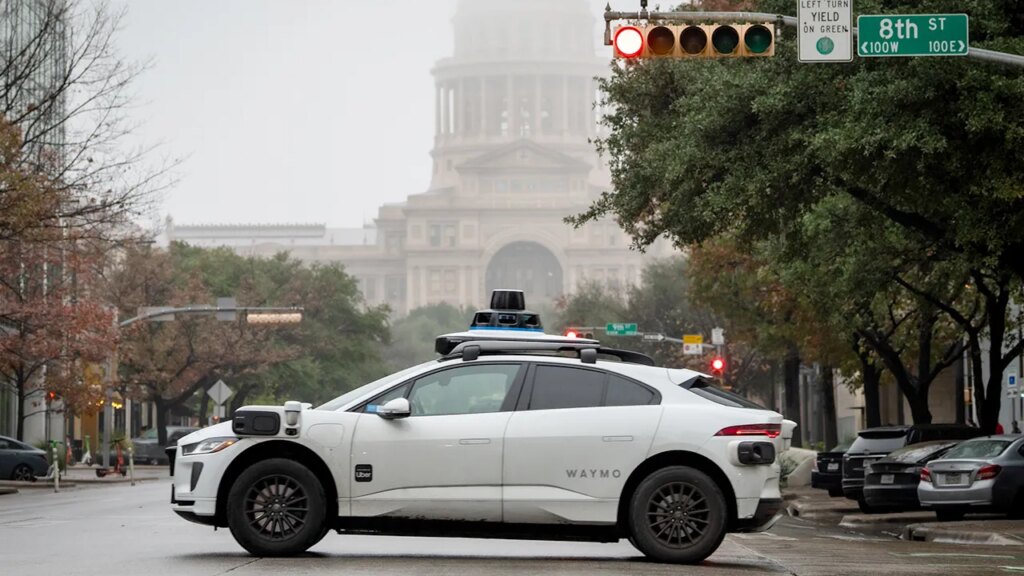
Waymo has recently unveiled critical details about the sophisticated computing systems integrated into its driverless vehicles, addressing concerns about what happens if the technology encounters a failure. The company assured riders that substantial backup systems are in place, as there is no human driver to intervene. The advancements include new custom circuits and multiple layers of redundancy that bolster the safety and reliability of autonomous rides.
| Article Subheadings |
|---|
| 1) Understanding Failures in Autonomous Driving |
| 2) The Driving Decision-Making Process |
| 3) The Role of Custom Chips in Reliability |
| 4) Multiple Safety Layers in Waymo’s Technology |
| 5) Staying Informed and Prepared While Riding |
Understanding Failures in Autonomous Driving
As autonomous vehicles become more prevalent, questions about their reliability, especially in case of a failure, loom large. Waymo emphasizes that its vehicles are equipped with advanced computing systems designed to function similarly to two independent engines. This dual-system approach ensures that if one computational system encounters a fault, the alternate system can immediately take over to maintain control of the vehicle.
The autonomous driving experience takes on new significance when considering the implications of such failures. As riders, understanding what replaces human intervention in an emergency can help alleviate concerns about the absence of a physical driver. Waymo’s primary priority during any serious electronic malfunction is to keep the vehicle controlled and safely parked, rather than simply continuing the trip.
The Driving Decision-Making Process
The decision-making framework within a Waymo vehicle is intricate and relies on a wealth of data collected from various sensors. As the vehicle navigates, it receives inputs from 13 cameras, Lidar technology, and radar systems to create a comprehensive understanding of its surroundings. This information is processed instantaneously by the onboard system, which enables real-time responses for steering, braking, and maneuvering.
What distinguishes Waymo’s system is that all driving decisions occur within the vehicle. The onboard computer does not require cloud support or intervention from remote operators to react to the immediate environment. Over the past eight years, Waymo states that it has significantly increased the raw computational power of its vehicles, resulting in faster decision-making capabilities.
The Role of Custom Chips in Reliability
Waymo has developed a specialized chip, referred to as a 5-nanometer application-specific integrated circuit (ASIC), which is integral to handling the massive data influx from the vehicle’s sensors. This custom chip processes information efficiently, ensuring that the vehicle can accept, evaluate, and act upon data with minimal delay.
With an impressive performance rate of over 1,000 TOPS (trillions of operations per second), this chip benchmarks the significance of tailored hardware in the realm of autonomous technology. By dedicating resources to a specific task rather than relying on general-purpose processors, Waymo aims to enhance the reliability of its vehicles, enabling optimal performance in varied environmental conditions, including low light.
Multiple Safety Layers in Waymo’s Technology
Beyond the redundancy in computing systems, Waymo has implemented substantial safety measures within its vehicles to counteract possible faults. This includes additional braking systems designed to safely halt the vehicle should the primary braking system fail. Similar precautions apply to steering mechanisms, which are supported by separate controllers and power supplies to maintain control under adverse conditions.
Waymo’s sophisticated construct ensures that if one critical function is compromised, backups will step in to preserve the vehicle’s operability. Continuous self-monitoring capabilities during driving allow the vehicle to detect issues and act accordingly. This layered approach demonstrates Waymo’s commitment to safe, reliable transportation, especially in scenarios where human operators are absent.
Staying Informed and Prepared While Riding
For those contemplating their first ride in a Waymo autonomous vehicle, understanding how to interact with the system can significantly improve the experience. Waymo encourages passengers to familiarize themselves with the Ride Support features available within the app or on the passenger screen, ensuring that help is accessible if needed.
- Know how to reach Rider Support: Passengers can contact Support anytime during their ride via the Waymo app or passenger screen.
- Know how to pull over: If a ride needs to be interrupted, tapping ‘Pull over’ will prompt the system to locate a safe stopping place.
- Stay buckled during unexpected stops: Riders are advised to remain secured with their seat belts while the support team assesses the situation.
- Leave the driving controls alone: Passengers should not engage in attempting to control the vehicle if problems arise, as support will follow up promptly.
- Call for help: In case personal safety is threatened, utilizing the emergency option in the Waymo app can swiftly connect someone to 911 or display support options.
| No. | Key Points |
|---|---|
| 1 | Waymo’s autonomous vehicles are equipped with dual computing systems for fault tolerance. |
| 2 | The onboard computer processes environmental data in real time, enabling instant reactions without external input. |
| 3 | Custom chips enhance data processing speed, significantly improving vehicle responsiveness. |
| 4 | Multiple redundant systems ensure safety and continued operation in the event of hardware failures. |
| 5 | Passengers are advised on procedures and features available in the event of unexpected situations during rides. |
Summary
As Waymo continues to refine its autonomous vehicle technology, the company’s commitment to safety and reliability is increasingly transparent. With intricate layers of redundancy, innovative computing systems, and clear communication pathways for passengers, Waymo aims to ensure a secure and confident riding experience, even without a human driver at the helm. This comprehensive system of backups and rapid decision-making capabilities showcases Waymo’s proactive measures in addressing concerns associated with driverless technology. The future of transportation is evolving, and understanding how these systems interact can ease the transition into a more automated world.
Frequently Asked Questions
Question: What happens if a Waymo vehicle’s primary computer fails?
The vehicle is designed with a backup computer that can take over control almost instantaneously, ensuring that the vehicle can safely stop or navigate to a secure state.
Question: How does Waymo ensure safety during a ride?
Waymo integrates multiple layers of redundancy, including backup braking and steering systems, to prevent failures from compromising the safety of passengers.
Question: Can remote agents operate a Waymo vehicle in emergencies?
No, while remote assistance can offer guidance, Waymo vehicles operate independently. Automated systems handle all driving tasks without a human remotely taking control.