
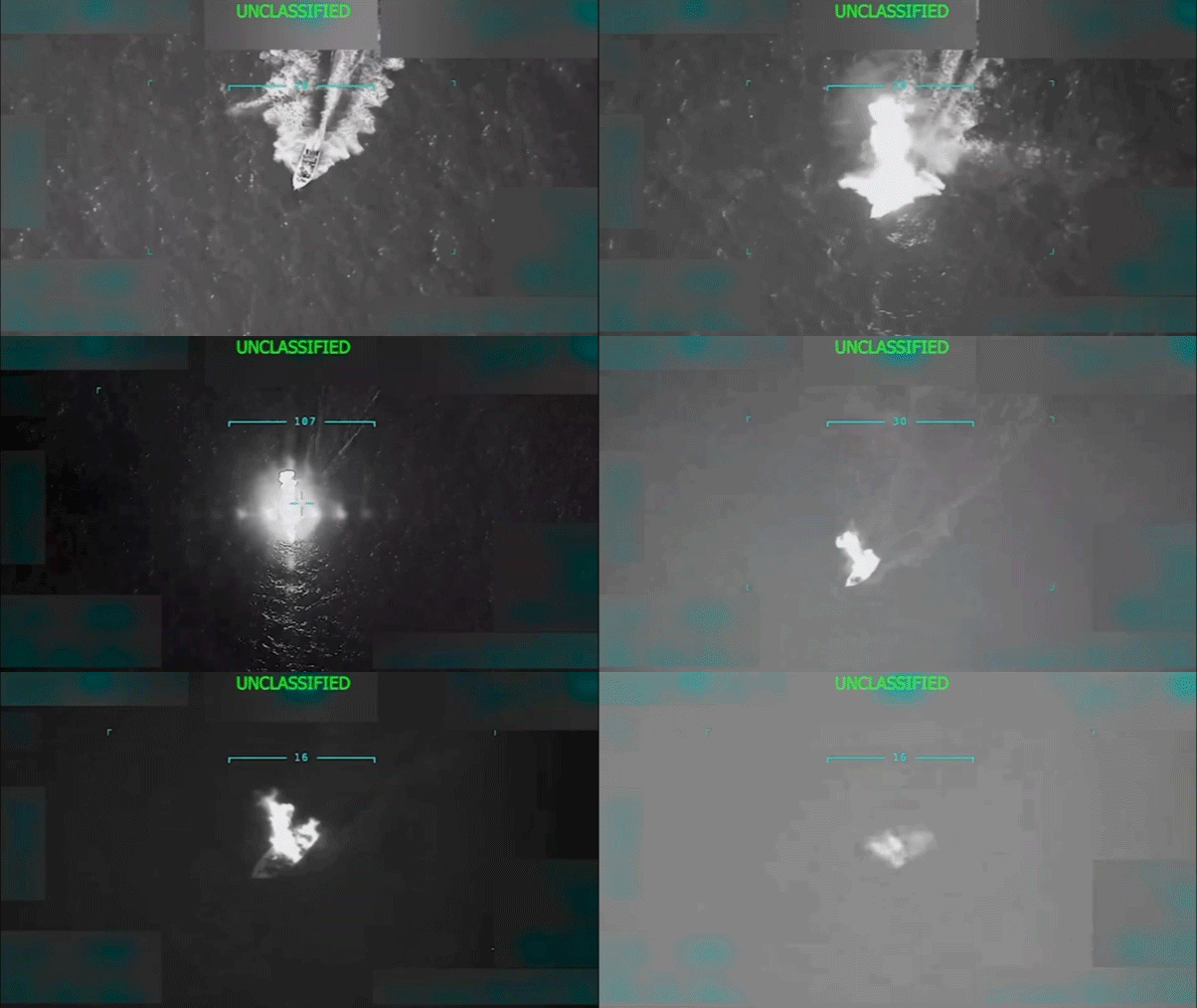
The White House has officially confirmed a second military strike targeting alleged drug smugglers in the Caribbean, a controversial operation carried out under the guidance of the Trump administration. The strikes, taking place earlier in September, have sparked intense scrutiny from lawmakers, particularly after conflicting accounts emerged regarding the orders for these actions. As officials continue to navigate questions about the legality and ethics of the strikes, they underscore an ongoing commitment to combat drug trafficking, posing complicated questions regarding military engagement in international waters.
| Article Subheadings |
|---|
| 1) Overview of the Military Operations |
| 2) Details of the Strike and Claims of Legality |
| 3) Political Reactions and Calls for Oversight |
| 4) The White House and Pentagon’s Divergent Narratives |
| 5) Future Implications for U.S. Military Engagement |
Overview of the Military Operations
The recent military operations carried out by the Trump administration have been characterized by multiple strikes directed at alleged drug vessels operating in the Caribbean. Specifically, the two strikes that took place on September 2 were aimed at disrupting the flow of narcotics from sources believed to be linked to Venezuelan drug trafficking networks. This military initiative is part of a broader strategy to curb the influx of illegal drugs into the United States, which has been a persistent issue affecting public health and safety.
The operations highlight a significant increase in military engagements under the Trump administration, with over twenty strikes reported against alleged drug boats in recent months. While officials argue that these operations are essential for national security, they also raise complex questions regarding the legality of military actions in international waters, as well as the moral implications of targeting individuals allegedly involved in narcotic trafficking.
Details of the Strike and Claims of Legality
On the day of the strikes, Secretary of Defense, Pete Hegseth, reportedly authorized naval actions intended to eliminate what officials described as immediate threats posed by the drug boats. In a clear defense, White House press secretary, Karoline Leavitt, asserted that the military response was justified as an act of self-defense in accordance with the law of armed conflict. This legal justification rests on the premise that drug trafficking poses a significant and immediate threat to national security.
The White House emphasized that the directive to conduct the strikes was given with full adherence to existing legal frameworks. Citing the law of armed conflict, officials maintained that the actions were not only necessary but also executed within the bounds of military engagement protocols. During press briefings, Leavitt stated that such operations are part of a wider strategy authorized by the President to counter narco-terrorism.
Political Reactions and Calls for Oversight
Political reactions to the strikes have been mixed, prompting calls for further accountability from various lawmakers. Both Republican and Democrat leaders in the House Armed Services Committee issued a statement affirming their commitment to rigorous oversight concerning military operations in the Caribbean. The co-chairs, Mike Rogers and Adam Smith, underscored the necessity for transparency regarding the strikes and the decision-making processes that led to these military actions.
Critics have voiced concerns over the potential for escalating military engagements to become a routine response to drug trafficking issues. Such discussions highlight the complex interplay between military operations and domestic drug policies. Prominent political figures, including members of Congress, are increasingly calling for investigations into the nature of these military strikes to ensure they align with both legal and ethical standards.
The White House and Pentagon’s Divergent Narratives
Amidst these developments, discrepancies have surfaced between narratives presented by the White House and the Pentagon. While the White House has remained firm in its defense of the actions taken, the Pentagon issued statements denying allegations regarding the specifics of the military engagements. A spokesperson for the Pentagon, Sean Parnell, labeled media reports as “false” and suggested that the information disseminated was fabricated. This discrepancy raises questions about intra-agency communication and the reliability of the narratives being presented to the public.
In addition, calls for more robust oversight from lawmakers are becoming increasingly urgent as skepticism mounts regarding the legality and efficacy of following military strikes. The ongoing debate is likely to spotlight the need for clear guidelines governing military actions abroad, particularly in contexts where civilian lives may be at risk.
Future Implications for U.S. Military Engagement
As the landscape evolves, the implications of these military actions on future U.S. engagements are substantial. The Trump administration’s commitment to military interventions targeting drug trafficking may redefine the role of the U.S. military abroad, particularly in regions deemed critical for U.S. national security. Stakeholders are closely watching how these operations could set precedents for future military actions in other conflict areas around the globe.
Moreover, the ongoing discussions regarding military authority imply that lawmakers may push for more stringent checks and balances to govern such military actions, especially in complex situations that intertwine international law and domestic policy. The emerging consensus appears to advocate for not only increased oversight but also a re-evaluation of strategies employed in combating narcotic trafficking.
| No. | Key Points |
|---|---|
| 1 | The White House confirmed two military strikes targeting drug smugglers in the Caribbean. |
| 2 | Officials assert that the strikes complied with the law of armed conflict. |
| 3 | Political leaders are calling for enhanced oversight and investigation into military actions. |
| 4 | Conflicting narratives between the White House and Pentagon point to potential communication issues. |
| 5 | Future military actions against drug trafficking may reshape U.S. engagement strategies abroad. |
Summary
The recent military strikes against alleged drug traffickers in the Caribbean highlight the complexities surrounding U.S. military engagement as part of a broader strategy to combat drug trafficking. The contrasting narratives emerging from the White House and the Pentagon, along with calls for greater oversight from lawmakers, underscore the necessity for a more transparent approach to military operations. As the political landscape evolves, the implications of these actions will continue to resonate, prompting further debates over the legality and ethical considerations of military interventions in foreign nations.
Frequently Asked Questions
Question: What were the reasons for the military strikes in the Caribbean?
The military strikes were aimed at disrupting drug trafficking operations believed to pose a threat to U.S. national security, according to officials.
Question: What has been the response from lawmakers regarding these strikes?
Lawmakers from both parties are calling for increased oversight and investigations into the military operations, emphasizing the need for transparency.
Question: How did the Pentagon’s statements differ from the White House’s?
The Pentagon denied reports regarding the specifics of the military strikes, labeling them as “false,” while the White House has defended the actions as lawful and necessary.