
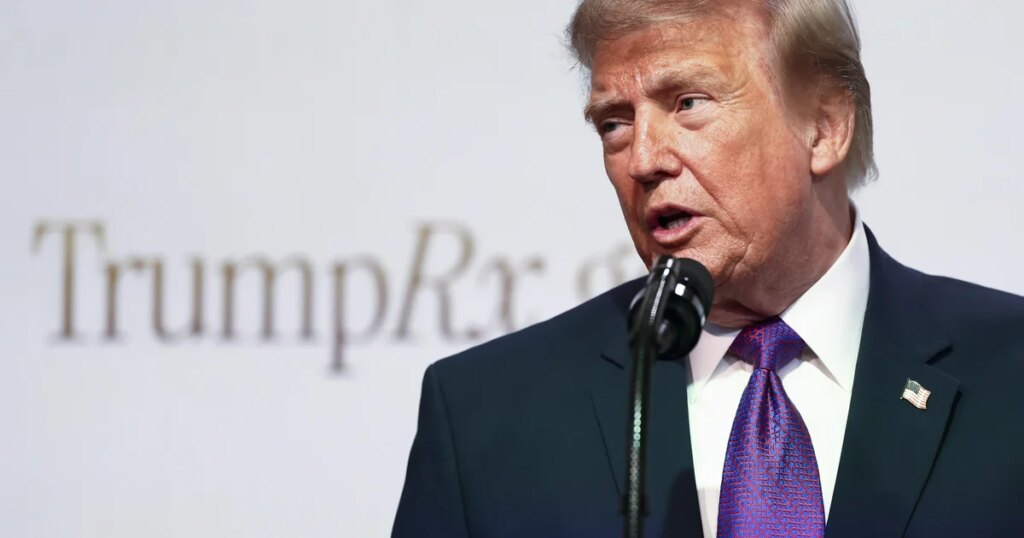
The Trump administration has unveiled a significant agreement that positions North American Blue Energy Partners (NABEP) at the center of operations in Venezuela’s vast oil reserves. Under this deal, NABEP will be granted the rights to drill in 17 oil fields, containing approximately 65 billion barrels of oil, a substantial portion of Venezuela’s resources. As the plan unfolds, it aims to elevate production rates and enhance U.S. energy security, though it faces scrutiny and skepticism from various industry experts and political figures.
| Article Subheadings |
|---|
| 1) Overview of the Agreement |
| 2) The Role of North American Blue Energy Partners |
| 3) Implications for U.S. Energy Security |
| 4) Challenges and Skepticism Surrounding the Deal |
| 5) Political Reactions and Concerns |
Overview of the Agreement
The agreement reached between the Trump administration and the Venezuelan government involves a long-term commitment, allowing NABEP to drill across multiple oil fields in Venezuela. Announced officially on a Monday, this pact encompasses 100-year concessions, enabling the company to tap into significant energy resources in the region. These oil fields are believed to harbor about 65 billion barrels of oil, which represents roughly one-fifth of the total proven reserves in Venezuela. The deal has emerged as a pivotal factor in U.S. energy strategy, especially given the historical tensions surrounding U.S.-Venezuela relations.
The Role of North American Blue Energy Partners
North American Blue Energy Partners, under the leadership of Venezuelan executive Alejandro Betancourt, positions itself as the second-largest private oil producer in Venezuela, currently producing over 200,000 barrels of oil daily. The strategic vision of NABEP is ambitious, with plans to ramp up production to more than 1 million barrels per day in the near future. This objective reflects a renewed focus on Venezuelan oil, as the country has some of the largest untapped reserves of oil globally. The company is expected to invest approximately $100 billion into the country’s oil infrastructure, aiming to enhance efficiency and output dramatically.
Implications for U.S. Energy Security
The Trump administration has emphasized the potential benefits of this partnership, articulating that it could substantially bolster U.S. energy security. By accessing additional oil supplies from Venezuela, the U.S. government aims to lower energy prices while also replenishing its Strategic Petroleum Reserve. The Defense Department is set to hold a 35% stake in NABEP, while the State Department will have the right to purchase 20% of the company’s output at production cost. This deal has been portrayed as a means to ensure energy dominance for the United States over the coming century, all purportedly at no cost to taxpayers.
Challenges and Skepticism Surrounding the Deal
Despite the hopeful projections surrounding the agreement, there are prevalent concerns among industry experts regarding the feasibility of the short-term benefits. The infrastructure necessary for efficient oil extraction and production in Venezuela is severely underdeveloped, raising doubts about the immediate availability of their oil in markets such as the U.S. There is also skepticism concerning the quality of Venezuelan oil, which is often described as “heavy” and “sour,” making it more challenging to refine compared to lighter crudes. As a result, analysts suggest that any meaningful decrease in oil prices in U.S. markets could take several years or even decades to manifest.
Political Reactions and Concerns
The announcement of this agreement has sparked considerable debate in both American and Venezuelan political arenas. Several opponents of the regime in Venezuela have denounced the deal as an “asset grab,” raising questions about the legality of transferring such control of national resources to a foreign entity. In the United States, political figures, such as Democratic Senator Jack Reed of Rhode Island, have criticized the Pentagon’s stake in the Venezuelan oil venture as an abuse of power. In his statement, Reed asserted that the administration’s motives align with extracting Venezuelan oil for U.S. gain while appropriating military resources and public funding.
| No. | Key Points |
|---|---|
| 1 | The Trump administration has established a noteworthy agreement with the Venezuelan government regarding oil reserves managed by NABEP. |
| 2 | NABEP aims to significantly increase oil production from the Venezuelan fields in the near term. |
| 3 | The deal is viewed as a means to enhance U.S. energy security, potentially lowering fuel prices. |
| 4 | Experts have voiced concerns about the potential delays in realizing the benefits of the agreement due to infrastructure challenges. |
| 5 | Political opposition in both countries has raised serious questions about the legality and ethics of the deal. |
Summary
The agreement between the Trump administration and NABEP represents a crucial step in U.S.-Venezuelan relations regarding the exploitation of oil resources that may significantly impact both nations’ economies. While officials assert that the deal could enhance U.S. energy security and stabilize oil prices, practical challenges and substantial political opposition indicate that the road ahead may be fraught with complications. An ongoing evaluation of the situation will be necessary, as both local and international stakeholders navigate this complex geopolitical landscape.
Frequently Asked Questions
Question: What is the primary goal of the agreement between the U.S. and NABEP?
The primary goal of the agreement is to increase oil production in Venezuela, thereby enhancing U.S. energy security and potentially lowering fuel prices. It also aims to facilitate investment in Venezuelan oil infrastructure.
Question: Who is Alejandro Betancourt?
Alejandro Betancourt is the executive leading North American Blue Energy Partners (NABEP), which is positioned as the second-largest private oil producer in Venezuela.
Question: What are the main concerns regarding the new oil deal?
Concerns include the potential lack of immediate benefits due to underdeveloped infrastructure in Venezuela, the quality of Venezuelan oil, and political opposition questioning the legality of transferring control of national resources to a foreign entity.