
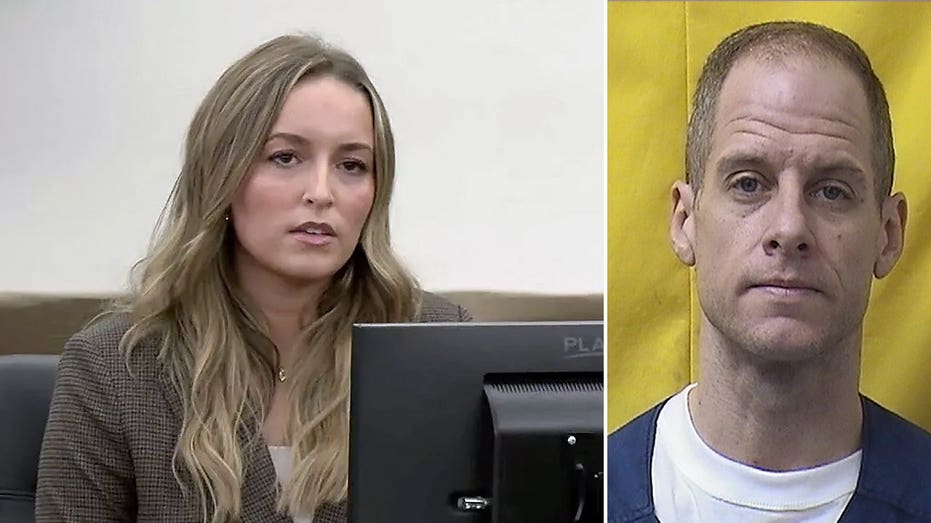
Alleigha Botner was not charged in the killing of Ashley Flynn after investigators reviewed messages, phone records and surveillance footage tied to the case. Her attorney, Nick Gounaris, said the evidence showed no involvement by Botner in the murder.
Caleb Flynn was convicted of aggravated murder and eight other counts after Ashley was shot at the couple’s home in Tipp City, Ohio, on Feb. 16, 2026. He was sentenced to life in prison without parole and has maintained his innocence.
Gounaris said Botner believed Flynn was preparing to divorce Ashley, despite messages in which the couple discussed violence and concealing their affair. Flynn’s attorneys have filed a notice of appeal.
| 1) | Why investigators treated Botner as a witness |
| 2) | What the messages revealed |
| 3) | Why Botner said she expected a divorce |
| 4) | The defense theory about the killing |
| 5) | The conviction, sentence and appeal |
Why investigators treated Botner as a witness
Botner’s affair with Flynn became a major issue during the investigation into Ashley’s death. Gounaris said he initially feared Botner could become a suspect because she spoke with police before retaining a lawyer and did not immediately provide a complete account of her relationship with Flynn.
After Botner’s family contacted Gounaris, he communicated with investigators while determining whether she was a witness or a potential defendant. Police examined her communications with Flynn, cellphone records and surveillance footage. According to the attorney, the evidence did not indicate that Botner helped plan or carry out the shooting at the Tipp City home.
What the messages revealed
Jurors heard that Flynn and Botner exchanged more than 107,000 messages during their relationship. Some included discussions about killing Ashley, including Flynn’s statement that he had stayed awake thinking about ways to kill her without going to prison.
The messages also included a suggestion that someone could be hired to kill Ashley. Gounaris acknowledged that the exchanges were disturbing, but argued that discussions about Ashley’s death represented a small portion of the communications and largely occurred months before the shooting.
Prosecutors also presented messages about deleting communications and changing phones. Gounaris said those actions were intended to hide the affair, which he argued could have harmed Flynn’s prospects in a divorce and custody dispute, rather than conceal a murder plan.
Why Botner said she expected a divorce
Botner ended the relationship in January after Flynn repeatedly failed to leave his marriage, according to Gounaris. The pair then stopped communicating for about a month before Flynn contacted her again shortly before Ashley was killed.
Gounaris said Flynn told Botner he was finally preparing to seek a divorce and disclose the affair to church leaders. Their renewed exchanges included about 250 messages concerning divorce, child custody, employment and the possible consequences of Flynn leaving Ashley. Botner also researched divorce-related questions through ChatGPT and sent screenshots to Flynn.
Hours before Ashley’s death, Flynn wrote, “It’s happening,” and Botner replied, “You’re about to be free.” Gounaris said Botner understood those messages to refer to Flynn ending his marriage. He said communications continuing until about 12:45 a.m., roughly one hour and 45 minutes before Flynn called 911, focused on divorce rather than murder.
The defense theory about the killing
Gounaris offered a theory that differed from prosecutors’ position that Flynn had planned the killing. He suggested Flynn may have made the decision during the early morning hours after recognizing that divorce could cost him his job, church position, income, home life and access to his children.
Flynn worked for his father-in-law’s company, had two daughters and held a prominent role at his church. Gounaris said Flynn wanted to preserve the benefits of both his marriage and his relationship with Botner, and that the prospect of losing those parts of his life may have triggered the killing.
The attorney emphasized that this remains his theory, not a court finding. Prosecutors said Flynn shot Ashley twice in the back of the head and staged a break-in.
The conviction, sentence and appeal
A jury convicted Flynn on Sept. 29, 2026, after deliberating for about two and a half hours. He was sentenced on Oct. 5 to life in prison without the possibility of parole. During sentencing, Flynn continued to deny killing Ashley.
Flynn’s attorneys filed a notice of appeal in Miami County court two days after sentencing. He was subsequently admitted to Ohio’s state prison system and held at the Correctional Reception Center in Orient.
Gounaris said Botner accepts responsibility for having an affair with a married man and making hateful statements about Ashley. He rejected the claim that those actions made her responsible for the murder or established that she participated in its planning or execution.
| Number | Key Point |
|---|---|
| 1 | Investigators found no evidence that Botner participated in Ashley Flynn’s killing. |
| 2 | Botner and Flynn exchanged more than 107,000 messages during their affair. |
| 3 | Her attorney said she believed Flynn was pursuing a divorce, not planning a murder. |
| 4 | Flynn was convicted and sentenced to life without parole. |
Summary
The investigation and trial established that Botner had an affair with Flynn and exchanged messages containing hostile statements about Ashley. Her attorney maintains that the evidence did not connect her to the shooting and that she interpreted Flynn’s final messages as signs he intended to divorce Ashley. Flynn was convicted, sentenced to life without parole and has appealed the judgment.
Frequently Asked Questions
Why was Alleigha Botner not charged?
Her attorney said investigators reviewed messages, phone records and surveillance footage but found no evidence that she participated in Ashley Flynn’s murder.
What did the messages between Botner and Flynn discuss?
The messages included discussions about Ashley’s death, concealing the affair, divorce, custody, employment and the possible consequences of Flynn leaving his marriage.
What happened to Caleb Flynn?
Flynn was convicted of aggravated murder and eight other counts, sentenced to life in prison without parole, transferred to the Ohio prison system and named in a notice of appeal.