
Federal investigators are examining whether ice accumulation contributed to a small-plane crash in Wisconsin that killed six people, including a child. The Piper PA-46 Malibu was descending from 24,000 feet on Tuesday night after the pilot reported ice forming on the wings. Flight data showed the aircraft entered a steepening right turn, accelerated to nearly 340 mph and descended at up to 4,000 feet per minute before tracking and communications were lost.
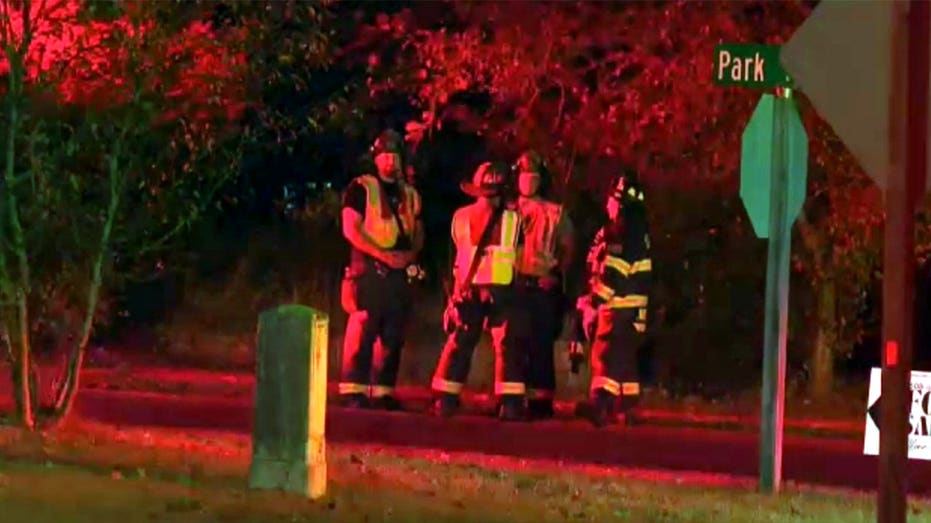
The crash occurred shortly before 10 p.m. in a wooded area of Sauk County, near Mirror Lake State Park and about 10 miles west of Wisconsin Dells. The National Transportation Safety Board is leading the investigation, but officials have not issued an official cause.
Authorities said all six people aboard died, while no structures were damaged and no one on the ground was injured. The victims’ identities had not been publicly released.
| 1) | Flight data points to a rapid and uncontrolled descent |
| 2) | The pilot reported ice building up on the wings |
| 3) | Six people died in the Sauk County crash |
| 4) | The aircraft model has faced earlier icing-related scrutiny |
| 5) | Investigators are reviewing communications and aircraft evidence |
Flight data points to a rapid and uncontrolled descent
Data reviewed by investigators showed the single-engine Piper PA-46 Malibu was flying at approximately 24,000 feet when the emergency sequence began. After the pilot requested permission to descend, the aircraft entered a right turn that became progressively sharper. Flight tracking information indicated that its airspeed nearly doubled to about 340 mph while the aircraft descended at a rate of as much as 4,000 feet per minute.
Communications with air traffic control and flight tracking data ended during the descent. The figures provide investigators with a timeline of the final moments, but they do not by themselves establish whether icing, a mechanical problem, pilot disorientation or another factor caused the loss of control.
The pilot reported ice building up on the wings
According to the NTSB, the pilot told air traffic controllers that ice was accumulating on the aircraft’s wings and asked to descend. Controllers approved the request, allowing the aircraft to move to a lower altitude as weather conditions affected the flight.
Rain was falling as a thunderstorm moved through the Dellona area near the time of the crash. Ice on a wing can disrupt airflow, reduce lift and make an aircraft harder to control. Aviation safety expert Jeff Guzzetti, a former investigator with the NTSB and FAA, said the available information had “all the earmarks of an icing-related loss of control.” His assessment is not an official finding.
Six people died in the Sauk County crash
The aircraft was traveling from Kenosha to Menomonie when it went down shortly before 10 p.m. Tuesday, Oct. 13, 2026. The crash site was in a wooded area of the Town of Dellona in Sauk County, near Mirror Lake State Park and roughly 10 miles west of Wisconsin Dells.
Five adults and one child were aboard, and authorities said there were no survivors. Emergency responders found the wreckage in the wooded area. No buildings were struck, no structures were damaged and no one on the ground was injured. Officials had not publicly released the victims’ names.
The aircraft model has faced earlier icing-related scrutiny
The Piper Malibu model has previously been examined in connection with crashes involving icing conditions. The NTSB conducted a special safety review of seven icing-related crashes involving Piper Malibu and Mirage aircraft between 1989 and 1991.
Several of those cases involved relatively inexperienced pilots who were unfamiliar with handling the sophisticated aircraft in icy conditions. The review led to recommendations involving pilot training, aircraft checklists and operating manuals. It also recommended an indicator light for systems intended to prevent ice from building up in pitot tubes, which help provide accurate airspeed readings.
Investigators are reviewing communications and aircraft evidence
The NTSB is leading the current investigation and is examining the aircraft’s final communications with air traffic control, available flight data and the wreckage. Investigators will seek to determine the aircraft’s condition, the extent of any ice accumulation, the performance of relevant systems and the pilot’s actions during the descent.
The investigation remains preliminary. Officials have not determined an official cause, and the final findings could identify one or more contributing factors. Weather records, maintenance information, pilot qualifications and recovered aircraft components are among the evidence typically considered in establishing what happened.
| Number | Key Point |
|---|---|
| 1 | The Piper Malibu was descending from 24,000 feet after the pilot reported wing icing. |
| 2 | Flight data showed a steepening right turn, airspeed near 340 mph and a descent of up to 4,000 feet per minute. |
| 3 | Six people, including a child, died in the crash near Mirror Lake State Park. |
| 4 | The NTSB has not yet determined an official cause. |
Summary
The Wisconsin crash investigation is focused in part on the possibility that icing contributed to a loss of control. The pilot reported ice on the wings before the aircraft entered a rapid, tightening descent over Sauk County. While prior safety reviews have examined icing risks involving similar Piper aircraft, investigators must complete their analysis before assigning an official cause.
Frequently Asked Questions
What caused the Wisconsin plane crash?
The official cause has not been determined. Investigators are examining whether ice accumulation contributed to a loss of control, along with other possible factors.
How many people died?
Six people died, including five adults and one child. There were no survivors.
Where did the crash occur?
The aircraft crashed in a wooded area of Sauk County near Mirror Lake State Park, about 10 miles west of Wisconsin Dells.
Who is investigating the crash?
The National Transportation Safety Board is leading the investigation and is reviewing flight data, weather conditions, communications and the aircraft wreckage.