
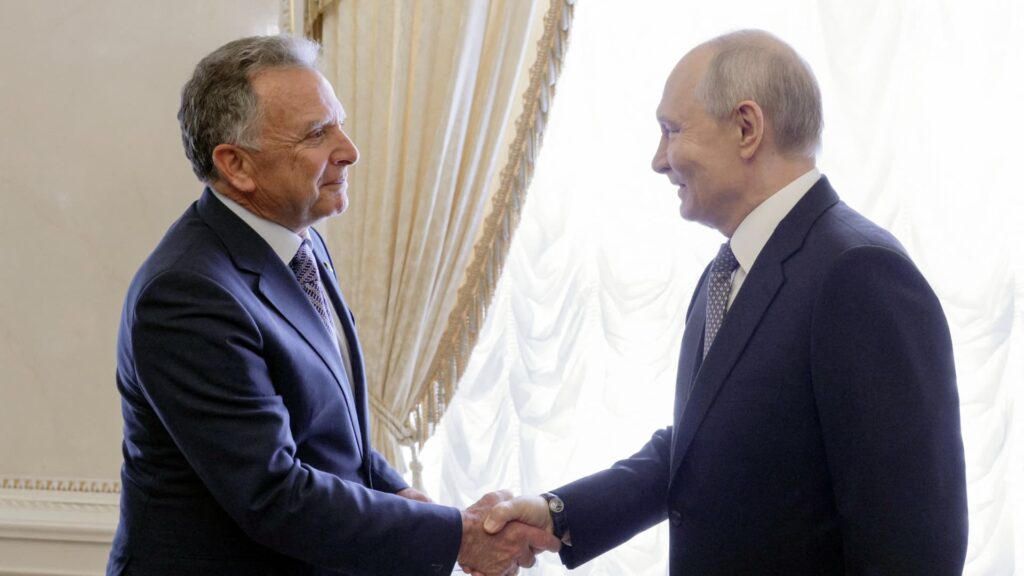
In a significant diplomatic engagement, U.S. special envoy Steve Witkoff addressed Russian President Vladimir Putin during talks in St. Petersburg, extending gratitude for his previous remarks regarding the humanitarian contributions of U.S. President Donald Trump. This interaction comes at a critical time as Ukrainian President Volodymyr Zelenskyy demands that any discussions related to Ukraine’s future include its participation. Meanwhile, Russia announced the release of an American detained on allegations of being a mercenary, which has drawn mixed reactions from U.S. officials.
| Article Subheadings |
|---|
| 1) Diplomatic Relations and Humanitarian Acknowledgements |
| 2) Ukraine’s Stand on Negotiations |
| 3) Release of Detained American Teacher |
| 4) Current Tensions and Security Guarantees |
| 5) Updates from the Frontlines of Conflict |
Diplomatic Relations and Humanitarian Acknowledgements
The recent discussions in St. Petersburg have spotlighted the evolving relationship between the U.S. and Russia amidst the ongoing war in Ukraine. On Wednesday, special envoy Steve Witkoff praised Vladimir Putin, calling him a “humanitarian” during the meeting focused on de-escalating conflict. This statement came as Witkoff acknowledged Putin’s past comments regarding Donald Trump, where the U.S. President was also framed in a humanitarian light. Such diplomatic overtures are unusual, especially given the backdrop of tension surrounding Ukraine’s sovereignty.
These talks signal a complex layer of international negotiations involving multiple nations, underscoring the importance of dialogue even amid strife. Witkoff’s remarks indicate a strategic effort to find common ground, a necessity for broader peace talks. The broader implications of these talks reflect deep-rooted international relations, where perceptions and rhetoric can shift dramatically.
Ukraine’s Stand on Negotiations
At a conference held alongside leaders from Finland and Norway in Oslo, President Volodymyr Zelenskyy asserted that Ukraine must be included in any discussions affecting its future. This call to action is a critical reiteration of Ukraine’s stance throughout the conflict, emphasizing the principle of self-determination. “Nothing about Ukraine without Ukraine,” Zelenskyy stated emphatically, reinforcing the necessity that Ukrainian perspectives must inform any diplomatic solutions.
Zelenskyy’s insistence on a direct role in negotiations reflects broader sentiments within his country, where skepticism toward external mediation is prevalent. The dynamics of Ukrainian participation are not just a matter of political protocol; they echo the struggles and sacrifices of its populace. By solidifying this point, Zelenskyy aims to position Ukraine as an equal partner in negotiations, rather than a subject to external decisions.
Release of Detained American Teacher
The backdrop of these diplomatic discussions was further marked by Russia’s announcement to release Stephen Hubbard, an American educator who had been labelled a mercenary by Russian authorities. This development was met with gratitude from the U.S. officials, including Witkoff, who thanked Putin for the decision. The move is significant in the context of U.S.-Russia relations, showcasing the potential for humanitarian gestures even amid political disagreements.
Vice President JD Vance echoed this sentiment, focusing on the relief of bringing a detained American home rather than getting embroiled in the diplomatic rhetoric surrounding the release. Vance’s perspective reflects a pragmatic approach, emphasizing humanitarian outcomes over political disputes. This highlights a potential path for future negotiations where humanitarian considerations might offer touchpoints for cooperation, even amidst contentious discourse.
Current Tensions and Security Guarantees
The discussions in both St. Petersburg and Oslo come against a backdrop of heightened tensions marked by recent criticisms exchanged between Trump and Zelenskyy. Trump’s assertion that Zelenskyy is not genuinely pursuing peace has fueled animosity, while Zelenskyy accuses the U.S. of potentially compromising critical sanctions against Russia, which many believe could prolong the conflict. The complexities of these relationships underscore the fraught nature of international diplomacy in wartime.
Additionally, NATO’s Article 5 remains a focal point in these talks. This article embodies a critical defense strategy affirming that an attack on one member is considered an attack on all, highlighting collective security principles. Discussions aimed at enhancing security guarantees are pivotal for Ukraine as it navigates its sovereignty amidst ongoing hostilities. Witkoff is expected to relay feedback from these discussions to Russian officials, presenting an opportunity to explore avenues for de-escalation, or at the very least, a reduction in hostilities.
Updates from the Frontlines of Conflict
Developments on the ground in Ukraine have remained dire, with reports of Russian strikes targeting energy and civilian infrastructure, leading to casualties. These escalatory measures follow claims from Trump regarding an “energy ceasefire,” which stipulates a halt to attacks on energy infrastructure but has yet to materialize in practice. The Ukrainian leadership’s countermeasures and responses, including tactical pauses in certain operations, illustrate the fragile state of the conflict and the challenges of stabilizing the situation.
Despite the temporary pause in attacks, Ukrainian forces have renewed operations in response to continued Russian aggressions, demonstrating a commitment to national defense amidst the uncertainties of international negotiations. Intelligence sharing from the U.S. has resumed, providing Ukraine with critical early warnings that could mitigate future assaults. As the two nations navigate this multi-faceted war, the interplay of military and diplomatic strategies will be essential in determining the conflict’s trajectory.
| No. | Key Points |
|---|---|
| 1 | U.S. envoy Steve Witkoff acknowledged Putin at talks about ending the Ukraine war. |
| 2 | Ukrainian President Zelenskyy demands a seat at any negotiations about Ukraine’s future. |
| 3 | Russia released American Stephen Hubbard, eliciting mixed reactions from U.S. officials. |
| 4 | Ongoing tensions stem from accusations and sanctions regarding Russian aggression. |
| 5 | U.S. intelligence has resumed sharing with Ukraine amidst ongoing military operations. |
Summary
Overall, the events surrounding the U.S. envoy’s commendation of Putin and Ukraine’s insistence on its involvement in peace talks underscore the complexities of international diplomacy amid warfare. The ongoing struggles and humanitarian issues persist in shaping the dialogue as both nations continue to navigate military tensions. The interaction highlights the potential for dialogue even in strained relations, emphasizing the significance of inclusive discussions in resolving conflicts that have profound global implications.
Frequently Asked Questions
Question: What is the significance of Ukraine’s demand to be included in negotiations?
Ukraine’s request emphasizes its right to sovereignty and self-determination, ensuring that any outcomes reflect its interests and protect the nation’s future.
Question: How does the U.S. view the release of Stephen Hubbard?
U.S. officials welcomed Hubbard’s release as a humanitarian act, emphasizing the importance of bringing detained Americans home, regardless of the surrounding political context.
Question: What role does NATO’s Article 5 play in the ongoing discussions?
NATO’s Article 5 represents a collective defense strategy, asserting that an armed attack against one member is an attack against all, which is vital for Ukraine as it seeks security guarantees.