
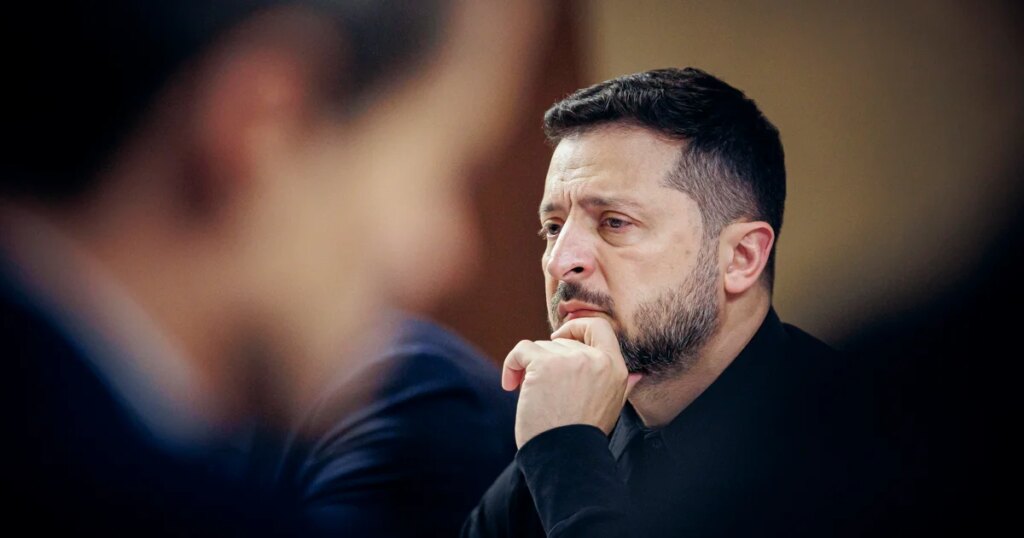
Ukrainian President Volodymyr Zelenskyy has firmly rejected calls for the country to hold elections amidst the ongoing war with Russia. This decision follows a public appeal from former Defense Minister Mykhailo Fedorov, who advocated for resuming democratic processes even during the conflict. Zelenskyy emphasized the risks associated with elections during wartime, referring to them as a potential “tsunami” that could further destabilize Ukraine.
With martial law currently in effect, the discussion surrounding the feasibility and safety of holding elections has taken center stage. Fedorov’s recent statements have sparked a nationwide debate about political transparency and accountability in a time of war.
| Article Subheadings |
|---|
| 1) Zelenskyy’s Stance on Elections Amid War |
| 2) Former Minister’s Call for Democratic Processes |
| 3) The Impact of Martial Law |
| 4) Fedorov’s Commentary on Corruption and Governance |
| 5) Public Response to Political Turmoil |
Zelenskyy’s Stance on Elections Amid War
In a recent address, President Volodymyr Zelenskyy expressed his firm opposition to holding elections during the ongoing war with Russia. He articulated concerns that elections could significantly destabilize the nation at a time when unity is paramount. “I believe that in a war like this, elections as such are a huge risk. Elections right now are a tsunami for the country that will split Ukraine,” he stated, highlighting the potential division and chaos elections might bring amidst the conflict.
The backdrop of these remarks is critical. Since the onset of the war in February 2022, Zelenskyy has maintained a critical narrative that prioritizes national security over political processes. By imposing martial law, he aimed to curb any electoral ambitions that could threaten the government’s focus on military objectives against the Russian invasion. His administration continues to push the narrative that the primary goal is to preserve Ukraine’s sovereignty and territorial integrity.
Former Minister’s Call for Democratic Processes
On the other side of the debate, former Defense Minister Mykhailo Fedorov has advocated for restoring Ukraine’s democratic processes despite the ongoing conflict. In a video message shared via social media, he argued, “Democracy cannot be held hostage by Russia,” asserting that even in times of war, citizens deserve to have their voices heard through elections. Fedorov suggested that a “legal, safe and realistic mechanism” should be developed to facilitate elections without compromising national security.
His sentiments resonate with a segment of the population that sees the continuation of democratic governance as essential to Ukraine’s identity as a European nation. “We are fighting precisely because we want to remain a free European state,” he emphasized, pointing toward the broader implications of democratic processes on national morale and international perception.
The Impact of Martial Law
Martial law in Ukraine bars elections for the duration of the conflict, establishing significant legal and procedural hurdles for any potential electoral processes. This legal backdrop plays an essential role in the ongoing discourse surrounding democracy in Ukraine, as the foundational structures that typically allow for elections are suspended. Since the law’s enactment, officials have emphasized stability over potential electoral discord, framing the plight of Ukrainian citizens in terms of national survival rather than political participation.
Zelenskyy’s administration argues that under current circumstances, the priority should be cooperation and resistance against foreign aggression rather than political maneuvering that could lead to internal divisions. Critics, however, like Fedorov, argue that the political landscape must also evolve, even if the traditional structures governing that landscape are currently impeded.
Fedorov’s Commentary on Corruption and Governance
In a recent interview aired by a leading news outlet, former Minister Mykhailo Fedorov raised pressing questions regarding governance and transparency in President Zelenskyy’s administration. Citing a recent money laundering investigation announced just days before the interview, he urged the president to address the lingering allegations about corruption within his government. Fedorov remarked, “If I cannot share my ideas and be open about them with my own society, then what are we fighting for?”
His questioning reflects a broader anxiety among some citizens regarding the integrity of their leaders during a time of crisis, thereby adding another layer to the discourse about whether elections should take place. While Fedorov emphasized the need for transparency, Zelenskyy maintains that his focus on security is justified and necessary given the war’s ongoing devastation.
Public Response to Political Turmoil
The interplay between Zelenskyy’s administration and political dissenters, such as Fedorov, has led to widespread unrest among the Ukrainian populace. Following Fedorov’s dismissal, there were significant public protests where thousands voiced their grievances regarding the former minister’s ousting. Many citizens believe that Fedorov’s leadership played an instrumental role in Ukraine’s military strategy, thus attributing part of the war effort’s success to his contributions and expressing dissatisfaction with what they perceive as politically motivated decisions.
These protests highlight a significant divide between segments of the population who prioritize national unity in the face of external threats and those who are increasingly calling for political accountability and participation amidst such challenges. As the landscape continues to evolve, it remains to be seen how this tension will impact both the war effort and democratic governance in Ukraine.
| No. | Key Points |
|---|---|
| 1 | President Zelenskyy’s rejection of elections during the war aims for national stability. |
| 2 | Former Minister Fedorov advocates for restoring democratic processes in Ukraine. |
| 3 | Martial law prevents any elections during the ongoing conflict. |
| 4 | Fedorov’s concerns on governance emphasize a need for transparency amid allegations of corruption. |
| 5 | Public protests illustrate a deep divide over political accountability and national unity. |
Summary
The ongoing discussions in Ukraine regarding elections during wartime highlight a critical juncture in the country’s political evolution. President Zelenskyy’s firm stance against elections underscores a commitment to stability in a time of conflict, while former Minister Fedorov’s calls for democratic governance reflect significant public sentiment for political participation and accountability. This dichotomy in perspectives will shape Ukraine’s future as it navigates the complex challenges posed by war, governance, and national identity.
Frequently Asked Questions
Question: Why are elections banned under martial law in Ukraine?
Elections are banned under martial law in Ukraine to ensure national stability and security in the face of foreign aggression. The government believes that elections could exacerbate internal divisions during a time of war.
Question: What are the implications of Fedorov’s calls for elections?
Fedorov’s calls for elections imply a desire for renewed democratic processes and political accountability in Ukraine, stressing that democracy should not be compromised, even during conflict.
Question: How has the public reacted to the political turmoil in Ukraine?
The public has expressed significant unrest, as evidenced by protests against the ousting of former Minister Fedorov. Many citizens see him as a crucial figure in Ukraine’s defense strategy and wish to hold their leaders accountable during these challenging times.