
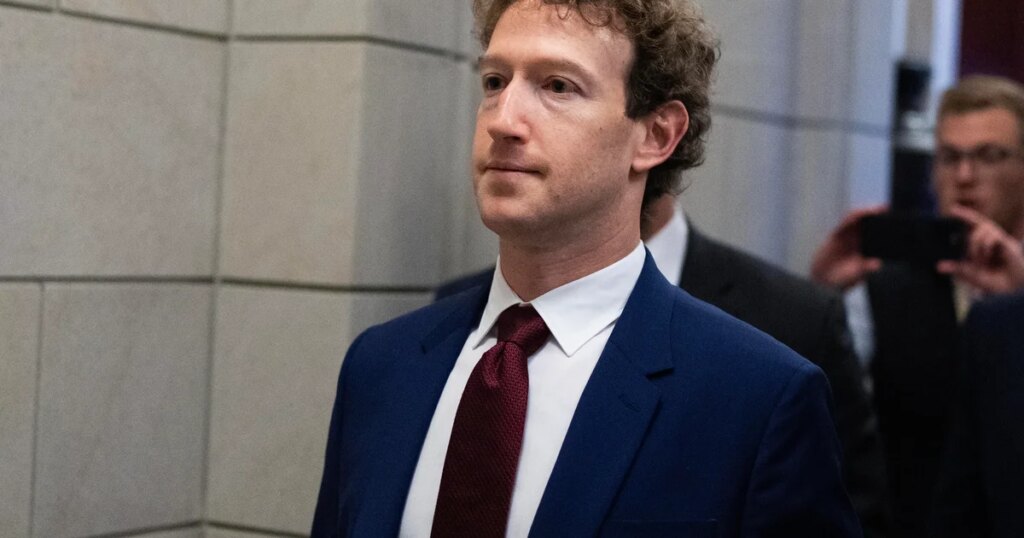
In a recent essay published on Meta’s website, CEO Mark Zuckerberg shared his vision for the future of artificial intelligence (AI). He advocates for making AI tools widely available to individuals and businesses, emphasizing the importance of equitable access to technological advancements. In addition, Zuckerberg outlines the potential benefits of superintelligence and underscores the need for strategic actions to ensure the safe and responsible development of AI technologies.
| Article Subheadings |
|---|
| 1) Free or affordable access to AI for everyone |
| 2) AI’s impact on employment |
| 3) Investments in community data centers |
| 4) Commitment to open-source models |
| 5) Collaboration with authorities for AI safety |
Free or affordable access to AI for everyone
In his essay, Mark Zuckerberg envisions a future where AI can serve as a personal assistant for daily activities. By democratizing access to AI tools, he aims to enhance individual capabilities, supporting people in managing their health, careers, finances, and relationships more efficiently. To achieve this vision, he stated that Meta plans to make versions of its AI technologies available for free to billions of users. This initiative is particularly important in closing the digital divide, allowing even underprivileged communities to benefit from advanced technological solutions.
Zuckerberg emphasized the need for affordable options, asserting that Meta will strive to offer its AI technology at the lowest possible prices. An integral part of this approach is the creation of a “fully private mode” for personal AI agents. This mode would ensure that user data remains confidential, preventing Meta and other service providers from accessing private information. By prioritizing user privacy, Meta aims to build trust and encourage widespread adoption of AI tools.
AI’s impact on employment
Amid concerns that AI technologies may lead to job displacement, Mark Zuckerberg argues that AI will, in fact, transform the job landscape positively. He believes that rather than eliminating jobs, AI will facilitate the emergence of new job opportunities that do not currently exist. Describing superintelligence as a “tool of invention,” Zuckerberg envisions it enhancing human productivity rather than replacing human effort.
He pointed out that while businesses may become more streamlined—similar to the historical transition from large industrial firms to tech-centric companies—this shift doesn’t imply a net loss of jobs. Instead, a diversified business environment will emerge with many smaller companies employing fewer individuals, which could even lead to greater overall employment opportunities in the long run.
Investments in community data centers
In light of the surging demand for AI computing power, Meta joins other tech giants like Alphabet and Amazon in rapidly expanding its data center footprint. However, this expansion has sparked significant public concern over environmental and economic implications. Recognizing these issues, Zuckerberg proposed the creation of the “Future is for Everyone Fund,” a $1 billion investment initiative aimed at benefiting communities impacted by the development of new data centers.
The fund will focus on several key areas, supporting local economies, keeping electricity costs low, restoring natural water supplies, and providing training for workers who will support these data center operations. With a capital spending budget of $145 billion earmarked for building data centers, Meta seeks to ensure that local communities are not only included in the tech boom but also actively benefit from it.
Commitment to open-source models
Mark Zuckerberg has raised concerns regarding the competitive disparities in the AI field, advocating for a reduction of barriers that hinder U.S. open-source models from competing effectively with foreign counterparts. He cautioned against locking AI models as proprietary tools, emphasizing that keeping them under wraps could stifle innovation.
In alignment with this vision, Zuckerberg announced that Meta is planning to continue its efforts in releasing open-source models in the near future. One such upcoming initiative is the launch of the Muse Glimmer model, coupled with an open-weight version of Muse Spark 1.2, one of Meta’s most sophisticated coding models. By fostering an open-source approach, Meta aims to create a more competitive landscape while prioritizing innovation within the AI sector.
Collaboration with authorities for AI safety
Lastly, Mark Zuckerberg emphasized the importance of collaboration between AI companies and government entities to ensure the secure and responsible use of AI technologies. He proposed a series of policy suggestions including sharing “intermediate training checkpoints” of new AI models with the government, which would allow authorities to identify and address potential security threats proactively.
In addition, Zuckerberg stressed the necessity for AI labs to partner with law enforcement agencies to mitigate the risk of misuse of the technology by malicious actors. By establishing these collaborations, Meta aims not just to advance AI innovation but also to ensure that it is developed within a framework of responsibility and safety for society.
| No. | Key Points |
|---|---|
| 1 | Zuckerberg advocates for widespread access to AI tools, asserting that they should be free or very affordable to the public. |
| 2 | He claims that AI will create new job opportunities rather than displace existing ones. |
| 3 | Meta will launch a $1 billion fund to support communities affected by the expansion of their data centers. |
| 4 | Zuckerberg intends to promote innovation by releasing open-source AI models. |
| 5 | Collaboration with government and law enforcement is critical to ensure AI development is safe and responsible. |
Summary
In his recent essay, Mark Zuckerberg outlines a comprehensive and optimistic vision for the future of artificial intelligence. Emphasizing equitable access, job creation, community investment, open-source collaboration, and safety measures, he advocates for a responsible approach to AI development. This multifaceted strategy not only aims to harness the transformative potential of technology but also to ensure that it serves humanity as a whole, safeguarding individual privacy and community interests.
Frequently Asked Questions
Question: What is Zuckerberg’s vision for AI access?
Zuckerberg envisions making AI tools free or affordable for everyone, thereby allowing individuals to utilize these technologies for various personal and professional needs.
Question: How does Zuckerberg believe AI will impact jobs?
He believes that rather than displacing jobs, AI will facilitate the creation of new job opportunities that do not currently exist and will enhance productivity among workers.
Question: What is the Future is for Everyone Fund?
The Future is for Everyone Fund is a $1 billion initiative proposed by Zuckerberg to support communities where Meta’s data centers are built, addressing concerns related to environmental and economic impact.