

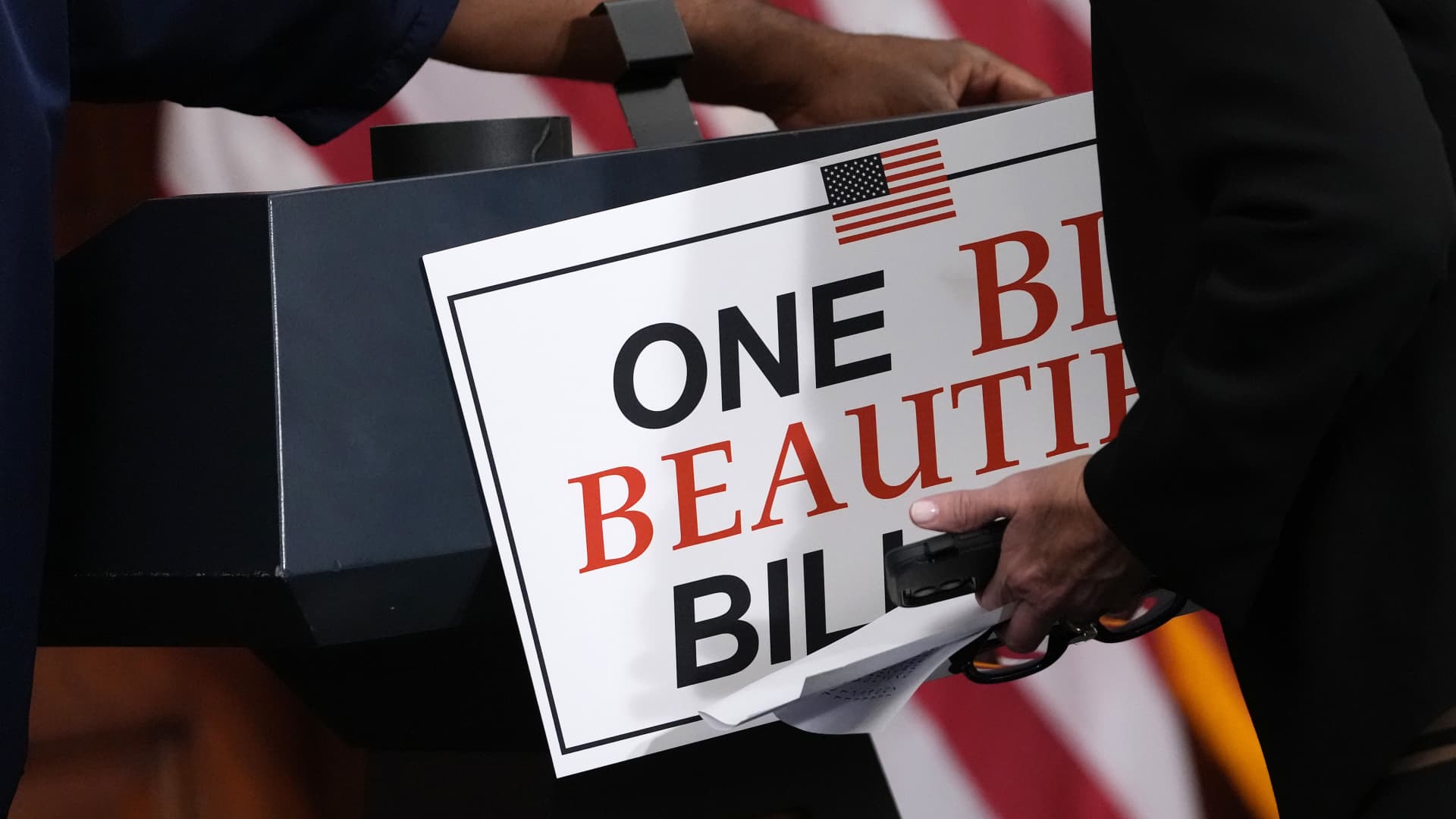

A recently passed legislative package by House Republicans has raised significant concerns regarding its impacts on different income groups in the United States. Officially titled the “One Big Beautiful Bill Act,” the bill proposed substantial tax cuts aimed primarily at wealthier households, while substantially reducing support for low-income families. Economists warn that these shifts in fiscal policy could exacerbate existing inequalities while the bill now heads for further scrutiny and potential amendments in the Senate.
| Article Subheadings |
|---|
| 1) House Bill’s Focus on High Earners |
| 2) Economic Analysis of Impact on Income Groups |
| 3) Cuts to Social Safety Net Programs |
| 4) Tax Benefits Favoring the Wealthy |
| 5) Consequences for Low-Income Households |
House Bill’s Focus on High Earners
The “One Big Beautiful Bill Act” recently passed by House Republicans signifies a noteworthy shift in fiscal policy priorities. Aimed predominantly at benefitting wealthier Americans, the bill has sparked discussions and concerns about its broader socioeconomic implications. Major components of this legislation include tax cuts specifically designed for high earners—including business owners, investors, and homeowners situated in high-tax regions. By lowering taxes for these groups, the bill poses a risk to the income of lower-earning households, which are projected to face a detrimental impact as various social safety net programs are curtailed.
Economic Analysis of Impact on Income Groups
In terms of economic ramifications, the Congressional Budget Office (CBO) provides a grim outlook for low-income households. According to their analysis, those in the bottom decile could see their incomes diminish by 2% in 2027 and by a staggering 4% in 2033 due to provisions in the bill. In stark contrast, affluent families—those within the top 10%—are projected to benefit with a 4% increase in income initially, tapering to a 2% increase later down the line. A separate analysis by the Yale Budget Lab reinforces these findings, revealing that households earning below $14,000 annually will see average income losses of approximately $800 by 2027. Conversely, those in the top income bracket may expect gains upwards of $63,000.
Cuts to Social Safety Net Programs
A focal point of the legislation is its proposed cuts to essential social safety net programs, including Medicaid and the Supplemental Nutrition Assistance Program (SNAP), previously known as food stamps. As economists predict, these cuts could lead to a reduction of federal spending on Medicaid by approximately $700 billion and on SNAP by around $267 billion through 2034. This alarming statistic indicates a deliberate strategy to finance tax cuts for the wealthiest by undermining support for the most vulnerable populations. Further complicating matters, new stringent work requirements are likely to be imposed on beneficiaries of these programs, increasing insecurity for lower-income families who rely heavily on such support.
Tax Benefits Favoring the Wealthy
The bill features an assortment of tax benefits that are overwhelmingly skewed towards high earners. Tax experts indicate that approximately 60% of the bill’s tax cuts will primarily extend to the wealthiest 20% of American households. Additionally, provisions such as the increase in the state and local tax (SALT) cap from $10,000 to $40,000 will exclusively benefit those already within higher tax brackets, leaving the lower-income groups without any significant relief. Moreover, the legislation preserves the 37% tax rate established under the 2017 Tax Cuts and Jobs Act, further entrenching the advantages afforded to affluent households.
Consequences for Low-Income Households
While the Tax Policy Center indicates that more than 80% of households may see a tax cut by 2026 if the bill is enacted, the benefits for low-income families come with caveats. Provisions, such as a higher standard deduction and an enhanced child tax credit, initially appear advantageous, yet experts warn that they may not deliver the anticipated benefits to those who are most in need. Specifically, many tipped workers, roughly one-third, do not owe federal income taxes and thus will not benefit from proposed tax breaks tied to gratuities. As a result, while some low-income households may experience marginal improvements, the long-term outlook remains grim due to the cuts imposed on essential support services.
| No. | Key Points |
|---|---|
| 1 | The “One Big Beautiful Bill Act” primarily favors wealthier Americans through tax cuts. |
| 2 | Low-income households may see a reduction in annual income, while the wealthiest could gain substantially. |
| 3 | The legislation imposes significant cuts to critical social safety net programs such as Medicaid and SNAP. |
| 4 | Provisions like higher SALT caps and maintaining a lower top tax rate primarily benefit high-income households. |
| 5 | Although a majority of households may receive a tax cut, many low-income families would be adversely affected due to cuts to essential services. |
Summary
The passage of the “One Big Beautiful Bill Act” marks a pivotal moment in U.S. fiscal policy, drawing a clear line between the interests of affluent individuals and the needs of struggling families. With substantial tax reductions favoring wealthy households and drastic cuts to social support programs, the legislation raises critical questions about economic equity. As the bill progresses to the Senate, ongoing debates will likely center on the implications of this policy for social justice and economic sustainability in the nation.
Frequently Asked Questions
Question: What are the primary objectives of the “One Big Beautiful Bill Act”?
The primary objectives of the “One Big Beautiful Bill Act” are to implement significant tax cuts for affluent households while reducing federal spending on social safety net programs.
Question: How will low-income households be affected by the proposed legislation?
Low-income households are expected to experience decreases in their annual income due to the combination of tax cuts and cuts to programs like Medicaid and SNAP.
Question: What measures are being introduced regarding social safety net programs under the new legislation?
The legislation proposes stricter work requirements for beneficiaries of social safety net programs such as Medicaid and SNAP, resulting in significant funding cuts to these essential services.
