

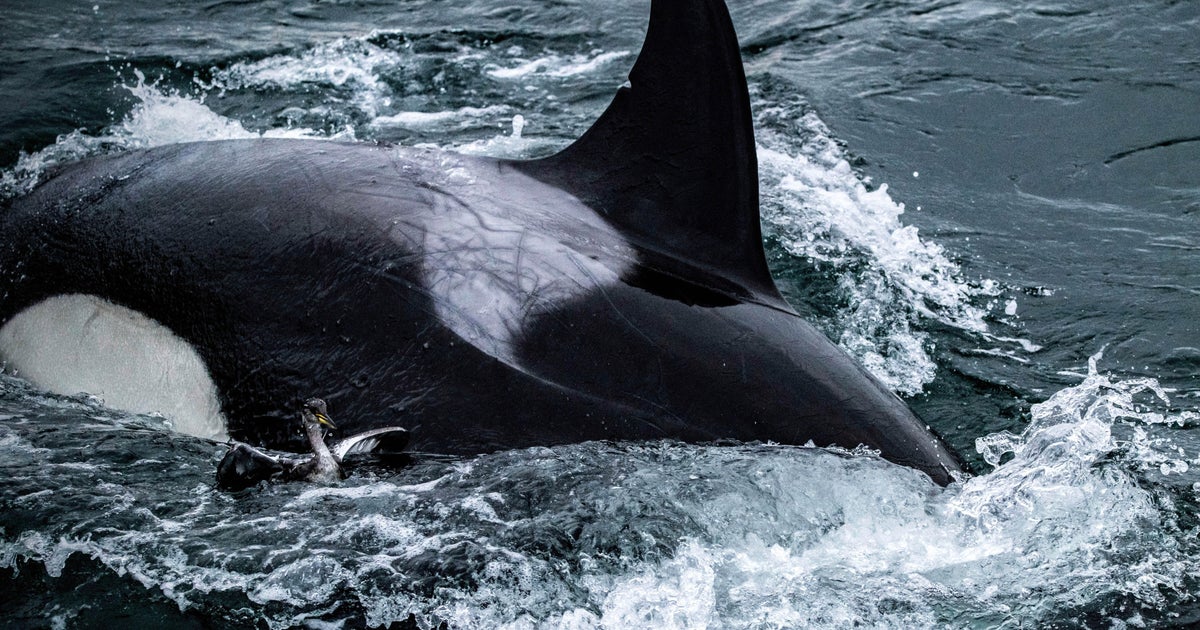

Scientists have recently uncovered remarkable behavior in killer whales, observing these marine mammals using pieces of seaweed as tools for grooming each other. This groundbreaking discovery highlights the cognitive abilities of orcas, revealing that they employ a technique termed “allokelping.” This finding marks a pivotal advancement in our understanding of animal behavior, demonstrating that tool use is not exclusive to terrestrial creatures but extends to marine environments as well.
The study details the actions of a critically endangered population known as the southern resident killer whales, who have been under close observation in the Salish Sea for over five decades. Researchers hope that this new behavior sheds light on the social dynamics and grooming habits of these intelligent creatures, which are facing severe threats from environmental changes and human activities.
| Article Subheadings |
|---|
| 1) Unique Behavior of Killer Whales |
| 2) The Discovery Process |
| 3) Understanding Allokelping |
| 4) Implications for Conservation |
| 5) Broader Context of Marine Mammal Behavior |
Unique Behavior of Killer Whales
Killer whales, known scientifically as orcas, have gained attention for their highly complex social structures and behavioral patterns. Their latest observed behavior involves the use of bull kelp, a type of seaweed, which the whales utilize to exfoliate and groom each other. This is notably significant as it represents the first known instance of marine mammals creating and employing tools. Unlike terrestrial animals, such as chimpanzees and elephants, tool use among marine species is rare, making this discovery all the more impactful. The ability to innovate and manipulate natural materials for a practical purpose showcases an advanced level of intelligence in these creatures.
The Discovery Process
The pivotal findings regarding killer whales came from a team of researchers observing the southern resident population in the Salish Sea, which encompasses parts of British Columbia and Washington state. The project has been ongoing for more than 50 years, focusing primarily on monitoring the behaviors and habitats of these endangered whales. The initial observation of the kelp use was made by Rachel John, a master’s student at Exeter University, who noticed unusual interactions in drone footage. On revisiting archived footage, researchers documented 30 instances of this kelp grooming behavior occurring over a span of just eight days. Observations indicated that the whales would break off segments of bull kelp and use them for mutual grooming, emphasizing the importance of social interactions in their lives.
Understanding Allokelping
The term “allokelping” was coined by researchers to describe the process wherein killer whales use kelp not just for personal grooming but also to engage with other whales. This interaction often takes on a playful form, as the whales pair up and rub the kelp between their bodies while forming an “S” shape, indicating a shared experience. Previous understanding of whale behavior already included instances of frolicking through seaweed, known as “kelping.” However, the advent of allokelping suggests a deeper layer of social bonding and maintenance behaviors that could have broader implications for their social structures. The research indicated a correlation between the amount of dead skin on whales and their propensity to engage in allokelping, hinting that these behaviors are not merely recreational but also serve practical grooming purposes.
Implications for Conservation
The implications of this astonishing finding are manifold, particularly with regard to conservation efforts for the southern resident killer whales, whose population has dwindled to a mere 73 individuals. Scientific findings suggest that cultural behaviors, like allokelping, could be lost if these whales become extinct. The threats they face are significant, ranging from depleted prey availability—such as Chinook salmon—to habitat destruction and increasing water temperatures affecting kelp forests. Conservationists stress the urgency of addressing these threats to ensure that cultural and social practices observed in these creatures do not vanish along with them.
Broader Context of Marine Mammal Behavior
While tool use has been documented in other species such as bottlenose dolphins and octopuses, the findings related to killer whales add an exciting dimension to our understanding of marine mammal behavior. Previous claims of dolphin tool use involved the use of marine sponges to hunt for prey, yet the unique aspect of allokelping lies in its social dynamic. Janet Mann, a biologist not involved in the study, pointed out that the research warrants careful consideration, citing the potential for other marine animals, including various whale species, to also exhibit signs of tool use. The research authors assert that allokelping could represent a novel category of tool use, providing insights into social learning and behaviors among marine animals and enriching our understanding of animal culture as a whole.
| No. | Key Points |
|---|---|
| 1 | The southern resident killer whales utilize bull kelp for grooming each other, representing a form of tool use. |
| 2 | The behavior, termed “allokelping,” emphasizes social bonds and may have welfare implications for the whales. |
| 3 | Researchers documented 30 instances of this behavior occurring over an eight-day observation period. |
| 4 | The dwindling population of these killer whales raises concerns over the loss of unique cultural behaviors. |
| 5 | The study highlights the complexity of social learning and behaviors among marine mammals, expanding our understanding of animal culture. |
Summary
The discovery of tool use in killer whales highlights the advanced cognitive abilities and social structures of these marine mammals. Researchers hope that understanding allokelping may offer insights into their social needs and grooming behaviors, which are critical for their survival and well-being. However, with dwindling numbers threatening the future of this unique cultural phenomenon, immediate conservation efforts are necessary to ensure that we do not lose this significant aspect of orca behavior.
Frequently Asked Questions
Question: What is allokelping?
Allokelping is a newly identified behavior in killer whales where they use pieces of kelp to groom one another, showcasing social bonding and tool use.
Question: How do killer whales use kelp?
Killer whales use their teeth to break off pieces of bull kelp and rub it between their bodies, allowing for both grooming and social interaction.
Question: Why is the population of southern resident killer whales declining?
The population is declining due to various factors, including reduced prey availability, habitat destruction, and the effects of climate change on their environment.
