

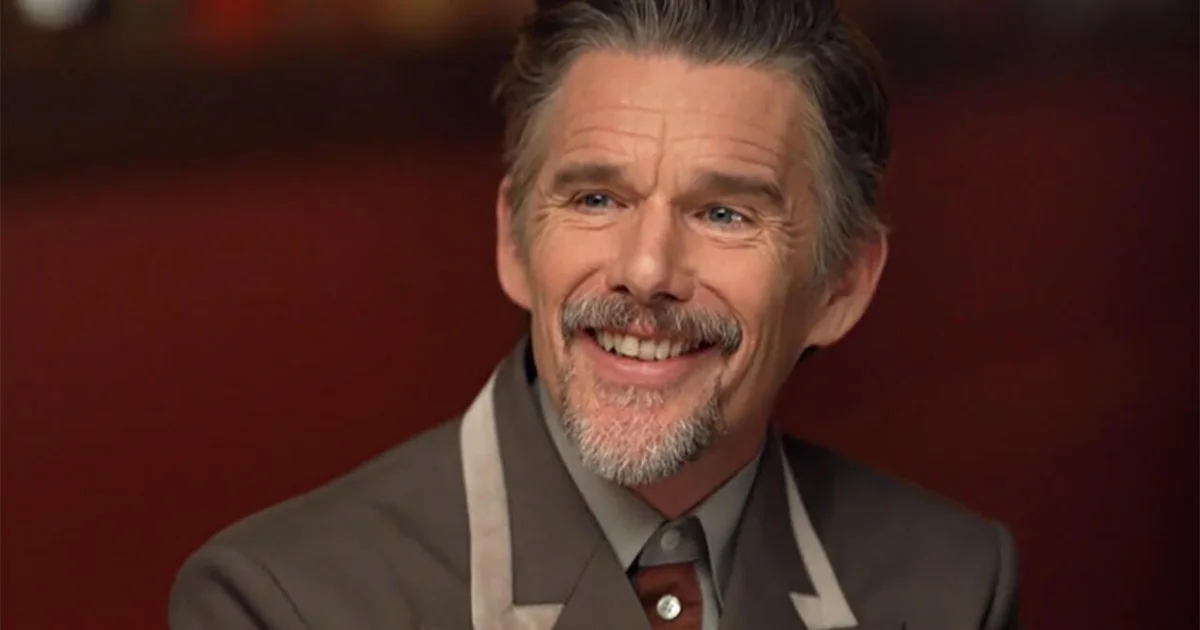

The world of musical theatre has been graced by formidable talents like Richard Rodgers and Lorenz Hart, whose collaboration crafted timeless classics now embedded in the Great American Songbook. As the 1940s approached, Hart’s personal struggles steered Rodgers toward a new partnership with Oscar Hammerstein II, producing landmark works like “Oklahoma!” Their compelling story comes to life once again in the film “Blue Moon,” featuring Ethan Hawke as Hart, navigating the bittersweet tapestry of legacy and loss amidst celebration.
| Article Subheadings |
|---|
| 1) The Rise of a Musical Duo: Rodgers and Hart |
| 2) The Transition: Hart’s Descent and Rodgers’ New Collaboration |
| 3) Bringing “Blue Moon” to Life on Film |
| 4) Ethan Hawke: Embracing the Shadow of Hart |
| 5) The Legacy: Current Reflections and Future Aspirations |
The Rise of a Musical Duo: Rodgers and Hart
In the early 20th century, the partnership of Richard Rodgers and Lorenz Hart emerged as one of the most celebrated alliances in musical history. They revolutionized Broadway with iconic creations such as “My Funny Valentine,” “The Lady Is a Tramp,” and “Blue Moon.” The duo defined the essence of American songwriting, combining rich melodies with poignant lyrics that resonated emotionally with audiences. Their collaborative efforts left an indelible mark on the landscape of musical theatre, creating masterpieces that are still revered today.
Despite their achievements, both musical and personal tensions began to surface over time. The complexities of their relationship were exacerbated by Hart’s struggles with alcoholism, leading to erratic behavior that affected their professional commitments. As the 1940s approached, Hart’s dependency on alcohol deepened, making him increasingly unreliable as a collaborator. Nevertheless, his significant contributions and the spectacular songs they built together have continued to echo through the ages.
The Transition: Hart’s Descent and Rodgers’ New Collaboration
The turning point in Rodgers and Hart‘s storied collaboration came in the early 1940s when Hart’s declining health and performance became evident. Seeking a fresh start, Rodgers subsequently partnered with Oscar Hammerstein II. Their first production together, the groundbreaking musical “Oklahoma!” premiered at the St. James Theatre on March 31, 1943, instantly garnering acclaim and establishing a new milestone in musical theatre. The show marked not just a new chapter for Rodgers but was a pivot point in American theatre itself.
The narrative of the musical reflects real-life struggles and societal changes, resonating deeply with audiences. Hart, ironically, though overshadowed by his partner’s successes, was a complex figure who contributed profoundly to American culture. His bittersweet story is infused with moments of brilliance, mirroring the emotional weight of the music that he so cleverly intertwined with Rodgers’ compositions.
Bringing “Blue Moon” to Life on Film
The film “Blue Moon” revives the historical narrative surrounding the duo, delving into the poignant and often painful chapters of their lives. Directed by a celebrated filmmaker, the movie revisits the crucial moments—particularly the night of “Oklahoma!”‘s opening—when Hart, feeling a mix of emotions at a celebratory gathering at Sardi’s, encounters both nostalgia and despair. Ethan Hawke portrays Hart against the backdrop of Broadway’s glittering, and sometimes unforgiving, allure.
To capture the essence of Hart authentically, the film’s crew went to great lengths to recreate the iconic Sardi’s on a soundstage. Hawke’s performance reflects a personal investment, as he immerses himself in Hart’s life, grappling with the complexities of portraying a man torn between triumph and tragedy. As the actor notes, “It’s definitely the most text I’ve ever had in a movie,” emphasizing the depth and challenge of his role.
Ethan Hawke: Embracing the Shadow of Hart
In taking on the role of Lorenz Hart, Ethan Hawke faces the challenge of embodying the less-than-perfect sides of a genius. Acknowledging Hart’s struggles, Hawke delves into the psychology behind the character, stating, “I have to perform beyond how I usually express myself.” This transformation required him to not only study Hart’s life but also employ physical adaptations, including camera tricks to project Hart’s shorter stature and altering his voice and mannerisms.
With over 30 years of experience in the industry, Hawke reflects on the pressures of early success and the shadows it casts. Recalling his breakthrough roles, he contrasts the beginning of his career with the lessons learned from peers, like Robin Williams, highlighting the importance of resilience against criticism. When asked about the journey from youth to adult roles, Hawke candidly responds, “If you let it be the high-water mark of your life, it will be.”
The Legacy: Current Reflections and Future Aspirations
Hawke’s appearance at the storied Sardi’s and the recognition he received serves as a testament to the lasting impact of his work. Stunned by the tribute of having his portrait added to the restaurant’s collection, he states, “I’ve arrived! Things are looking up on this life!” This moment is not just a personal honor but an illustration of how far he has come in the industry.
The conversation shifts toward the Oscar buzz surrounding “Blue Moon,” where Hawke expresses a mixture of hope and humility. Recognizing the challenges of the industry, he remarks about the ongoing relevance of his work and adds layers to the dialogue regarding artistic integrity, stating, “I don’t take any of it for granted.” The journey through the highs and lows, marked by persistence and adaptability, designs a framework that echoes not only Hart’s story but Hawke’s own enduring legacy in film and theatre.
| No. | Key Points |
|---|---|
| 1 | Rodgers and Hart created timeless classics that shaped American musical theatre. |
| 2 | Hart’s struggles with alcoholism impacted his partnership with Rodgers, leading to a transition. |
| 3 | “Blue Moon” encapsulates the poignant narrative of Hart’s life and partnership with Rodgers. |
| 4 | Ethan Hawke’s dedication to portraying Hart involves physical transformations and emotional depth. |
| 5 | The film has drawn significant Oscar consideration, reflecting the enduring influence of Hart’s legacy. |
Summary
The narrative of Rodgers and Hart offers a profound exploration of talent, triumph, and tragedy within the American musical landscape. As depicted in the film “Blue Moon,” their relationship is filled with the complexities of personal struggles and artistic brilliance, embodied by Ethan Hawke‘s portrayal of Hart. This film not only emphasizes the echoes of a bygone era in musical theatre but also serves as an artistic homage—embracing the hopes, dreams, and failures of its characters. The lasting impact of this story resonates through generations, ensuring that the legacies of these musical pioneers continue to inspire both audiences and artists alike.
Frequently Asked Questions
Question: Who were Rodgers and Hart?
Rodgers and Hart were an iconic songwriting duo whose work significantly shaped the landscape of American musical theatre in the early 20th century.
Question: What challenges did Lorenz Hart face in his personal and professional life?
Lorenz Hart struggled with alcoholism, which ultimately impacted his professional collaboration with Richard Rodgers and affected his mental health and stability.
Question: What awards consideration is “Blue Moon” garnering?
The film “Blue Moon,” particularly highlighted by Ethan Hawke’s performance, is generating considerable Oscar buzz, reflecting the quality and emotional depth of the narrative.
