

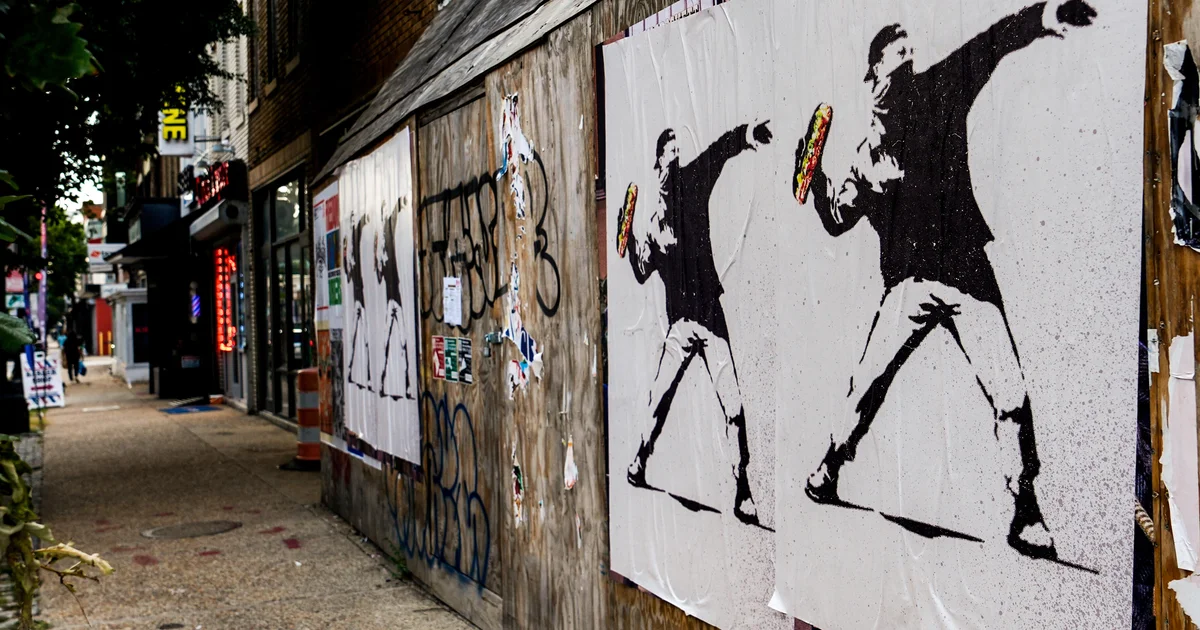

In a curious federal case that captivated the nation, Sean Dunn was acquitted after he threw a “submarine-style sandwich” at a Customs and Border Protection officer in Washington, D.C. The incident, which took place in August, became emblematic of wider tensions regarding federal handling of protests during the Trump administration. The courtroom was bustling, drawing considerable public attention, and despite the nature of the misdemeanor charges, jurors engaged in a thoughtful deliberation that reflected the complexities of their decision.
| Article Subheadings |
|---|
| 1) Background of the Incident |
| 2) Jury Deliberations Revealed |
| 3) Jurors’ Perspectives |
| 4) Political Implications |
| 5) Summary of the Trial Process |
Background of the Incident
The incident that led to the trial occurred in August when Sean Dunn passionately hurled a sandwich at a CBP officer stationed at a bustling intersection. This event did not merely fall under the typical scope of disorderly conduct; it emerged as a focal point amid rising tensions around federal policing in the capital during the Trump administration. Violent protests and increased federal presence in Washington have dictated much of the region’s atmosphere. The oasis of confusion—an ordinary sandwich—thus became a bizarre catalyst for national discourse about governmental authority and public dissent.
Onlookers witnessed the sandwich’s trajectory in disbelief, a stark contrast to the escalating clashes seen in surrounding events. Dunn’s act was perceived not simply as a disrespectful tantrum, but by some as a symbolic statement against federal agents’ roles in the city following nationwide anti-police brutality protests.
Jury Deliberations Revealed
The jury’s process was anything but straightforward. Although deliberations lasted around seven hours, they began with a 10-2 split on the panel, highlighting various perspectives on Dunn’s actions. The jurors grappled with vital questions about the intent behind the act and whether a sandwich could ever be construed as a weapon. As one juror noted, “It was kind of ridiculous,” indicating that they believed the case lacked a solid foundation for prosecution.
Throughout their discussions, the jurors explored the nuances of what constitutes “criminal intent.” Many felt that Dunn did not exhibit malicious intent; rather, the circumstances surrounding the act, including the chaotic environment outside, played a significant role in shaping their verdict. This exploratory process allowed jurors to voice concerns about setting a precedent for punishing seemingly innocuous acts that, while inappropriate, did not seem to pose genuine harm.
Jurors’ Perspectives
Following the trial, some jurors provided insights into their experiences. They expressed concern regarding the implications of their decision, particularly how a “not guilty” verdict could suggest acceptance of throwing objects at federal officers. “We were very scared and nervous about what this meant for us,” a juror confided, reflecting the fears surrounding potential repercussions from the public or pressure from external political forces.
The foreperson of the jury, who employed a patient and gentle demeanor during discussions, was credited with fostering an open environment conducive to dialogue. They explored various legal interpretations, with one juror questioning if a sandwich could inflict harm on someone in a ballistic vest. The deliberations were notably tumultuous, underscoring the gravity of deliberating on such a publicly debated case.
Political Implications
This incident played out against a backdrop of intensified national scrutiny on federal authorities deploying enhanced policing in urban settings, especially during politically charged moments. Dunn’s case became interwoven with ongoing debates regarding the militarization of police and the role of federal agents during times of civil unrest. The jurors were aware that their ruling could hold far-reaching implications, pushing against the narrative of individuals being unfairly prosecuted for protests against authority.
The potential fallout from this case was not lost on the jurors, many of whom expressed awareness of how their decision could resonate within broader social movements advocating for justice and transparency. One juror commented on the overwhelming presence of media coverage surrounding the case and how this weight contributed to their deliberative process, noting how unusual it felt to assess a case laden with such rich contextual undercurrents.
Summary of the Trial Process
The trial, while labeled as a misdemeanor, carried with it an air of intensity that belied the simplicity of its facts. The jurors’ deliberations were marked by tensions and questions that extended beyond Dunn’s behavior; they were forced to grapple with concerns about public safety, the implications of law enforcement’s authority, and the parameters of acceptable protest behavior. Following the jurors’ decision to acquit, it was evident that they had navigated a labyrinth of legal standards and social implications that made the sandwich toss more significant than originally perceived.
Despite Dunn’s initial embarrassment, the acquittal not only lifted a weight from his shoulders but also reflected the jurors’ personal and collective understanding of justice, allowing them to challenge a prosecution they collectively deemed unwarranted. Their decision underscored the need for introspection in America’s justice system, particularly when public sentiment and political dynamics shape the criteria for criminality.
| No. | Key Points |
|---|---|
| 1 | Dunn’s trial became a symbol of public dissent against federal overreach. |
| 2 | The jurors experienced conflict regarding the implications of their verdict. |
| 3 | Fear of public backlash affected juror sentiments during deliberation. |
| 4 | The case raised questions about acceptable protest behavior and intent. |
| 5 | The outcome reflected jurors’ broader concerns about justice in politically charged cases. |
Summary
The acquittal of Sean Dunn for throwing a sandwich at a federal officer transcends beyond a mere misdemeanor ruling. It points to deep societal considerations regarding the nature of protests, public sentiment towards federal policing, and the evolving responsibility of juries within such contexts. As this case demonstrates, the legal system interacts intricately with broader political narratives, compelling jurors to navigate complex terrains where law meets public opinion. The case’s repercussions may linger, influencing how incidents of similar nature will be prosecuted and adjudicated in the future.
Frequently Asked Questions
Question: What led to Sean Dunn being charged?
Sean Dunn was charged with misdemeanor offenses after throwing a sandwich at a Customs and Border Protection officer in Washington, D.C., during a period of heightened tensions regarding federal policing.
Question: What was the jury’s deliberation process like?
The jury experienced a lengthy deliberation process, ultimately leading to a 10-2 split initially, as they discussed nuances of criminal intent and the broader implications of their verdict.
Question: What broader issues did this case highlight?
The case highlighted public concerns around federal authority, the nature of acceptable protests, and the pressures jurors face when adjudicating cases entwined with political narratives.
