

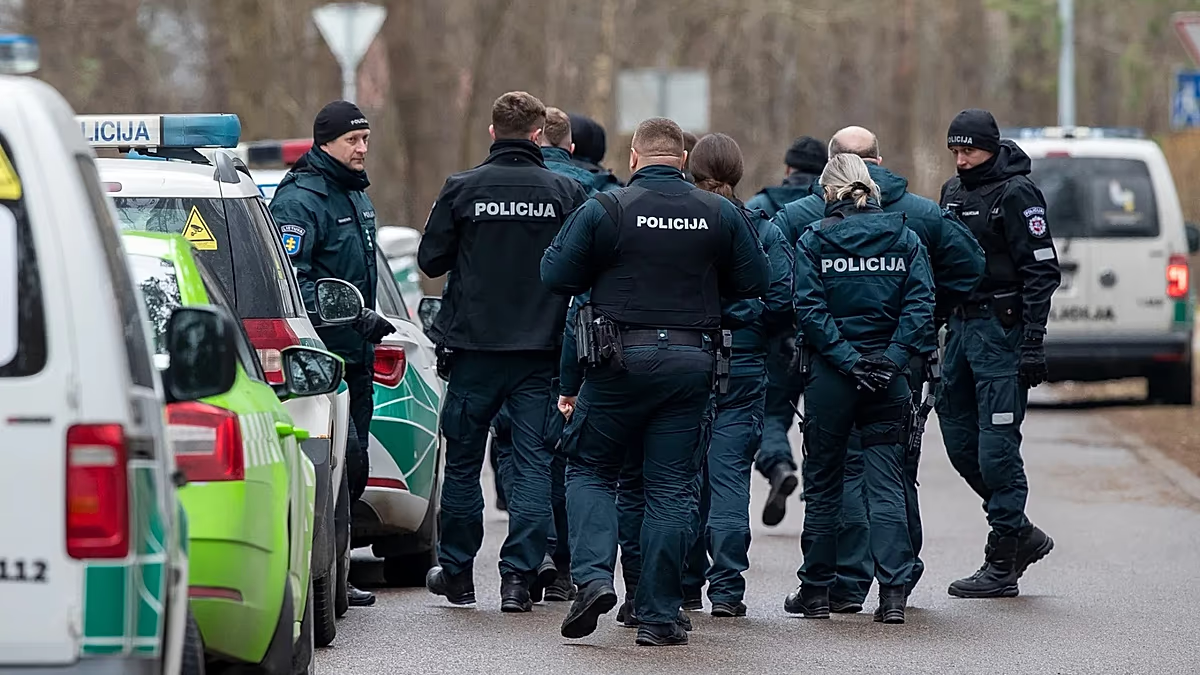

Authorities in Lithuania have undertaken significant action against a sophisticated criminal network allegedly smuggling cigarettes using specialized weather balloons. On Tuesday, officials announced the arrest of 21 suspects connected to the operation, which involved launching balloons from Belarus into Lithuania’s airspace. The operation combined the efforts of multiple law enforcement agencies, resulting in numerous seizures and raising concerns about national security linked to airspace violations.
| Article Subheadings |
|---|
| 1) Overview of the Smuggling Operation |
| 2) Details of the Arrests |
| 3) Impact on Lithuania’s Security |
| 4) International Reactions |
| 5) Broader Implications for Europe |
Overview of the Smuggling Operation
The cigarette smuggling operation was a highly organized criminal enterprise utilizing innovative methods to evade law enforcement. Launching balloons from Belarus, the network aimed to bring contraband into Lithuania’s airspace. This method provided both anonymity and the ability to bypass traditional surveillance measures, highlighting a worrying trend in smuggling tactics. The involvement of advanced technology, such as GPS tracking equipment, underscores the high level of sophistication that organized crime can reach, prompting fears about national security. Officials indicated that whoever orchestrated these operations engaged in systematic planning and coordination, suggesting a well-established criminal framework operating across borders.
Details of the Arrests
In the significant crackdown on this network, Lithuanian authorities reported conducting over 80 searches, resulting in the arrests of 21 individuals. The operation saw participation from more than 140 officers across various agencies, including the Lithuanian Criminal Police Bureau and special anti-terrorism units. Among the items seized were cigarettes with Belarusian excise stamps, communication tools, and firearms, marking a decisive blow against unlawful smuggling endeavors. Prosecutors have characterized the network as one displaying a “very strict conspiracy,” with roles clearly defined among its members. The arrested individuals are expected to face serious charges, including active participation in a criminal organization and illegal handling of excise goods.
Impact on Lithuania’s Security
The incidents have raised serious concerns regarding Lithuania’s security infrastructure, particularly in light of repeated airspace violations linked to the activity of balloons. The government had previously declared a national emergency over these encroachments, leading to the temporary closure of the main airport in Vilnius, creating logistical nightmares for travelers. Such disturbances also forced border crossings with Belarus to close, highlighting a significant escalation in regional tensions. The operational tactics employed by the smuggling network reflect broader geopolitical tensions, as Lithuania faces external challenges to its sovereignty and territorial integrity.
International Reactions
The geopolitical implications of this situation extend beyond Lithuania’s borders, with Belarus asserting that the reaction is part of a larger “hybrid war.” This phrase has resonated within European political circles, especially as the integrity of NATO and EU alliances are tested by increasing violations from the east. Belarusian President Aliaksandr Lukashenka has vocally condemned the airspace closures, framing them as unwarranted and provocative measures. This rhetoric not only underscores the complexity of the situation but also suggests a potential escalation in diplomatic tensions between Lithuania and Belarus.
Broader Implications for Europe
The smuggling operation highlights a concerning trend in broader European security vulnerabilities. Following a series of drone violations that surged in September, European officials have been prompted to consider enhanced security measures such as the development of a “drone wall” designed to better monitor and respond to unauthorized aerial activities. Recent NATO discussions have also focused on anti-drone systems to protect eastern member states from emerging threats. The suggestion that these incidents may be part of a larger effort to test NATO’s responses to incursions only amplifies concerns across the continent regarding preparedness for similar situations.
| No. | Key Points |
|---|---|
| 1 | 21 individuals were arrested in connection with a cigarette smuggling operation from Belarus. |
| 2 | The smuggling utilized weather balloons to bypass surveillance. |
| 3 | Lithuania declared a national emergency over airspace violations linked to these operations. |
| 4 | Belarusian leaders criticized Lithuania’s actions, framing them as part of a hybrid conflict. |
| 5 | Europe is adopting new security measures to address emerging aerial threats. |
Summary
The recent arrests in Lithuania provide a stark reminder of the challenges faced by nations in securing their borders against sophisticated smuggling operations. As countries grapple with both internal and external security threats, the implications of these events extend far beyond Lithuania, raising critical questions about international cooperation and preparedness in facing modern criminal tactics. The need for enhanced monitoring and collaborative efforts to maintain sovereignty has never been clearer, as nations work to adapt to rapidly changing security landscapes.
Frequently Asked Questions
Question: What was the main method used by the smuggling network in Lithuania?
The smuggling network primarily utilized specialized weather balloons launched from Belarus to transport contraband cigarettes into Lithuania.
Question: How did the Lithuanian authorities respond to the airspace violations?
Lithuanian authorities declared a national emergency, temporarily shutting down the main airport in Vilnius and closing two land border crossings with Belarus.
Question: What does the term “hybrid war” refer to in this context?
“Hybrid war” refers to a blend of conventional warfare and irregular tactics used to undermine a nation, as described by Belarusian President Aliaksandr Lukashenka in response to Lithuania’s actions.
