

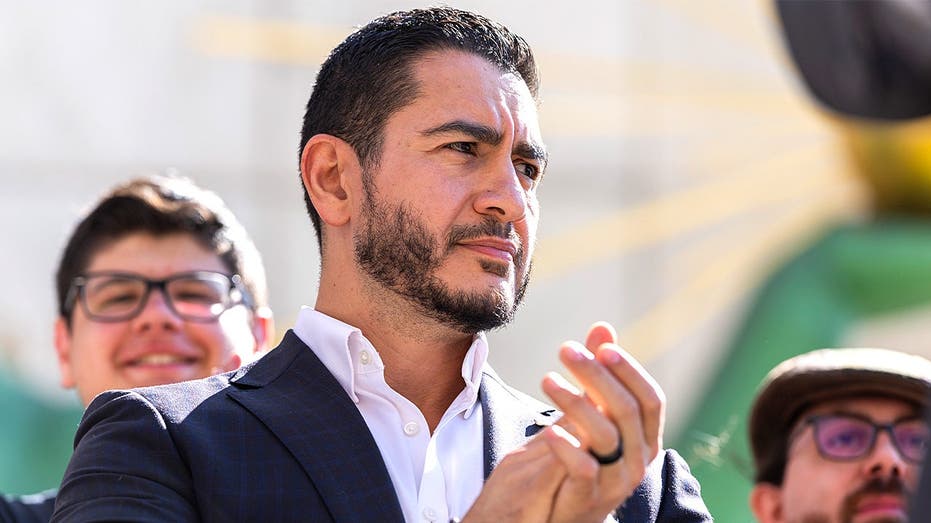

Jewish voters are emerging as a closely watched bloc in Michigan’s Senate race, where concerns about antisemitism and anti-Zionist rhetoric are creating tension within the Democratic Party. Progressive candidate Abdul El-Sayed has faced criticism over political associations and an endorsement linked to Nation of Islam leader Louis Farrakhan. Republican candidate Mike Rogers could benefit if Jewish Democrats shift their support, although the political impact remains uncertain. The controversy comes as Michigan Attorney General Dana Nessel accuses party leaders of failing to respond adequately to antisemitism ahead of the state Democratic convention.
| 1) | Jewish voters become a pivotal constituency |
| 2) | El-Sayed faces scrutiny over an endorsement |
| 3) | Nessel challenges her party’s response |
| 4) | Israel and Gaza claims add to the debate |
| 5) | The broader dispute over antisemitism |
Jewish voters become a pivotal constituency
Jewish voters in Michigan are receiving unusual attention because the state’s electorate can be closely divided. The article describes more than 100,000 Jewish voters as potentially significant in a state decided by about 19,000 votes in 2024. Some lifelong Democrats are reportedly considering support for Republican Mike Rogers, citing concerns about Abdul El-Sayed and the direction of progressive politics.
The shift is presented as a matter of security and political self-preservation by voters who fear that anti-Zionist rhetoric can contribute to hostility toward Jews. Whether those concerns produce a large-scale change in voting patterns will depend on turnout, the candidates’ positions and the broader national and state campaign environment.
El-Sayed faces scrutiny over an endorsement
The controversy surrounding Abdul El-Sayed centers on his public promotion of an endorsement from Detroit pastor Horace Sheffield III. Critics point to Sheffield’s past praise for Louis Farrakhan, the Nation of Islam leader widely condemned for antisemitic statements. The issue has become part of a wider argument about the standards candidates should apply when accepting political support.
The campaign also reportedly paid $75,000 to Sheffield’s nonprofit for consulting services. The payment has intensified questions about the relationship and whether the endorsement was primarily political, financial or both. The available account does not establish wrongdoing, but it shows why the association has become a liability for the campaign.
Nessel challenges her party’s response
Michigan Attorney General Dana Nessel, a Democrat, has criticized her party’s handling of antisemitism before an upcoming Democratic convention. She said she would boycott the gathering because of security concerns and argued that party leaders had not done enough to confront antisemitic conduct.
According to the article, Nessel objected to members accused of making antisemitic threats being permitted to attend while criminal cases were pending. She said the situation undermined civil discourse and could make the August convention especially tense. Her criticism places an internal Democratic dispute alongside the Senate campaign’s debate over political alliances and rhetoric.
Israel and Gaza claims add to the debate
The political dispute is also connected to arguments over Israel’s conduct in Gaza. Israel’s United Nations ambassador, Danny Danon, rejected allegations that Israel deliberately caused starvation in Gaza, describing the claims as a “blood libel” and accusing Hamas of influencing aid distribution and data. The article cites a United Nations-backed survey that it says found child malnutrition had fallen to pre-war levels.
“Right now, however, it feels as though extremism on the left is not only becoming louder, but increasingly normalized. That has created a frightening moment for American Jews and certainly for the Jewish community here in Michigan.”
The statement came from Rabbi Aaron Starr of Congregation Shaarey Zedek in suburban Detroit. Claims about Gaza remain highly contested, and the competing accounts illustrate how international issues are shaping domestic political arguments in Michigan.
The broader dispute over antisemitism
The newsletter also addressed anti-Christian extremism in Israel through commentary by George Deek, described as Israel’s first special envoy to the Christian world. Deek argued that incidents targeting Christians should be prosecuted but said isolated acts do not define Israel. He maintained that Christians in Israel are growing, integrated into public life and serving as judges, diplomats and other leaders.
Taken together, the Michigan campaign, the Democratic convention dispute and the arguments over Israel show how antisemitism has become a fault line within American politics. Candidates and party officials face pressure to condemn prejudice consistently while navigating disagreements over Israel, Gaza, political speech and coalition-building.
| Number | Key Point |
|---|---|
| 1 | Jewish voters may influence a closely contested Michigan Senate race. |
| 2 | Abdul El-Sayed is facing criticism over an endorsement connected to Louis Farrakhan. |
| 3 | Dana Nessel says Michigan Democrats have not done enough to address antisemitism. |
| 4 | Disputed claims about Gaza are influencing the political debate. |
Summary
Michigan’s Senate contest is becoming a test of how concerns about antisemitism, Israel and political alliances affect voting behavior. The controversy has created pressure on Abdul El-Sayed, exposed divisions among Michigan Democrats and given Republican Mike Rogers an opportunity to appeal to voters worried about progressive rhetoric. The eventual effect will depend on whether these disputes translate into turnout and durable changes in party support.
Frequently Asked Questions
Why are Jewish voters important in the Michigan Senate race?
The article identifies more than 100,000 Jewish voters in Michigan and notes that the state was decided by about 19,000 votes in 2024, making the bloc potentially significant.
What criticism has Abdul El-Sayed faced?
Abdul El-Sayed has been criticized for highlighting an endorsement from Horace Sheffield III, who previously praised Louis Farrakhan, and for his campaign’s reported $75,000 consulting payment to Sheffield’s nonprofit.
Why is Dana Nessel boycotting the Democratic convention?
Attorney General Dana Nessel says party leaders have failed to respond adequately to antisemitism and has raised security concerns about allowing members accused of antisemitic threats to attend.
