

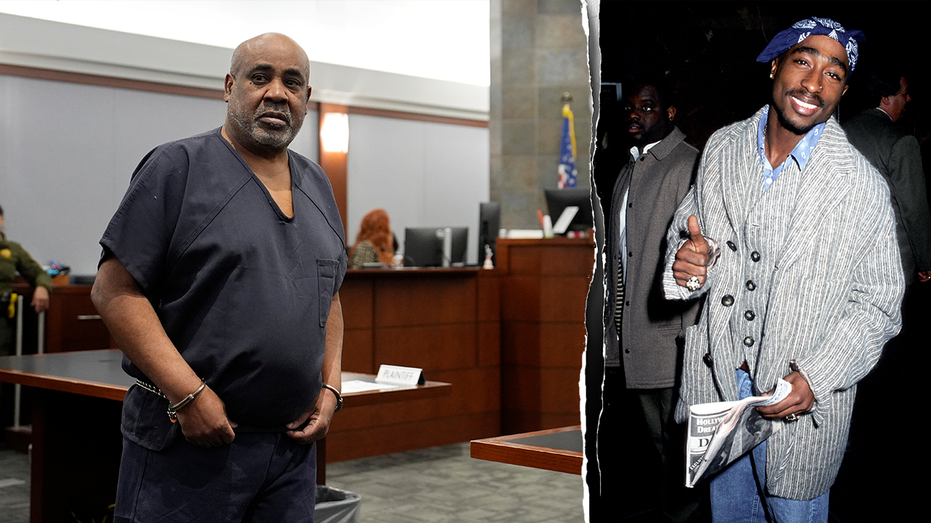

The murder trial of Duane “Keffe D” Davis could hinge on statements he made over several years and the testimony of his ghostwriter, Yusef Jah. Prosecutors allege Davis described his role in the events surrounding the 1996 killing of rapper Tupac Shakur, while the defense argues that portions of Davis’ memoir were fictionalized. A retired Los Angeles police detective said Jah’s testimony could help jurors determine whether the book reflected Davis’ own statements. The case also faces the challenge of a decades-old investigation and witnesses who have been reluctant to cooperate.
| 1) | The ghostwriter’s potential role |
| 2) | Davis’ recorded accounts |
| 3) | The defense challenge to the evidence |
| 4) | The witness cooperation problem |
| 5) | The 1996 shooting and its aftermath |
The ghostwriter’s potential role
Yusef Jah is listed as a potential prosecution witness in the Clark County case. Prosecutors are expected to examine whether Davis’ memoir was based on information Davis personally provided, an issue that could affect how jurors assess the book’s account of the killing. Retired LAPD detective Moses Castillo said the prosecution may ask Jah directly whether he wrote the material from Davis’ statements.
“I suspect that the prosecution is going to have to call the writer of this book and ask him point-blank and directly: Did you write this based on what Davis told you?”
The defense has suggested that some events in the book were fictionalized and should not be treated as admissions. Jah’s testimony, if presented, could therefore become central to the dispute over how the memoir was created and what it proves.
Davis’ recorded accounts
Duane “Keffe D” Davis has discussed the shooting in multiple settings. Prosecutors say he spoke with investigators in 1998, 1999, 2008 and 2009, while also appearing in a television documentary and discussing the events in his book. During the trial’s opening proceedings, prosecutors played portions of statements Davis made in 2008.
According to the prosecution’s presentation, Davis described obtaining the gun and said his nephew, who has since died, fired the shots. Clark County Chief Deputy District Attorney Binu Palal emphasized in opening remarks that Davis was one person who provided information about the shooting, despite the passage of nearly three decades.
The defense challenge to the evidence
Defense attorney Michael Sanft told jurors that they must decide whether the accounts presented in court are facts or fictionalized claims. The defense position is that Davis was not involved in the crime and that investigators did not adequately test the allegations contained in his book.
“What they are telling you, they’re representing it to be a fact when it really is fiction. And it’s up to you to determine what the facts are in this case.”
Sanft also argued that investigators did not interview other people allegedly in the suspect vehicle before those potential witnesses died. That argument places the reliability, corroboration and timing of Davis’ accounts at the center of the defense strategy.
The witness cooperation problem
The prosecution must present its case against the backdrop of a gang-related investigation in which witnesses were reluctant to be identified as informants. Castillo said the informal warning that “snitches get stitches” reflected the pressure surrounding cooperation and could make testimony difficult to obtain.
Marion “Suge” Knight, who co-founded Death Row Records and was in the car with Shakur during the shooting, was wounded but survived. Knight is also listed as a potential witness, although he has said he does not want to testify if called. He is currently serving a 28-year prison sentence after pleading no contest to voluntary manslaughter in 2018.
The 1996 shooting and its aftermath
The shooting occurred on Sept. 7, 1996, on the Las Vegas Strip. Authorities say a gunman in a white Cadillac opened fire on a BMW carrying Shakur and Knight. Knight suffered minor injuries, while Shakur died six days later at age 25.
Davis’ trial comes nearly 30 years after the killing, making the preservation and reliability of older statements especially important. Prosecutors are relying on Davis’ interviews and memoir-related evidence, while the defense is asking jurors to view those materials as unverified or fictionalized accounts rather than proof of guilt.
| No. | Key Point |
|---|---|
| 1 | Yusef Jah is on the prosecution’s witness list and may be questioned about Davis’ memoir. |
| 2 | Prosecutors have presented Davis’ interviews and his account of the gun and alleged shooter. |
| 3 | The defense disputes the factual value of Davis’ book and highlights a lack of corroboration. |
| 4 | The 1996 shooting killed Tupac Shakur and injured Marion “Suge” Knight. |
Summary
The trial is centered on whether Davis’ repeated accounts, including material in his memoir, can be treated as reliable evidence. Jah could provide important testimony about the origin of that material, while the defense is challenging its accuracy and the investigation’s lack of independent verification. The age of the case and reluctance among potential witnesses remain significant obstacles for prosecutors.
Frequently Asked Questions
Who is on trial in the Tupac Shakur murder case?
Duane “Keffe D” Davis is facing trial in connection with the 1996 killing of Tupac Shakur.
Why could Yusef Jah be important to the prosecution?
Yusef Jah is Davis’ ghostwriter and may be asked whether the memoir was based on statements Davis gave him.
What is the defense arguing?
The defense argues that portions of Davis’ book were fictionalized, that Davis was not involved in the crime and that investigators failed to adequately verify the claims.
