

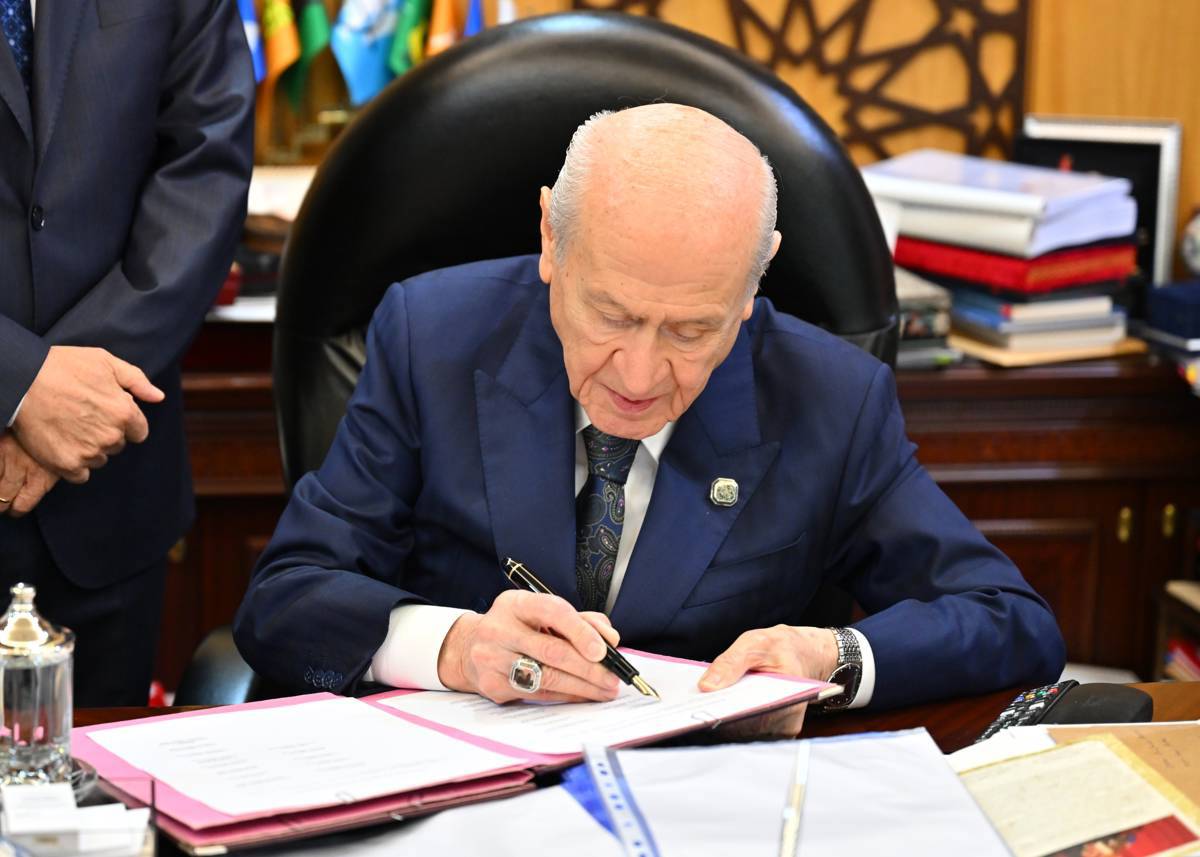

In response to escalating tensions following an Israeli airstrike close to the Turkish border, Devlet Bahçeli, the leader of a prominent nationalist party, has proposed a detailed seven-point plan aimed at containing Israel’s military actions in the region. This proposal comes in the wake of a strike that has heightened concerns about regional stability and security, particularly as it occurred in an area already subject to complex geopolitical dynamics. Bahçeli’s plan emphasizes collaboration among Muslim-majority countries and outlines a multifaceted approach involving both diplomatic and security measures.
| Article Subheadings |
|---|
| 1) Context Surrounding the Israeli Airstrike |
| 2) Bahçeli’s Stance on Regional Security |
| 3) Outline of the Seven-Point Plan |
| 4) Responses from the International Community |
| 5) Implications for Regional Stability |
Context Surrounding the Israeli Airstrike
The recent Israeli airstrike, which targeted a military site in northwestern Syria, has intensified scrutiny of Israel’s military strategies in the region. Occurring just under 100 kilometers from the Turkish border, the airstrike has drawn immediate condemnation from Ankara, which claims that Israeli actions reflect an aggression toward Turkey’s territorial sovereignty. Israeli officials have justified their action as necessary for national security, stating that it was directed against Turkey’s alleged military presence in Syria. However, Ankara fiercely denies any military deployment in the area, insisting that its involvement pertains solely to humanitarian efforts and regional stability initiatives.
This airstrike is part of a broader pattern of Israeli military engagements in Syria, which Israel claims are designed to counter the influence of hostile actors in the region. The tensions between the two nations reflect longstanding historical grievances and highlight the complex interplay of alliances and rivalries within the Middle East, particularly in the wake of the Syrian Civil War. With recent developments, there are concerns that this event could serve as a catalyst for further escalations between Turkey and Israel, eliciting responses not only from those directly involved but also from regional and global powers.
Bahçeli’s Stance on Regional Security
In light of the attack, Devlet Bahçeli has articulated a strong position against what he considers to be Israeli expansionism and military overreach. Emphasizing that Turkey is not a nation that seeks confrontation, he has nonetheless asserted that Ankara will not turn a blind eye to threats that undermine its sovereignty and security. Bahçeli criticized the Israeli government for its actions, claiming they violate international law and peace agreements. He developed a narrative that contrasts Turkey’s peaceful intentions with Israel’s perceived aggressiveness, labeling the latter’s military actions as reprehensible and destabilizing.
Bahçeli’s rhetoric stresses Turkey’s historical role as a sanctuary for Jewish communities throughout various trials, expressing disappointment that diplomatic relations have devolved into hostility. He believes that Israel’s actions threaten not only Turkish security but also peace across the broader Middle Eastern landscape. By framing the conflict as one between an aggressor and a defender, Bahçeli aims to rally not only national support but also influence perceptions among regional allies and Muslim nations.
Outline of the Seven-Point Plan
The centerpiece of Bahçeli’s response to recent events is his proposed seven-point plan, which aims to strengthen regional alliances and create a unified front against Israeli military actions. The plan encompasses several significant proposals:
- Expansion of the Mecca Agreement: Bahçeli advocates for the existing defense pact involving Turkey, Saudi Arabia, and Pakistan to expand, eventually transforming into a “Jerusalem Pact” that would cover additional Muslim nations under a single security umbrella.
- Formation of a Middle East Peace Council: He proposes setting up a temporary council composed of major powers including the United States, Russia, China, and the European Union, to facilitate discussions aimed at restoring stability in the region.
- Hosting a Middle East Security and Peace Conference: Under the auspices of the United Nations, Bahçeli suggests convening a conference to outline a roadmap for establishing a lasting peace between Israel and Palestine, focusing on a two-state solution.
- Issuance of an Ankara Declaration: An official statement from Turkey would clarify its regional security principles, emphasizing its readiness to respond to potential Israeli aggression and reaffirming its commitment to peace and stability.
- Establishment of a Ceasefire Monitoring Mission: He insists that ceasefires should have international oversight through a neutral mission established by the UN to ensure compliance and sustainability.
- Institutionalizing diplomatic mediation: Instead of relying on individual country-led efforts, Bahçeli calls for a structured approach to diplomacy that would enable consistent and reliable engagement with conflicting parties.
- Gradual Diplomatic Pressure Mechanism: Lastly, Bahçeli advocates for a carefully graduated approach to diplomatic appeals and sanctions, learning from previous failures to foster stability and security in the region.
This seven-point plan reflects a comprehensive strategy aiming to enhance collective security among Muslim nations while simultaneously addressing and countering Israeli military actions that he defines as unlawful.
Responses from the International Community
Reactions to Bahçeli’s proposal from the international community have been mixed, reflecting the deep divisions and varied interests that characterize Middle Eastern geopolitics. Some analysts express support for the idea of a unified Muslim front, arguing that it may galvanize efforts to address shared security concerns in a region often marked by fragmentation and isolationist tendencies.
However, other observers caution that such initiatives might provoke further tensions rather than foster dialogue. For example, Israel and its allies may regard Bahçeli’s proposed measures as escalating rather than de-escalating the conflict. Consequently, they might respond with heightened military readiness or diplomatic countermeasures, which could spiral into broader conflict.
Nations outside the region, particularly Western powers, are likely to be scrutinizing Bahçeli’s proposals for their potential impacts on existing treaties and alliances. The U.S. has historically supported Israel, which could complicate its response to a regional coalition aimed at limiting Israeli actions.
Implications for Regional Stability
The ripple effects of Bahçeli’s proposed plan could significantly alter the landscape of Middle Eastern politics. By advocating for stronger military alliances and collective security pacts among Muslim nations, he aims to present a unified challenge to perceived Israeli aggression while simultaneously strengthening Turkey’s leadership role in the region.
Historically, such collaborative ventures have faced substantial hurdles due to competing national interests and divergent political agendas among member nations. Thus, the realization of Bahçeli’s vision may hinge on the ability to navigate these complexities and foster genuine dialogue.
The long-term implications for stability in the Middle East are yet to be determined. While greater cooperation could conceivably lead to more robust regional security frameworks, it may also ignite further confrontations as nations align themselves along ideological lines. The coming months will be pivotal in revealing whether Bahçeli’s plan can translate from an abstract proposal into effective action.
| No. | Key Points |
|---|---|
| 1 | The Israeli airstrike near the Turkish border has exacerbated tensions in the region. |
| 2 | Devlet Bahçeli has proposed a seven-point plan aimed at countering Israeli military actions. |
| 3 | The plan focuses on enhancing Muslim nation alliances through structured defense and collective action. |
| 4 | International reactions to Bahçeli’s proposals indicate both support and concern regarding potential escalations. |
| 5 | The potential outcomes of the plan could profoundly impact regional stability and diplomatic relations. |
Summary
In summary, Devlet Bahçeli‘s seven-point plan represents a significant moment in the geopolitical landscape of the Middle East, particularly in response to Israeli actions that threaten regional security. While seeking to unify Muslim nations under a common agenda, the effectiveness of this plan remains uncertain, with challenges likely to arise from both internal divisions within the region and external pressure from global powers. As developments unfold, the implications of Bahçeli’s proposals will be closely monitored, with critical ramifications for Turkey, Israel, and broader Middle Eastern dynamics.
Frequently Asked Questions
Question: What prompted Devlet Bahçeli’s seven-point plan?
The plan was prompted by a recent Israeli airstrike near the Turkish border, which has led to increased tensions between Turkey and Israel regarding military actions in the region.
Question: How does Bahçeli’s plan aim to enhance regional security?
Bahçeli’s plan aims to enhance regional security by proposing expanded alliances among Muslim nations, establishing monitoring mechanisms, and promoting diplomatic resolutions to conflicts, as well as advocating for a collective defense pact.
Question: What concerns do observers have regarding the proposed plan?
Observers express concerns that the plan could provoke further tensions and conflict, emphasizing the need for careful navigation of geopolitical interests to avoid escalations that could destabilize the region even more.
