


Christian Castro, an ICE agent facing assault charges in Minnesota, could leave a Texas jail Thursday after a federal judge rejected Minnesota’s emergency request to block his release. U.S. District Judge Fernando Rodriguez Jr. ruled that Minnesota’s lawsuit was premature because Texas Gov. Greg Abbott has not approved or denied the state’s extradition request. Castro’s 90-day detention period under Texas law is set to expire unless a court order or rendition warrant intervenes. The decision leaves his immediate custody status in Abbott’s hands.
| 1) | Federal judge rejects emergency detention request |
| 2) | Minnesota cites flight concerns and extradition risks |
| 3) | Texas review continues without a set deadline |
| 4) | Assault case stems from January ICE operation |
| 5) | Ruling intensifies dispute over federal agent prosecutions |
Federal judge rejects emergency detention request
Judge Fernando Rodriguez Jr. denied Minnesota’s request for a temporary restraining order that would have barred Cameron County Sheriff Manuel Trevino from releasing Christian Castro. The request sought to keep Castro in the Cameron County Jail while Texas considered whether to surrender him to Minnesota. The judge concluded that Minnesota had not met the legal requirements for emergency relief.
Castro’s detention period under Texas law expires Thursday. His counsel indicated that, without a court order or a rendition warrant signed by Gov. Greg Abbott, the sheriff’s office would release him. The ruling therefore does not resolve the Minnesota criminal case, but it removes an immediate federal barrier to Castro’s possible release.
Minnesota cites flight concerns and extradition risks
Minnesota asked the federal court to require Abbott to issue a rendition warrant and prevent Castro from leaving custody in the meantime. State officials argued that Castro could flee to Mexico, citing jail calls with a woman identified in court filings as his romantic partner and resident of Progreso, Mexico.
The calls reportedly included discussions about purchasing property and moving to Mexico in the future. Minnesota argued that Castro’s departure from the United States could make his return difficult and delay prosecution for months or years. The judge acknowledged the state’s concerns but found that the legal dispute was not yet ready for adjudication because Abbott had not rejected the extradition request.
Texas review continues without a set deadline
Minnesota formally sought Castro’s extradition in early June, after he was arrested in Cameron County on the state’s warrant. Abbott directed the Texas secretary of state to investigate whether Castro should be surrendered, a process authorized under Texas’ Uniform Criminal Extradition Act.
The court noted that Abbott has considered the request for an unusually long period, but it found no constitutional or statutory deadline requiring him to complete the review by a specific date. The judge wrote:
“The record reflects only that Governor Abbott has neither agreed nor refused to sign the rendition warrant as to Castro.”
The order said Minnesota’s lawsuit was premature because the governor had not yet taken a final position.
Assault case stems from January ICE operation
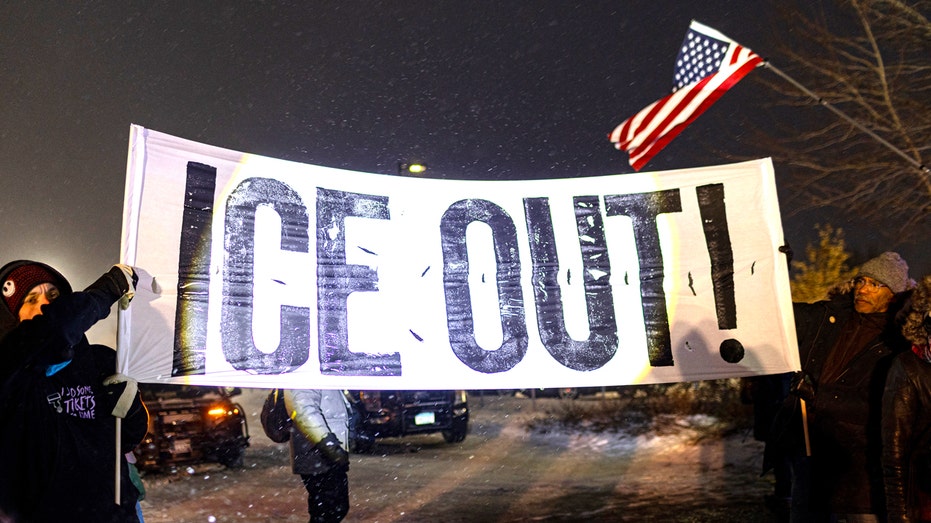
Minnesota prosecutors charged Castro in May with four felony counts of second-degree assault and one misdemeanor count of falsely reporting a crime. The charges arise from a January ICE operation in Minnesota during which, according to the court order, Castro fired one shot through the closed front door of a home and wounded a person in the leg.
The shooting prompted protests in north Minneapolis and became part of a wider conflict over the conduct of federal immigration officers. Minnesota officials have maintained that the alleged actions fell outside Castro’s federal duties. The charges remain allegations, and Castro has not been convicted in the case.
Ruling intensifies dispute over federal agent prosecutions
The extradition dispute is part of a broader political and legal clash involving Minnesota officials, Texas authorities and the Trump administration over state prosecutions of ICE personnel. Homeland Security officials have characterized Minnesota’s prosecution efforts as a political stunt, while Minnesota officials have argued that federal status does not shield agents from accountability for alleged state crimes.
Abbott has also questioned whether Castro qualifies as a fugitive because he returned to Texas at the direction of federal immigration officials after the January incident. Rodriguez expressed doubts in a footnote, writing that established case law appears to focus on whether an accused person left the state rather than the reason for leaving. The judge said that issue did not change the outcome of the emergency request.
| Number | Key Point |
|---|---|
| 1 | The federal judge denied Minnesota’s emergency request. |
| 2 | Castro’s 90-day Texas detention period expires Thursday. |
| 3 | Abbott has not approved or denied Minnesota’s extradition request. |
| 4 | Castro faces five charges connected to a January shooting. |
Summary
The ruling does not determine whether Castro will ultimately be extradited or tried in Minnesota. It establishes only that Minnesota cannot compel immediate detention while Texas’ executive review remains unresolved. Unless Abbott signs a rendition warrant or another court order is issued, Castro is expected to leave the Cameron County Jail when the statutory detention period ends.
Frequently Asked Questions
Why did the judge reject Minnesota’s request?
The judge ruled that Minnesota’s lawsuit was premature because Abbott had not yet denied the extradition request or made a final decision.
When could Castro be released?
Castro could be released Thursday, when his 90-day detention period expires, unless a rendition warrant or court order keeps him in custody.
What charges does Castro face?
He faces four felony counts of second-degree assault and one misdemeanor count of falsely reporting a crime related to a January ICE operation in Minnesota.
