

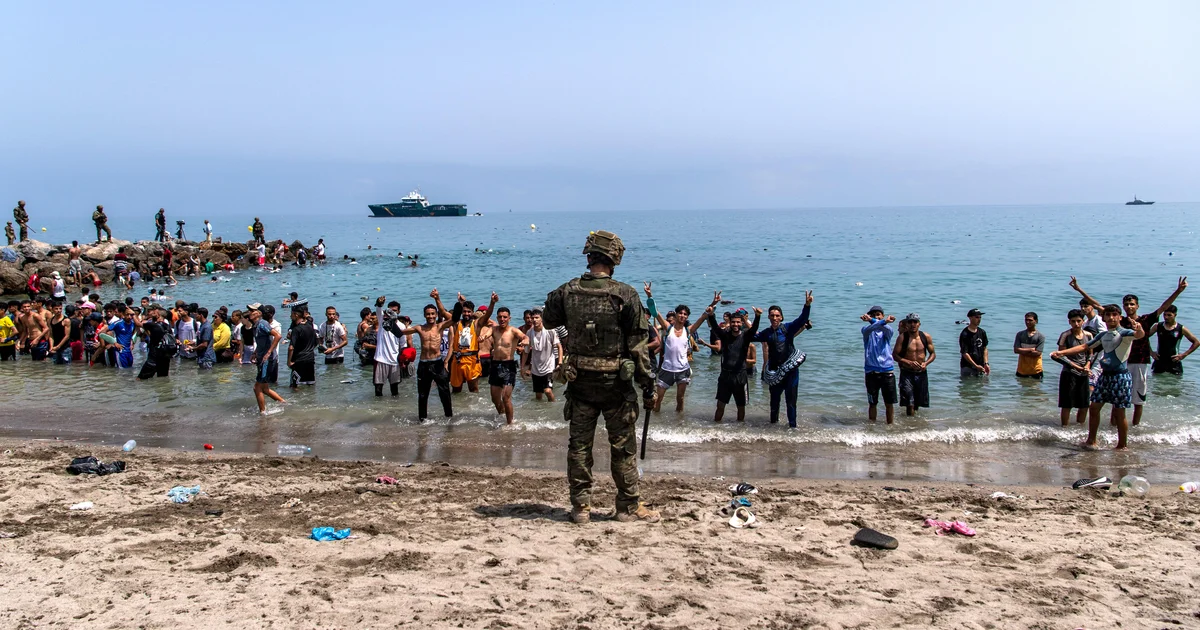

In a recent development concerning the migration crisis in Ceuta, Spanish Prime Minister Pedro Sánchez has raised serious allegations that networks linked to Russia and Israel have been disseminating disinformation surrounding the crisis. This comes on the heels of an enormous wave of migrants, exceeding 72,000, crossing the border from Morocco into the autonomous Spanish territory, with tragic consequences resulting in significant loss of life. With political tensions escalating, Sánchez has emphasized that the current situation is intertwined with broader geopolitical issues, particularly Spain’s stances on the Israeli-Palestinian conflict and the war in Ukraine.
| Article Subheadings |
|---|
| 1) Accusations of Disinformation |
| 2) The Migrant Crisis Unfolds |
| 3) Responses from Israel and Russia |
| 4) Spain’s Migration Policy Under Debate |
| 5) International Reactions and the Future |
Accusations of Disinformation
In an interview with Spanish radio network Cadena SER, Prime Minister Sánchez claimed that following the mass border crossings in late July, various social media networks, allegedly linked to both Russia and Israel, began spreading disinformation regarding the event. He asserted that these nations are exploiting the migration issue in retaliation for Spain’s foreign policy positions, particularly concerning the ongoing war in Ukraine and the situation in Gaza. His statement reflects an increasing concern over how misinformation can exacerbate political tensions and influence public sentiment regarding sensitive issues like migration.
During the interview, Sánchez pointed to research conducted by the European External Action Service (EEAS), indicating that these foreign networks played a role in disseminating misleading information about the circumstances surrounding the influx of migrants. While the specifics of the EEAS research were not disclosed, Sánchez’s remarks suggest a larger concern regarding international efforts to manipulate public discourse. “It is evident that if [foreign nations] get involved in spreading disinformation on this issue, it is not out of concern for migration but as a reaction to our political stances,” he claimed, labeling his government’s positions on these issues as “courageous.”
The Migrant Crisis Unfolds
Between July 30 and 31, more than 72,000 migrants from Morocco surged across the border into Ceuta, resulting in a significant humanitarian crisis. The influx was reportedly accompanied by chaos and despair, leading to at least 70 fatalities as individuals attempted to cross into the Spanish territory, which is located on the North African coast. By the end of August, approximately 5,000 migrants, including 1,200 minors, remained in Ceuta, a figure that has significant implications for both Spain and the wider European context concerning migration.
The Spanish government has maintained a policy of returning the vast majority of these migrants back to Morocco, a decision aimed at controlling the situation and minimizing the repercussions on Spanish national resources. Nevertheless, the humanitarian aspect of this crisis has raised critical ethical questions about migrant rights and Spain’s responsibilities under international law. Prime Minister Sánchez reaffirmed his commitment to a cooperative immigration strategy with Moroccan authorities, asserting that collaboration rather than confrontation is essential to navigate this complex issue.
Responses from Israel and Russia
In the wake of Sánchez‘s accusations, officials from both Israel and Russia have vehemently rejected the claims. Israeli Foreign Minister Gideon Saar publicly labeled the Spanish leader’s comments as “brazen lies,” describing them as attempts to deflect attention from failures in managing domestic affairs. He tweeted, “Prime Minister @sanchezcastejon is lying shamelessly, astonishingly accusing Israel of disseminating misleading information regarding the events in Ceuta.”
Additionally, Russian officials have also dismissed the allegations as unfounded. Statements from the Kremlin spokespersons emphasize that the accusations are without merit, attempting to reassure the international community of their non-involvement in the crisis. This back-and-forth between governments highlights the contentious international atmosphere as different countries address their immigration challenges, often blaming one another to divert attention from internal failures and political conflicts.
Spain’s Migration Policy Under Debate
The recent crisis has ignited broader discussions regarding Spain’s migration policy and its implications within the European Union. Following the sudden influx, leaders from 22 EU member states expressed alarm, emphasizing the necessity to combat illegal migration more effectively. In a joint letter, they underscored that countries must enhance their external borders and coordinate actions to deter irregular migration effectively.
Critics of Spain’s approach point to recent policy changes that involve the regularization of large numbers of undocumented migrants, with over 1.1 million applications submitted. While this initiative aims to integrate undocumented migrants into society and the workforce, opponents argue it may serve as a pull factor, attracting more migrants to Europe. As the crisis unfolds, the implications of these policies will likely remain a contentious point in both domestic and EU-wide discussions on migration and border control.
International Reactions and the Future
As the situation in Ceuta continues to develop, reactions from various sectors of the international community are anticipated. Calls for more coordinated efforts to address the root causes of migration, including poverty and conflict in migrants’ home countries, are increasingly prominent. Moreover, the ongoing geopolitical tensions may further complicate Spain’s approach as it seeks both to manage migration pressures and to navigate its relationships with other nations involved.
Undoubtedly, as Sánchez advocates for a cooperative relationship with Morocco to address these immigration issues, the effectiveness of such a strategy will be scrutinized both domestically and abroad. The coming months will be crucial as Spain confronts not only the humanitarian aspects of this crisis but also the broader political dynamics shaping European migration policies.
| No. | Key Points |
|---|---|
| 1 | Spanish Prime Minister Pedro Sánchez has accused Russia and Israel of spreading disinformation regarding the migration crisis in Ceuta. |
| 2 | More than 72,000 migrants crossed from Morocco into Ceuta, leading to significant humanitarian concerns. |
| 3 | Officials from Israel and Russia have denied the accusations of disinformation, labeling them as politically motivated statements from Spain. |
| 4 | Spain is experiencing scrutiny over its migration policies, particularly its new regularization program for undocumented migrants. |
| 5 | The situation in Ceuta reflects ongoing geopolitical tensions and the need for a coordinated response among EU member states. |
Summary
The recent crisis in Ceuta has exposed deep-seated issues not only with migration policies but also with international relations amid rising tensions concerning the Israeli-Palestinian conflict and the war in Ukraine. As Spanish Prime Minister Pedro Sánchez navigates these challenging waters, accusations of foreign disinformation complicate an already fraught situation. The legitimacy of Spain’s immigration policies will continue to be scrutinized in light of this crisis, demanding a balanced approach that prioritizes humanitarian concerns while also addressing the political fallout across Europe.
Frequently Asked Questions
Question: What is the migration crisis in Ceuta?
The migration crisis in Ceuta refers to the overwhelming influx of migrants from Morocco to the Spanish enclave, surpassing 72,000 individuals in a short period, which has raised significant humanitarian and political concerns.
Question: Why did Prime Minister Sánchez accuse Russia and Israel of disinformation?
Prime Minister Sánchez accused these countries of spreading false information to exploit the migration issue as a political tool in response to Spain’s foreign policy stances regarding the Israeli-Palestinian conflict and the Russian invasion of Ukraine.
Question: How have other countries responded to the situation in Ceuta?
European leaders have expressed alarm over the crisis and called for a coordinated response to illegal migration, emphasizing the need for enhanced border security and cooperation among member states.
