

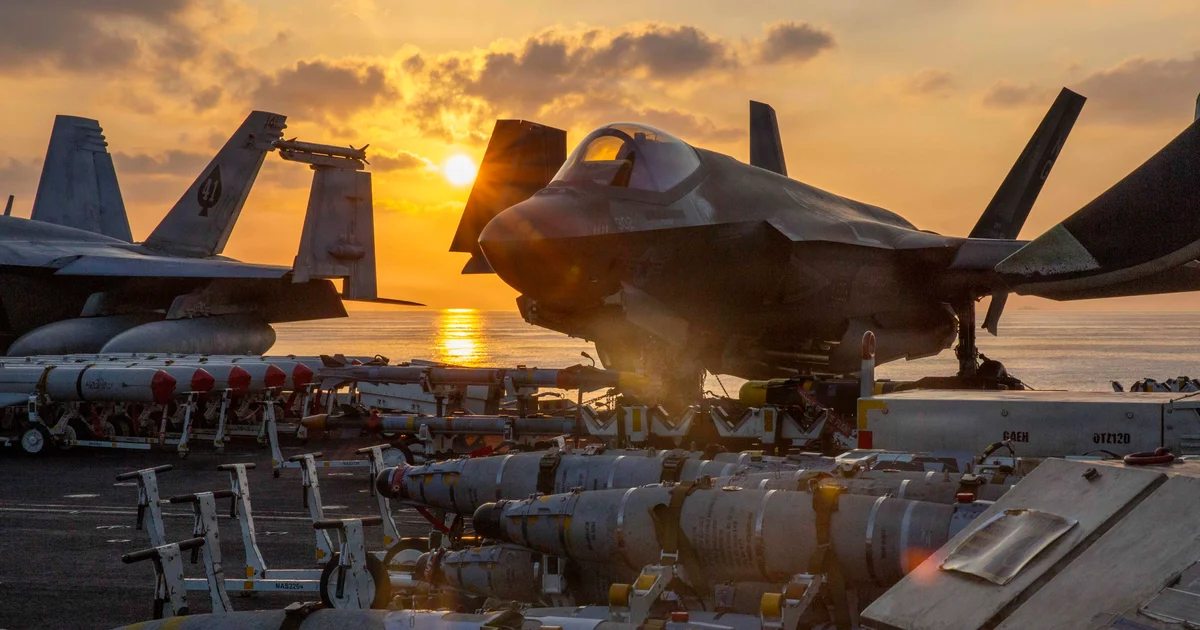

The United States is currently grappling with a significant ammunition shortfall due to the ongoing conflict in Iran, as outlined in a recent report by the Defense Department’s inspector general. This unprecedented report provided insights into the financial implications of Operation Epic Fury (OEF), revealing that the operation has cost approximately $33.4 billion, with expended munitions accounting for a substantial $22.3 billion of that total. The report also highlights the adverse effects on strategic inventory levels and the production capacities of munitions within the defense industry.
| Article Subheadings |
|---|
| 1) Overview of Operation Epic Fury Costs |
| 2) Impact on U.S. Military Assets |
| 3) Analysis of Defense Production Challenges |
| 4) Responses from Government Officials |
| 5) Future Implications for U.S. Military Strategy |
Overview of Operation Epic Fury Costs
Operation Epic Fury (OEF) has significantly strained U.S. military resources, with costs surging to an estimated $33.4 billion between February 28 and June 30. Of this staggering amount, $22.3 billion has already been expended on munitions alone, pointing to an accelerated use of military assets. This report is the first of its kind to give Congress a formal overview of the military operations’ financial ramifications and sets a worrying precedent for future military engagements.
Such extensive expenditure has not only depleted existing stocks but has also raised critical concerns about the U.S. military’s ability to sustain operations over the long term. The inspector general’s report indicates that the continuous expenditure has led to strategic inventory shortfalls and identified bottlenecks in the industrial base responsible for supplying munitions, raising alarms about future readiness and capability.
Impact on U.S. Military Assets
The ongoing conflict has resulted in significant losses of key U.S. military assets. Notably, the report indicates that four F-15 jets have been destroyed, and one F-35 has been damaged alongside seven KC-135 tanker aircraft suffering from damage. Additionally, the report reveals that up to 30 MQ-9 Reaper drones have been lost during the ongoing military operations. Each asset lost represents a substantial financial and strategic setback for the U.S. military.
The implications of these losses extend beyond immediate replacements; they affect operational capabilities in theater and can slow down ongoing and future operations. The substantial asset damage and loss rates compel a systemic review within the military establishment on how future engagements are conducted and managed.
Analysis of Defense Production Challenges
In light of the findings, defense officials and industry leaders have begun expressing concerns about the capability of the defense industrial base to meet the high demands for munitions. During a recent oversight visit to Lockheed Martin’s production facility in Arkansas, details emerged regarding their capacity and challenges. The defense industry is now producing 750 Patriot air defense missiles annually, each costing around $4 million.
Experts, like Mark Cancian from the Center for Strategic and International Studies, have suggested that while the U.S. has enough munitions for the current conflict, challenges may arise with prolonged engagements, especially in scenarios involving other adversaries such as China. Cancian emphasized that sustaining such a high level of production over the long term would require strategic adjustments and potentially significant increases in manufacturing capabilities.
Responses from Government Officials
The White House has taken a cautiously optimistic position amid the increasing concerns regarding munitions shortages. President Trump has downplayed worries about depleted stocks, claiming that the U.S. military has “virtually unlimited” munitions, a statement made just weeks prior to the report’s release. On his Truth Social platform, he highlighted that the U.S. is producing “more Exquisite and Elite Weapons than at any time in our History,” aiming to bolster public confidence in the defense manufacturing sector.
However, there is an apparent contradiction between public reassurances and the findings of the inspector general, indicating a potential gap in the communication and operational realities faced by the military. The Defense Secretary, Pete Hegseth, is pressing the defense industry to ramp up production, underscoring the urgent need for a collaborative effort between governmental oversight and industry capabilities.
Future Implications for U.S. Military Strategy
The ramifications of the report extend beyond immediate concerns, signaling potential long-term shifts in U.S. military strategy. As the landscape of global conflicts evolves, the United States may need to reconsider its operational frameworks and readiness strategies to effectively respond to the complex global threats being faced. Continuous expenditure patterns observed in OEF may compel the Pentagon to take a nuanced approach, balancing between the need for strategic superiority and the implications of sustained financial outlay.
In conclusion, the current conflict in Iran is shaping a pivotal moment for U.S. military readiness, manufacturing, and broader strategic approaches. Policymakers, military strategists, and defense contractors will likely need to engage in robust discussions regarding future priorities, operational sustainability, and the health of the defense industrial base to avoid facing resource shortfalls in future conflicts.
| No. | Key Points |
|---|---|
| 1 | Operation Epic Fury has cost the U.S. approximately $33.4 billion, significantly impacting ammunition and resources. |
| 2 | The U.S. military has experienced substantial losses, including four F-15 aircraft and damages to numerous other assets during the conflict. |
| 3 | Concerns are growing regarding the defense industrial base’s capacity to meet munitions demands for sustained operations. |
| 4 | Government officials, including President Trump, have downplayed the severity of the ammunition shortfall, asserting that the U.S. has ample supplies. |
| 5 | Long-term military strategies may need reevaluation based on the findings of the inspector general report and ongoing conflict in the region. |
Summary
In conclusion, the ongoing conflict in Iran is posing significant challenges for U.S. military logistics, operational readiness, and strategic foresight. The insights provided by the inspector general’s report highlight critical issues surrounding resource depletion, the impact on military assets, and the ongoing discourse around defense manufacturing capabilities. As U.S. military leaders work to address these issues, the long-term implications for the defense-industrial complex and military strategy will be essential in shaping future military readiness in volatile environments.
Frequently Asked Questions
Question: What is the significance of Operation Epic Fury?
Operation Epic Fury has led to unprecedented military spending by the U.S. and raised alarms about ammunition shortages and operational capabilities.
Question: What is being done to address munition shortfalls?
Government officials and defense contractors are working collaboratively to address production challenges and increase munitions manufacturing.
Question: How has the conflict impacted U.S. military assets?
The conflict has resulted in considerable losses of key air assets, including fighter jets and drones, which may affect U.S. operational capabilities in the region.
