

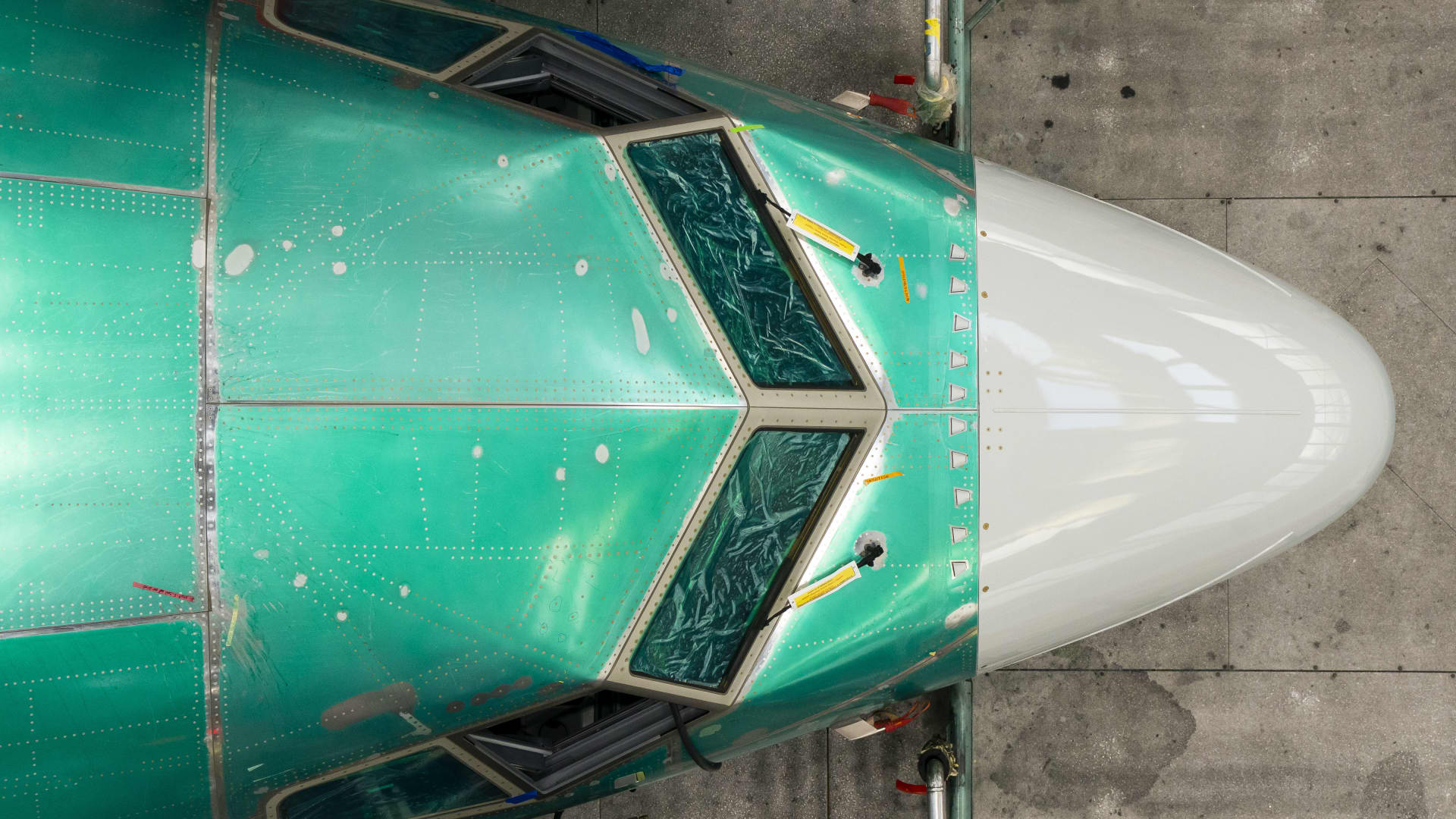

Boeing has reported a software glitch affecting certain landing procedures of its 737 Max aircraft, which could impact its upcoming federal approval for the new Max 10 model. The Federal Aviation Administration (FAA) is evaluating the issue and preparing to take action as necessary. Although airlines are assured that no flights are at risk, the incident raises questions about the overall regulatory process and the reliability of Boeing’s safety measures following previous crises.
| Article Subheadings |
|---|
| 1) Boeing’s Identification of the Glitch |
| 2) FAA’s Response to the Issue |
| 3) Impact on Airlines and Operations |
| 4) History of Challenges with the 737 Max |
| 5) The Future of the 737 Max Series |
Boeing’s Identification of the Glitch
Boeing formally announced that a software glitch was detected last month on certain 737 Max aircraft models, specifically impacting landing procedures under particular circumstances. The glitch could occur if pilots mismanage a preprogrammed flight path after a missed approach. In such cases, additional manual steps may be required for pilots to utilize the automated tools necessary for subsequent approach landings. This identification follows a thorough internal evaluation conducted by Boeing engineers to monitor any potential safety inefficiencies in its aircraft systems.
Boeing has actively communicated the issue to its airline operators, emphasizing that pilots are sufficiently trained to execute safe manual landings without reliance on the automated systems. Despite this, the manufacturer is developing a software update intended to remedy the glitch comprehensively. This proactive approach aims to reinforce confidence in both the aircraft and Boeing’s response to any safety concerns as it prepares to submit fixes to the FAA for approval.
FAA’s Response to the Issue
The FAA responded to Boeing’s announcement by stating that it is currently assessing the situation and evaluating the potential impact on safety. Officials emphasized their commitment to maintaining stringent safety standards and will act decisively should they determine that there is a genuine risk. The FAA has a significant role in reviewing Boeing’s proposed software updates and ensuring they meet required safety protocols before implementation.
As part of their oversight, the agency has monitored Boeing’s adherence to safety regulations, especially given the controversial history surrounding the 737 Max series. With newfound scrutiny over these developments, the FAA is likely to engage in meticulous inspections to ensure that the integrity and safety of the aircraft are never compromised.
Impact on Airlines and Operations
As news of the software glitch broke, U.S. airlines including Southwest Airlines and United Airlines confirmed that their fleets do not currently have the updated models of the Max 8 and Max 9 aircraft equipped with this problematic software. Both airlines have made it clear that they are working closely with Boeing and the FAA while remaining engaged in discussions regarding the operational implications of this incident.
Southwest Airlines specifically noted that they are “aware of the issue” and mentioned that none of their aircraft possess the software version implicated in the glitch. Other carriers like Alaska Airlines, who are in line to take delivery of the Max 10, have also expressed concern. Their representatives have stated they are monitoring the situation and will ensure compliance with the necessary procedures as discussions with Boeing progress.
History of Challenges with the 737 Max
The current software glitch is yet another challenge for Boeing’s 737 Max series, which has already dealt with significant scrutiny following two tragic crashes involving the Max 8 model in 2018 and 2019 that resulted in 346 casualties. The flawed flight control software was identified as a key factor contributing to these incidents, leading to widespread grounding of the aircraft and intense regulatory reviews globally.
Despite thorough revisions in systems and procedures post-crisis, every new report of complications continues to stir public concern regarding the safety of Boeing’s aircraft. The airline industry and regulatory bodies are keenly aware that confidence in air travel largely hinges on the trusted operational safety of aircraft models. Therefore, the repercussions of the recent glitch could prompt additional investigations and audits of Boeing’s manufacturing and safety assurance protocols.
The Future of the 737 Max Series
The 737 Max series, which boasts a total of 2,430 aircraft currently operational worldwide according to aviation analytics, has a pivotal future ahead. The introduction of the Max 10 is particularly anticipated, as it represents the next evolution in Boeing’s best-selling aircraft family. The FAA certified the Max 7 earlier this month, but the prospects for deliveries and operations with outdated software remain uncertain.
Despite these challenges, Boeing Chief Executive Officer Kelly Ortberg expressed optimism that certification for the Max 10 would come “very soon.” Nevertheless, the need for stringent checks and balances across the airline’s operations will be paramount in ensuring that future models meet the rigorous safety standards expected by regulators and passengers alike. Boeing is also working on a robust procedure that would empower pilots to re-enable automated vertical navigation in case of emergencies.
| No. | Key Points |
|---|---|
| 1 | Boeing announced a software glitch on its 737 Max that may affect landing procedures. |
| 2 | The FAA is reviewing the problem and intends to take action if a safety concern is identified. |
| 3 | Major airlines have confirmed they do not currently operate the models with the implicated software. |
| 4 | The incident follows Boeing’s previous challenges related to the 737 Max series after two fatal crashes in 2018 and 2019. |
| 5 | Boeing aims to finalize delivery and certification for the new Max 10 model amid ongoing scrutiny. |
Summary
The recent discovery of a software glitch in Boeing’s 737 Max aircraft underscores the ongoing challenges faced by the aerospace giant as it works towards regulatory approvals for new models. The FAA’s assessment and the responses from U.S. airlines reflect the cautious approach necessary to ensure public safety in aviation. As Boeing navigates through these complexities, the resolution of these issues may determine the future success and trust in the 737 Max series.
Frequently Asked Questions
Question: What is the software glitch affecting the Boeing 737 Max?
The software glitch could impact certain landing procedures when pilots miss a preprogrammed flight path, requiring them to take additional manual steps.
Question: How is the FAA involved with Boeing’s software issues?
The FAA is assessing the potential safety risks associated with the software glitch and will act promptly if a concern is found, reviewing Boeing’s proposed solutions.
Question: What are the implications for airlines operating the 737 Max?
Airlines currently do not have any Max aircraft equipped with the troublesome software version, but they are closely monitoring the situation and collaborating with Boeing and the FAA to ensure operational safety.
