

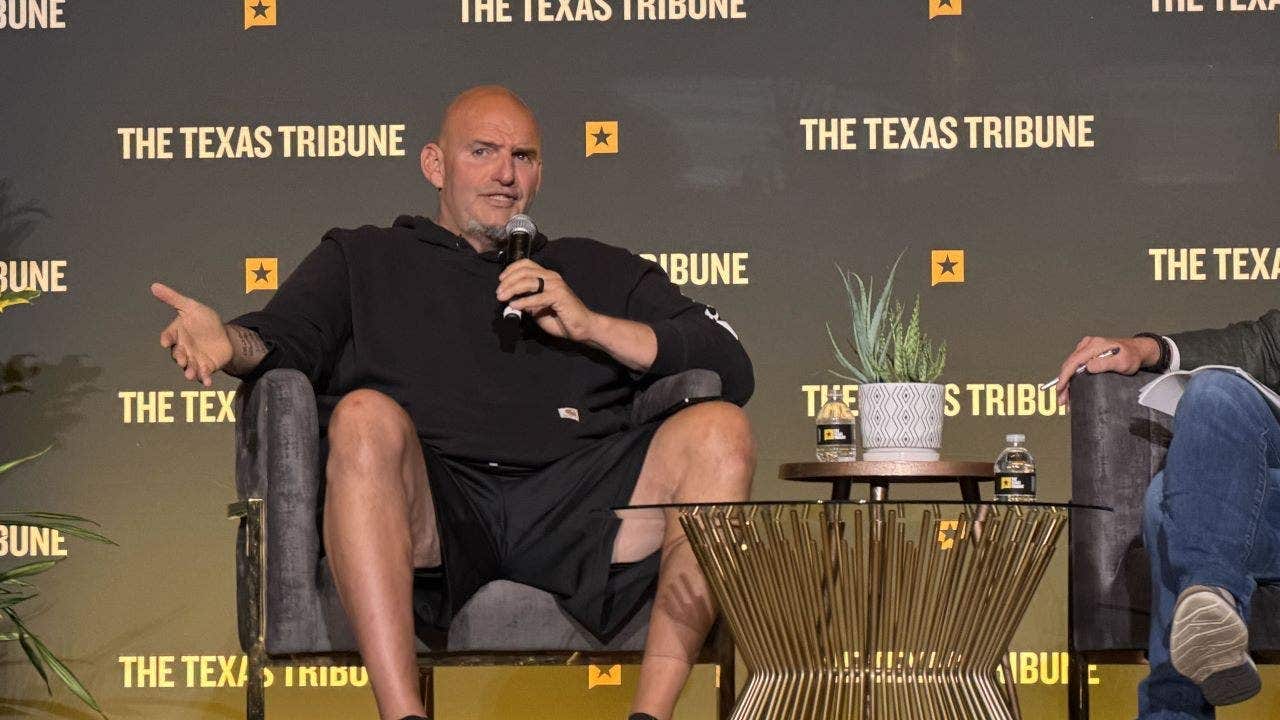

In a recent appearance at the Texas Tribune Festival, Pennsylvania Senator John Fetterman inadvertently referred to himself as a “lifelong Republican,” a faux pas that quickly elicited laughter from the audience. The incident occurred while addressing a question about his party affiliation amid rising speculation regarding a potential switch to the Republican Party. Although Fetterman quickly clarified his allegiance to the Democratic Party, his comments highlight the growing tension within the party and the challenges he faces from both sides of the political spectrum.
| Article Subheadings |
|---|
| 1) Unintentional Humor Highlights Political Tensions |
| 2) Fetterman’s Coalition and Critique of Parties |
| 3) The Growing Rift with the Democratic Party |
| 4) Reactions from Political Allies and Opponents |
| 5) The Future of Fetterman’s Political Career |
Unintentional Humor Highlights Political Tensions
During the Texas Tribune Festival, Senator John Fetterman made headlines for mistakenly calling himself a “lifelong Republican.” This unexpected gaffe took place when an audience member inquired why he didn’t pursue a bid as an independent candidate. Fetterman’s quick apology underscored the serious atmosphere surrounding political identities, especially as he navigates a tumultuous relationship with the Democratic Party.
This humorous blunder not only elicited laughter but also provoked a deeper conversation regarding his current standing in the political arena. Such moments often reveal the complexities of modern-day politics where public figures are under continuous scrutiny. Fetterman himself acknowledged the potential repercussions of his comments, stating,
“I guarantee you that will break through. That will get clipped.”
This indicates a heightened awareness of how statements can easily be taken out of context or reinterpreted by the media and the public.
Fetterman’s Coalition and Critique of Parties
In his keynote address at the festival, Fetterman elaborated on his perspective regarding both major parties in America. He articulated his disdain for extreme positions that have emerged within the Republican Party, as well as expressing criticism towards the Democratic Party. Fetterman stated, “I don’t have a reason to,” join the Republicans, suggesting that his affiliation with the Democratic Party is rooted in pragmatic ideology rather than emotion.
He emphasized the need for inclusivity within political discourse, arguing that a more comprehensive approach to politics could create an environment where differences are tolerated. “For a big-tent situation, it’s easier to be included in that big tent,” he said, referencing the importance of compromise without necessarily abandoning core beliefs. His remarks aimed to highlight the divisiveness in American politics and the potential for collaborative efforts, even amidst entrenched partisan divides.
The Growing Rift with the Democratic Party
Fetterman has been under considerable scrutiny, and the sentiment within the Democratic Party regarding his stance has shifted. Many in the party question his legitimacy due to his willingness to collaborate with Republicans, which some perceive as a betrayal. The senator admitted, “If the Democratic Party votes me out or expels me, they’re always entitled to do that.” This statement suggests that he is prepared to face opposition for the path he has chosen inside the political ecosystem.
His position has become increasingly precarious; earlier this year, Fetterman warned fellow Democrats that should they adopt hardline, anti-Israel positions, he might reconsider his party affiliation. His comments serve as a reminder of the increasing polarization within political parties and the internal struggles faced by those who occupy centrist or moderate positions. As election cycles progress, the ongoing discourse surrounding party loyalty will be imperative for Fetterman and like-minded politicians.
Reactions from Political Allies and Opponents
The immediate reaction to Fetterman’s slip has reflected broader sentiments across both party lines. While some Democrats have criticized his remarks and position on certain issues, Republicans have shown a surprisingly warm reception to his political maneuvers. His public appearances have resulted in speculation regarding a possible switch to the Republican Party, fueling the ongoing chatter about his future. This duality of acceptance and rejection underscores the uncertainty he navigates as the political landscape evolves.
Furthermore, Fetterman’s interactions during events have received mixed reviews. Some Democratic leaders perceive him as a liability, while others view his willingness to engage with Republicans as an opportunity to build coalitions across party lines. This has enabled him to somewhat defy conventional party boundaries while maintaining a recognizable identity within the Democratic Party. The dynamics between these opposing viewpoints highlight the complexity of contemporary political affiliations.
The Future of Fetterman’s Political Career
The question lingering in the political sphere is what the future holds for John Fetterman. As a relatively new face in the Senate who previously triumphed in a highly contested election against Dr. Mehmet Oz, his career trajectory is under close observation. Given his background as a progressive-turned-centrist, he finds himself embroiled in a volatile environment where allegiance is tested and party loyalty is contested.
Fetterman has become emblematic of the struggles facing centrist politicians. He is often perceived as straddling the line between two worlds, eliciting reactions that range from admiration to skepticism. His admission about potentially facilitating a shift in allegiance speaks volumes about the pressures he experiences. As political landscapes continue to shift, Fetterman’s capacity to navigate these waters will determine his relevance moving forward, particularly as 2024 approaches.
| No. | Key Points |
|---|---|
| 1 | Senator John Fetterman mistakenly identified himself as a “lifelong Republican” during a public event, eliciting laughter and highlighting his political predicament. |
| 2 | Fetterman critiqued both major political parties, emphasizing the need for a more inclusive and cooperative political environment. |
| 3 | His relationship with the Democratic Party has soured, with some factions viewing him as a liability due to his willingness to work with Republicans. |
| 4 | Reactions from party members reveal a spectrum of opinions, from criticism of his moderateness to welcoming the potential for cross-party collaboration. |
| 5 | The future of Fetterman’s political career remains uncertain as he negotiates pressures from both Democrats and Republicans amid a shifting political landscape. |
Summary
Senator John Fetterman has found himself at a crossroads within the current political climate, marked by a slip of the tongue that became emblematic of the broader tensions he faces as a centrist figure. His recent comments and interactions showcase the balancing act he performs in maintaining his Democratic identity while navigating an increasingly polarized political environment. As speculation around his potential switch to the Republican Party grows, it will be crucial for Fetterman to reconcile these diverging perspectives to sustain his role in American politics.
Frequently Asked Questions
Question: What did Senator Fetterman mistakenly say at the Texas Tribune Festival?
Senator John Fetterman mistakenly referred to himself as a “lifelong Republican” during a public speaking event, quickly correcting himself afterward.
Question: How has Fetterman’s relationship with the Democratic Party evolved?
Fetterman has faced growing criticism from some within the Democratic Party due to his willingness to collaborate with Republicans, leading to speculation about his future party affiliation.
Question: What is Fetterman’s stance on inclusivity in politics?
In his keynote address, Fetterman advocated for a more inclusive political environment where differing opinions could be tolerated, emphasizing the importance of coalition-building across party lines.
