

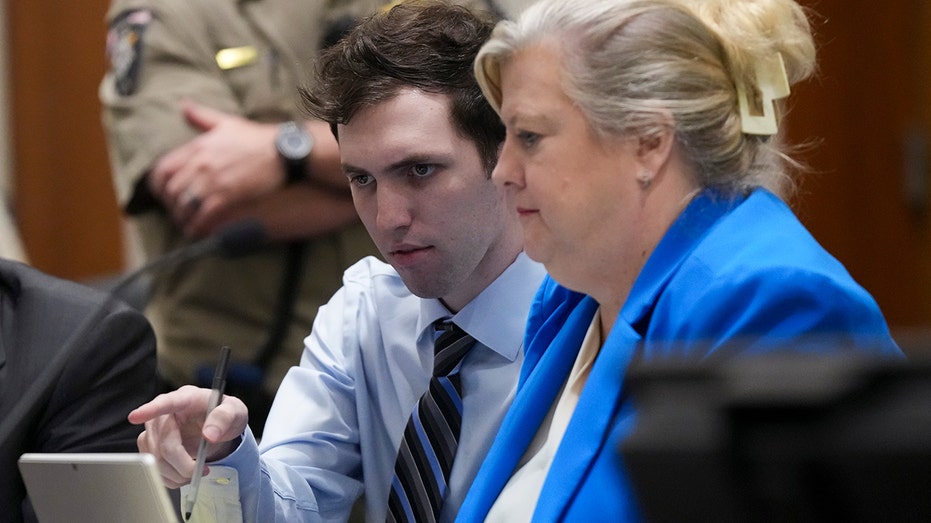

Tyler Robinson’s defense team is asking a Utah judge to bar cameras from an Oct. 23 hearing where a trial date could be set in the case involving the fatal shooting of Charlie Kirk. The lawyers argue that live coverage could increase prejudice against Robinson and undermine his rights to a fair trial. Their request follows reports that Utah County has paid $1.6 million for his legal defense, exhausting a special $1 million state allocation. Robinson has pleaded not guilty to all seven charges, including aggravated murder, which carries a possible death sentence.
| 1) | Defense challenges courtroom cameras |
| 2) | Legal team cites fair-trial concerns |
| 3) | Defense costs become part of public scrutiny |
| 4) | Judge has generally permitted courtroom coverage |
| 5) | Charges and potential penalty remain central |
Defense challenges courtroom cameras
Lawyers for Tyler Robinson filed an opposition to a request by local media to send a camera to the Oct. 23 proceeding in Utah. The hearing is not expected to include witness testimony, but it could address scheduling and establish a trial date. The defense argues that electronically recording and transmitting the discussion would add limited public value while increasing the risk that statements made in court would be widely circulated without their full legal context.
The team has previously sought to block both still photography and video in proceedings connected to the case. Its latest filing says continuing coverage of the killing and the defense could reinforce what it describes as prejudicial perceptions of Robinson.
Legal team cites fair-trial concerns
The defense contends that coverage could have an “incremental adverse effect” on Robinson’s constitutional rights. Lawyers are particularly concerned that comments about the time and resources needed to prepare the case could be interpreted primarily through the cost of the defense rather than the rights to effective counsel, due process, a fair trial and a reliable penalty determination.
“Statements by defense counsel at the upcoming proceeding concerning the time and resources necessary to prepare this case are likely to be examined and disseminated in real time through social media and other media channels and viewed through the lens of cost, rather than in the context of Mr. Robinson’s constitutional rights.”
The attorneys have also argued in earlier filings that extensive media attention can make courtroom proceedings resemble a reality television program, distract participants and place additional pressure on people involved in the case.
Defense costs become part of public scrutiny
The camera request comes after reports that Utah County had paid $1.6 million to Robinson’s legal team as of the previous month. That spending exhausted a special $1 million state earmark established for the defense. High-profile murder cases can require substantial funding for expert witnesses, investigations, laboratory testing and other preparation.
Some experts have estimated that Robinson’s defense could ultimately cost as much as $10 million, although the final amount will depend on the length and complexity of the proceedings. The defense says public discussion of those expenses could affect how its work is perceived and could obscure the legal obligations involved in preparing a capital case.
Judge has generally permitted courtroom coverage
Judge Tony Graf Jr. has largely sided with public access, allowing cameras in most proceedings under conditions set out in a courtroom decorum order. The defense has repeatedly challenged that approach, while the court has permitted coverage subject to restrictions designed to preserve order.
During an earlier five-day preliminary hearing, attorney Richard Novak laughed after the judge ruled that one camera-related request had been filed too late and that a pool photographer could take pictures only on the second through fifth days. The competing positions reflect a broader dispute over how much visual media access is appropriate in a highly publicized criminal case.
Charges and potential penalty remain central
Tyler Robinson is accused of shooting Charlie Kirk during a Turning Point USA event at Utah Valley University in Orem on Sept. 10, 2025. Kirk was speaking at the event when he was fatally shot in the neck in front of a crowd estimated at roughly 3,000 people.
Robinson faces seven charges, including aggravated murder, felony discharge of a firearm causing serious bodily injury, obstruction of justice, witness tampering and committing a violent offense in front of a child. The aggravated murder charge could result in the death penalty if he is convicted. Lead attorney Kathy Nester entered not guilty pleas on Robinson’s behalf during a brief September arraignment. A judge has ruled that the prosecution may proceed, but the case remains pending and the defendant is presumed innocent unless proven guilty.
| Number | Key Point |
|---|---|
| 1 | The defense wants cameras barred from the Oct. 23 hearing. |
| 2 | Lawyers say coverage could affect Robinson’s fair-trial rights. |
| 3 | Utah County has reportedly paid $1.6 million for the defense. |
| 4 | The judge has generally allowed cameras under courtroom rules. |
| 5 | Robinson faces an aggravated murder charge that could carry the death penalty. |
Summary
The defense request places courtroom access, media coverage and public spending at the center of the next stage of the case. Lawyers say cameras could magnify negative perceptions and distort public understanding of the resources required for a capital defense. The court must weigh those concerns against the public interest in observing proceedings, with the Oct. 23 hearing expected to address scheduling and potentially a trial date.
Frequently Asked Questions
Why does the defense want cameras banned?
The defense says live video and photography could spread comments about legal strategy and defense costs in ways that reinforce prejudice and threaten Robinson’s right to a fair trial.
When is the next hearing?
The hearing is scheduled for Oct. 23 and could include discussion of a trial date. It is not expected to include witness testimony.
What charges does Robinson face?
He faces seven charges, including aggravated murder, felony discharge of a firearm causing serious bodily injury, obstruction of justice, witness tampering and committing a violent offense in front of a child.
