

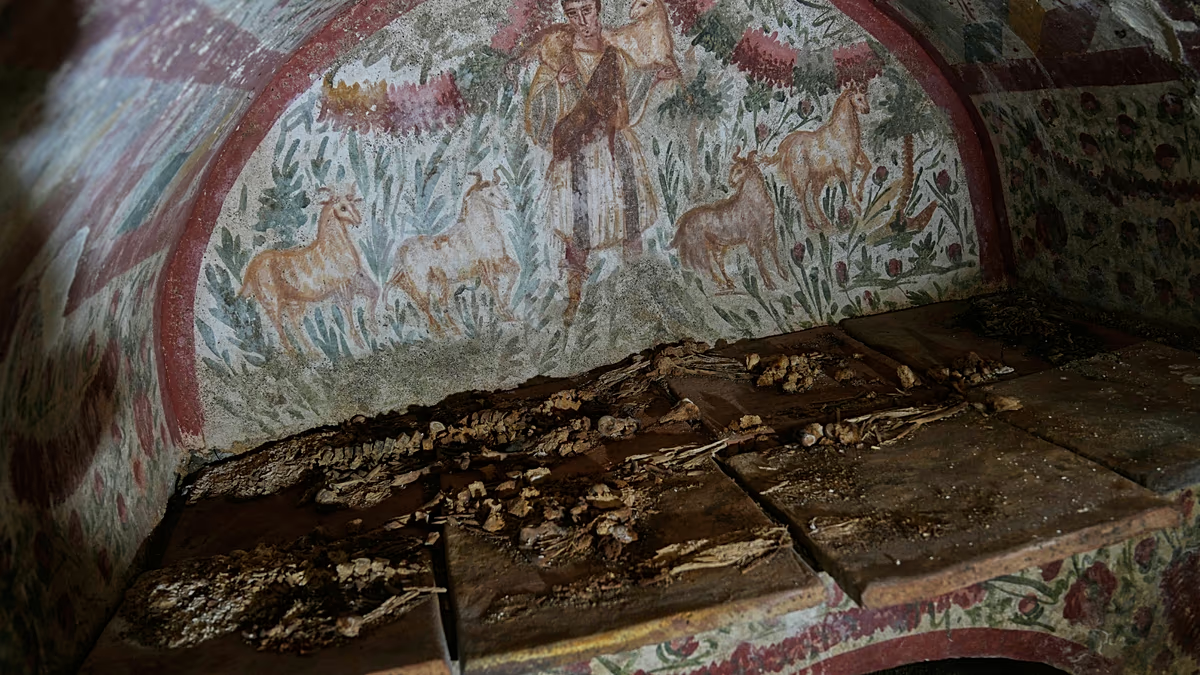

Recent archaeological discoveries in Turkey have unveiled a significant fresco depicting Jesus as the “Good Shepherd.” This artwork, found in an underground tomb near Iznik, originates from the early Christian era and highlights a notable moment in Christian history. The tomb, estimated to date back to the 3rd century, is a remarkable find that reveals the region’s transitional period from paganism to early Christianity, as well as providing insight into artistic expressions of faith during a time of persecution.
| Article Subheadings |
|---|
| 1) Discovery of the Fresco |
| 2) Historical Significance of Iznik |
| 3) Artistic Representation in Antiquity |
| 4) Archaeological Insights and Findings |
| 5) Reactions to the Discovery |
Discovery of the Fresco
The fresco was unearthed during archaeological excavations conducted in August near the village of Hisardere, close to Iznik. This significant discovery was made as a team of researchers sought to explore the area rich in Christian history. The artwork depicts a youthful and clean-shaven Jesus, portrayed with Roman attributes, a rarity in Anatolian art. Researchers assert that the fresco is possibly the only example of its kind in the region, marking it as a crucial piece in understanding the art of early Christianity.
Historical Significance of Iznik
Iznik holds a vital place in Christian history, having been the site where the Nicene Creed was established in AD 325. This council played a pivotal role in defining Christian doctrine, making the location historically important for both religious and cultural reasons. The recent discovery adds another layer to Iznik’s historical significance, as it exemplifies the early Christian community’s persistence amid Roman persecution. The fresco’s depiction of Jesus as the Good Shepherd evokes themes of protection and salvation, resonating deeply within Christian teachings of that era.
Artistic Representation in Antiquity
The Good Shepherd fresco is a key example of early Christian art, representing a significant shift in iconography during a transitional period in religious practices. Initially, the Good Shepherd motif was widely used before the cross was adopted as the symbol of Christianity. Researchers believe that this fresco highlights these artistic changes in how Jesus was depicted during the early centuries of Christianity. Similar motifs appeared in Roman art, allowing scholars to explore the cultural interchange between pagan and Christian elements in ancient Anatolia.
Archaeological Insights and Findings
Aside from the fresco, the excavation uncovered other important artifacts, including the skeletons of five individuals. Among these remains were those of two young adults and a six-month-old infant. This finding provides anthropological insights into the burials and funerary practices of early Christians in the region. Furthermore, the tomb’s walls and ceiling adorned with bird and plant motifs, alongside portraits of noble men and women with slave attendants, offer a glimpse into the socio-economic conditions and the status of the deceased in their society. Archaeologists emphasize that these findings indicate a blend of late paganism transitioning into early Christianity.
Reactions to the Discovery
The discovery has sparked significant interest both locally and internationally. Turkish officials highlighted the fresco as a national treasure, with Turkish President Recep Tayyip Erdogan presenting a tile painting of the Good Shepherd to Pope Leo XIV during a recent visit. This gesture underlines the fresco’s importance not only for Turkey but also for the broader Christian community. Archaeologists and historians alike have lauded the find, emphasizing its role in strengthening the understanding of early Christianity’s development in Anatolia and its broader implications in religious history.
| No. | Key Points |
|---|---|
| 1 | The fresco depicts a youthful Jesus as the “Good Shepherd” and is a significant archaeological find in Anatolia. |
| 2 | Iznik is historically important as the site of the Nicene Creed, contributing to its significance in Christian history. |
| 3 | The fresco demonstrates a transition from late paganism to early Christianity in its artistic representation. |
| 4 | The excavation also revealed the remains of five individuals, providing insight into early Christian funerary practices. |
| 5 | The discovery has garnered attention from officials, including a presentation to Pope Leo XIV during a visit to Turkey. |
Summary
The recent discovery of the fresco depicting Jesus as the Good Shepherd is a groundbreaking find for both archaeological and religious communities. It not only provides invaluable insight into early Christian art but also emphasizes the region’s historical significance as a center for early Christian thought and practice. With unprecedented artifacts unearthed, this discovery highlights the rich tapestry of history in Anatolia and its lasting influence on Christianity.
Frequently Asked Questions
Question: What is the significance of the Good Shepherd fresco?
The Good Shepherd fresco serves as a rare example of early Christian art in Anatolia, showcasing the transition from pagan beliefs to early Christian iconography during a period of persecution.
Question: What else was discovered alongside the fresco?
Along with the fresco, archaeologists unearthed the skeletons of five individuals, offering vital insights into the burial practices of early Christians in the region.
Question: Why is Iznik historically important?
Iznik is historically significant as the location where the Nicene Creed was adopted in AD 325, marking a foundational moment in Christian doctrine and belief.
