

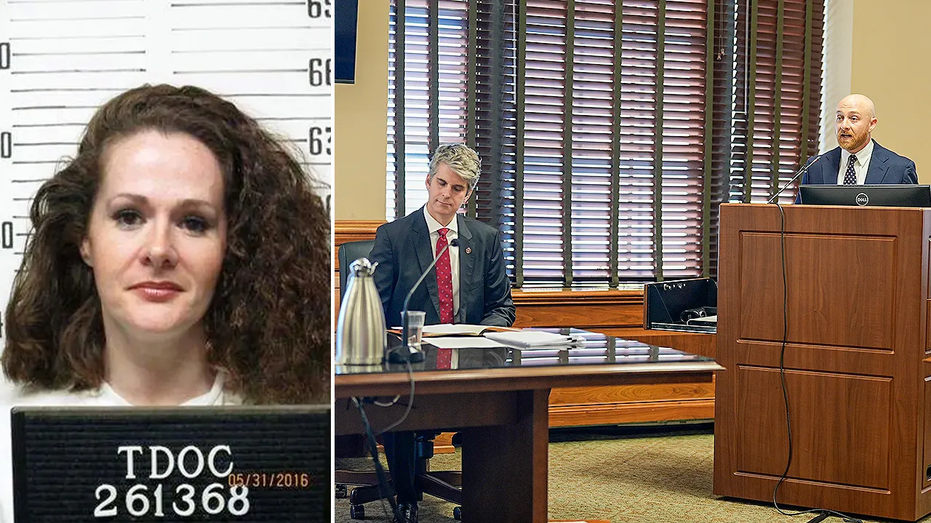

Christa Pike regained consciousness and began speaking nearly a week after Tennessee officials failed twice to administer a lethal injection. Her attorneys had believed the death row inmate was brain dead and expected her to be removed from life support. Pike now faces a lengthy recovery as the state investigates the Sept. 30 execution failure and her legal team seeks to preserve evidence.
Her attorney, Randy Spivey, said Pike’s first questions after waking were about her location and the people around her. A court has ordered the Tennessee Department of Correction to retain physical and digital evidence connected to the failed execution, while the state’s governor has halted executions for the remainder of 2026.
| 1) | Pike regains consciousness after failed execution |
|---|---|
| 2) | Her first words and medical condition |
| 3) | Court orders preservation of execution evidence |
| 4) | Tennessee pauses executions during investigation |
| 5) | Pike’s conviction and possible legal outcomes |
Pike regains consciousness after failed execution
Christa Pike regained consciousness Tuesday, nearly a week after Tennessee’s unsuccessful effort to carry out her execution on Sept. 30. She had remained on life support after the state failed twice to lethally inject her. Her attorneys and medical team had believed she was brain dead and expected that life support would eventually be withdrawn.
Instead, Pike began speaking unexpectedly. Randy Spivey told reporters after a court hearing in Nashville that the development surprised him, Pike’s legal team and the medical personnel treating her. The circumstances surrounding the change in her condition remain unexplained, and her recovery is expected to be prolonged.
“To the shock of everyone, including me, including her team and including the medical team, Christa woke up and began talking,” Randy Spivey said.
Her first words and medical condition
According to Randy Spivey, Pike’s first words were, “Where am I?” and “Who are you?” He said she remains confused as she adjusts to being conscious again. The questions provided the first reported indication that she could communicate following the failed execution.
Pike has pneumonia, cannot swallow and has a blood clot in one arm, her attorney said. He described her hands as severely swollen and said it is not known whether she will regain the use of her arms. Her medical condition will likely influence the next legal and custodial decisions, although no final outcome has been announced.
Court orders preservation of execution evidence
The update came as Davidson County Chancery Court Judge I’Ashea Myles granted Pike’s emergency request to preserve evidence from the failed execution. The order directs the Tennessee Department of Correction to retain needles, intravenous lines, package labels and drugs associated with the procedure.
The preservation order also covers text messages, encrypted communications, photographs and recordings. Judge I’Ashea Myles specifically referenced communications sent through applications such as Signal. She instructed the department to take affirmative steps to recover information if any evidence had already been discarded, deleted, destroyed or otherwise become unavailable.
Tennessee pauses executions during investigation
Tennessee Gov. Bill Lee has halted executions for the remainder of 2026 while the state examines what went wrong during the Sept. 30 procedure. The pause applies as officials review the failed attempts and the medical consequences for Pike.
At the court hearing, Assistant Attorney General Will Ayers declined to predict whether the state would seek another death warrant. The investigation and the preservation of physical and electronic evidence could shape any future proceedings. Pike’s attorneys have separately asked that her death sentence be changed to life imprisonment without parole.
Pike’s conviction and possible legal outcomes
Christa Pike was sentenced to death for the 1995 torture and murder of 19-year-old Colleen Slemmer in Knoxville. The case involved two other people who received lesser sentences. One was 17 at the time, while another testified for the state under a plea agreement.
Pike’s immediate future remains uncertain. She must continue medical treatment while her lawyers pursue a sentence commutation and seek information about the execution attempt. The state must also determine whether another death warrant is legally and practically possible after the investigation is complete.
| 1 | Pike regained consciousness nearly a week after the failed lethal injection. |
|---|---|
| 2 | Her first reported questions were about where she was and who was present. |
| 3 | A judge ordered Tennessee officials to preserve physical and digital evidence. |
| 4 | The governor suspended executions through the end of 2026. |
| 5 | Pike’s attorneys are seeking life without parole instead of execution. |
Summary
Pike’s unexpected recovery has changed the immediate circumstances surrounding Tennessee’s failed execution attempt. Her medical condition remains serious, while the court-ordered evidence preservation and statewide execution pause provide the framework for further investigation. The state has not said whether it will pursue another death warrant, and Pike’s attorneys continue to seek commutation of her sentence.
Frequently Asked Questions
When did Christa Pike regain consciousness?
She regained consciousness Tuesday, nearly a week after the failed execution attempt on Sept. 30.
What were Pike’s first reported words?
Her attorney said she asked, “Where am I?” and “Who are you?”
What evidence must Tennessee preserve?
The court order covers needles, intravenous lines, package labels, drugs, text messages, encrypted communications, photographs and recordings connected to the execution.
What is Pike’s current medical condition?
She has pneumonia, cannot swallow and has a blood clot in one arm. Her attorney said it remains unclear whether she will regain the use of her arms.
