

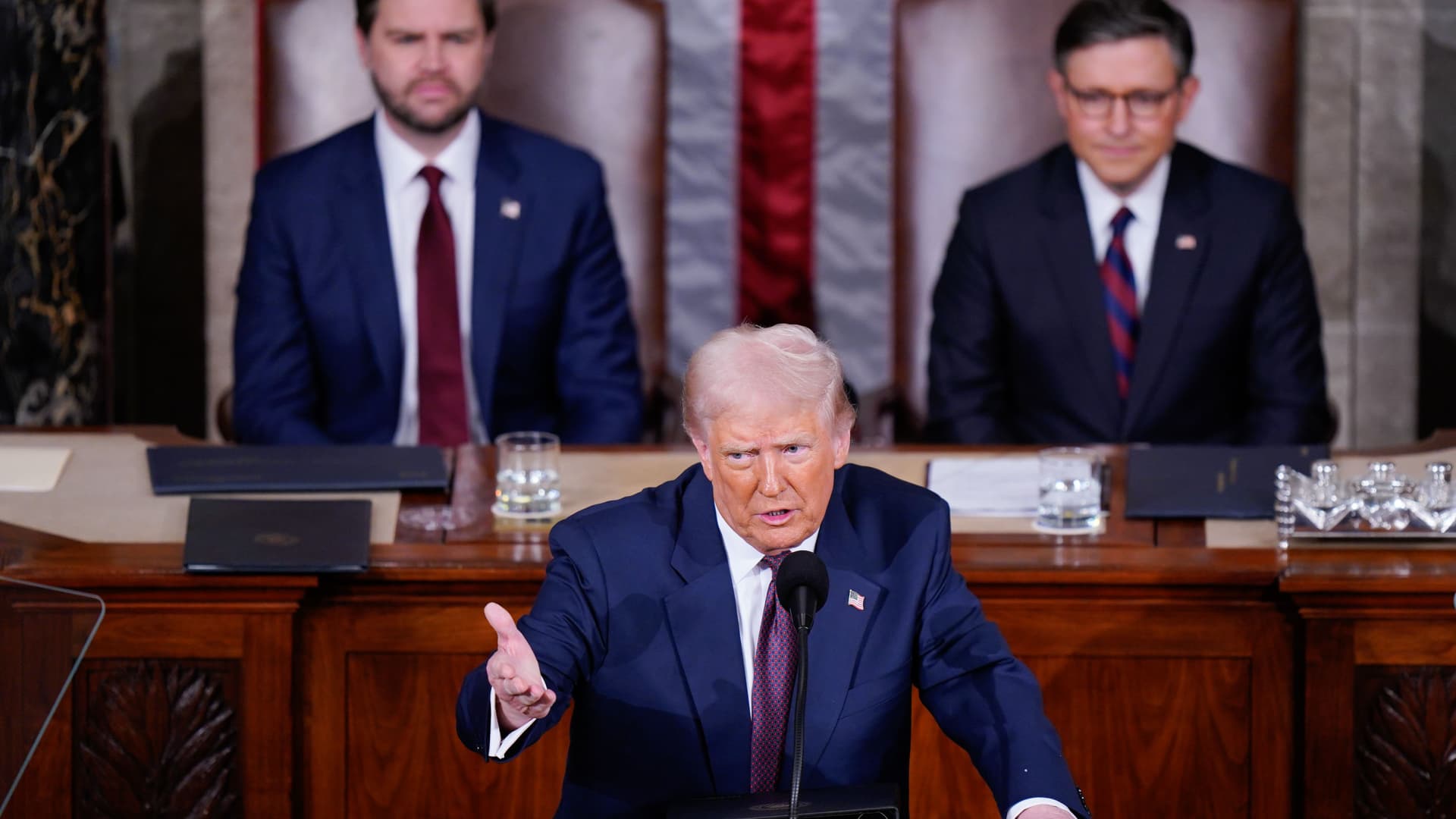

In a bold move, President Donald Trump has implemented extensive new tariffs aimed at nearly every trading partner, with the intention of bolstering the U.S. economy. This sweeping decision, announced during a joint session of Congress, includes a blanket 10% tariff on imports and significantly higher rates for dozens of countries. The policy has sent shockwaves through global markets, raising fears of a looming recession and prompting retaliatory threats from China, showcasing the contentious debates surrounding the balance of power between the executive and legislative branches regarding trade regulations.
| Article Subheadings |
|---|
| 1) Overview of Trump’s Tariff Announcement |
| 2) Executive Authority and Legislative Debate |
| 3) Congress’ Response and Bipartisan Opposition |
| 4) Potential Legal Challenges Ahead |
| 5) Future Implications for U.S. Trade Policy |
Overview of Trump’s Tariff Announcement
On Wednesday, President Donald Trump rolled out a comprehensive new tariff strategy that has the potential to reshape American trade relations significantly. During a joint session of Congress, he announced a blanket 10% tariff on imports, which applied globally, signaling a shift toward more aggressive protectionist policies. Trump’s administration argues that these tariffs are necessary to address perceived structural imbalances in the global trading system and to counteract the domestic economic policies of key trading partners.
The announcement has met with immediate backlash from various sectors, including business and financial markets. Following Trump’s tariff declaration, stock indices across the U.S. and international markets experienced sharp declines. Investors are concerned that such sweeping tariffs could lead to a trade war, particularly with major U.S. trade partners like China, which has already signaled intents to retaliate. It is unclear how Congress will react, despite having the potential to limit Trump’s power through legislative measures.
Executive Authority and Legislative Debate
Trump’s executive order to implement these tariffs highlights an intriguing aspect of executive power in the U.S. system. The president has cited several legal frameworks as authority for his actions, including the International Emergency Economic Powers Act (IEEPA) and the National Emergency Act. Using these statutes in conjunction allows the president to declare a national emergency and impose tariffs as a response to what he defines as an “unusual and extraordinary threat” to the economy.
This move is historic, as Trump is the first president to utilize the IEEPA for such broad tariff impositions, raising questions about the extent of executive power and its implications for trade policy. Historically, under the Constitution, the legislative branch holds the power to levy taxes and tariffs. Article 1, Section 8, explicitly grants this authority to Congress, reflecting the importance of legislative oversight in economic matters. However, over the decades, various laws have delegated certain tariff powers to the presidency, creating a complex interplay between branches of government.
Congress’ Response and Bipartisan Opposition
As the ramifications of Trump’s tariffs began to unfold, some bipartisan opposition emerged within Congress. A group of four Republican senators, including strong party figures like Mitch McConnell and Rand Paul, voiced concerns over the economic implications of these tariffs. Partnering with all Democratic senators and a few independents, they successfully passed a measure targeting Trump’s tariffs on Canadian imports, indicating a clear fracture within party lines regarding the administration’s trade policies.
Senator Tim Kaine from Virginia, who proposed the resolution to block the tariffs, stressed the potential for “massive economic heartbreak” if Congress does not act. His statement underscores the seriousness with which lawmakers view Trump’s tariffs, stating, “Donald Trump started in office with the strongest economy in the world… with the chainsaw and the tariffs, turned it into one with flashing red lights and question marks.” Beyond individual resolutions, a bipartisan Senate bill was introduced that would compel the president to notify Congress before imposing tariffs, giving lawmakers a chance to intervene. This reflects a growing sentiment to reclaim legislative authority over trade policies.
Potential Legal Challenges Ahead
Concurrent with legislative action, there are burgeoning legal challenges to Trump’s tariffs. A federal lawsuit filed in Florida argues that the president’s use of the IEEPA to levy tariffs is unconstitutional. The plaintiffs, represented by the New Civil Liberties Alliance, contend that the emergency law does not grant the president the authority to impose tariffs on American consumers, asserting that this radical expansion of presidential power infringes upon the rights of Congress and the citizenry.
Legal experts note the precedence of judicial interpretation often favoring broad executive powers concerning tariffs. However, this challenge poses a significant threat to Trump’s trade agenda, as court rulings could either reaffirm or curtail the expansive use of executive authority in tariff implementation.
Future Implications for U.S. Trade Policy
The unfolding events surrounding Trump’s tariffs will likely set the stage for future trade policy in the United States. A central question remains as to whether Congress, which remains heavily influenced by partisan dynamics, will take significant steps to curtail Trump’s powers. While there are indications of bipartisan concern over the economic impact, especially within certain sectors, the current Republican majority in both houses may limit the extent to which Congress can impose checks on the executive branch.
Moreover, with the looming threat of a trade war, the implications for the global trading system are profound. If retaliation from countries like China escalates, it could lead to further market volatility and widespread economic repercussions. Thus, the political landscape will be heavily influenced by how the situation evolves, and whether lawmakers can unite to preserve the balance of power regarding trade and tariffs.
| No. | Key Points |
|---|---|
| 1 | President Trump has enacted a blanket 10% tariff on imports, affecting nearly all trading partners. |
| 2 | The tariffs are justified under the IEEPA, amid claims of a national economic emergency. |
| 3 | Congress faces a divided response, with some Republicans joining Democrats to oppose Trump’s tariffs. |
| 4 | A legal challenge has been initiated to dispute the constitutional basis for Trump’s tariffs. |
| 5 | The outcome of this tariff policy could significantly impact future U.S. trade relations and executive-legislative dynamics. |
Summary
President Trump’s sweeping tariffs mark a turning point in U.S. trade policy, raising critical questions about the power balance between the presidency and Congress. As further economic repercussions unfold, including market instabilities and potential retaliatory measures from other countries, the implications of these tariffs extend beyond borders. The ongoing legislative and legal debates surrounding Trump’s authority to impose these tariffs demonstrate the complexities of governance and the dynamic nature of trade relations in an increasingly globalized economy.
Frequently Asked Questions
Question: What are the main components of Trump’s new tariff policy?
President Trump has imposed a blanket 10% import tariff on almost every country, alongside significantly higher rates for several others, initiating a protectionist trade policy.
Question: What legal bases does President Trump claim for implementing these tariffs?
Trump cites the International Emergency Economic Powers Act and the National Emergency Act as foundations for declaring a national emergency linked to trade relations, enabling him to impose tariffs without congressional approval.
Question: What are the potential political consequences of these tariffs?
The tariffs have led to bipartisan pushback in Congress and could prompt legal challenges, which may reshape the future approach to U.S. trade policy and executive authority in tariff regulation.
