

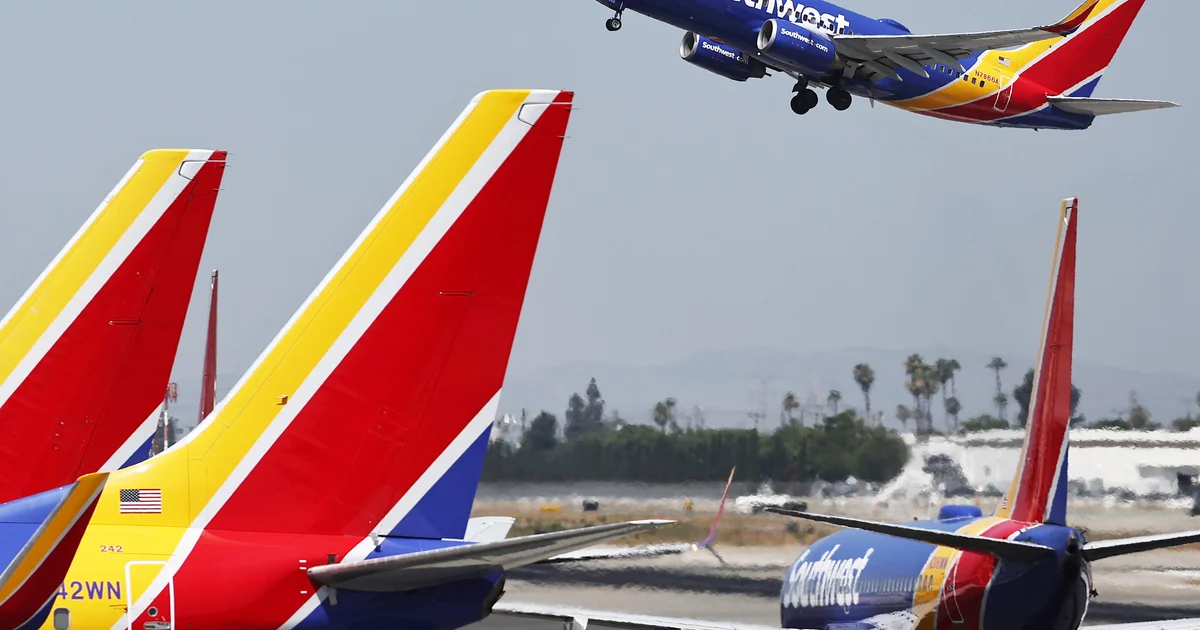

In a significant development, the U.S. Department of Transportation (DOT) has announced the waiver of a portion of the civil penalty imposed on Southwest Airlines, following the airline’s extensive flight cancellations during a winter storm in December 2022. Under a settlement agreed upon in 2023, Southwest faced a $140 million fine—the largest ever levied on an airline for transgressing consumer protection laws. This decision underscores a shift towards encouraging airlines to enhance their operational resilience, with the waiver reflecting Southwest’s improvements in performance.
| Article Subheadings |
|---|
| 1) Overview of the Settlement |
| 2) Background of the Incident |
| 3) Impact on Travelers |
| 4) Financial Implications for Southwest Airlines |
| 5) Signs of Improvement in Operations |
Overview of the Settlement
The recent waiver by the U.S. Department of Transportation is a notable development in the ongoing discussions about airline operational standards and consumer rights. In 2023, the Biden administration reached a settlement that required Southwest Airlines to pay a record $140 million civil penalty for its mishandling of flight cancellations during the winter storm that hit in December. This penalty was a reflection of their violations of consumer protection laws, marking a crucial moment in how the administration is addressing airline accountability.
Of the total amount, a significant portion was set aside for compensating affected travelers, highlighting the government’s intent to directly address the impact on consumers. Notably, $35 million was designated for the U.S. Treasury, with Southwest making payment installments in 2024 and early 2025. However, the administration modified the terms recently by waiving the final $11 million payment, citing Southwest’s improvements and proactive measures as justifications for this adjustment.
Background of the Incident
The massive flight cancellations stemmed from a winter storm that struck the U.S. in December 2022, causing widespread disruptions across the airline industry. Specifically, Southwest Airlines faced severe operational failures correlating with the storm’s impact in key hubs, including Denver and Chicago. Reports indicated that the airline canceled an unprecedented total of 17,000 flights, leaving millions of travelers stranded.
The crisis was exacerbated by a crew-rescheduling software that failed to adapt to the chaotic environment, leading to a cascade of operational challenges that overwhelmed the airline’s infrastructure. As a consequence, stranded customers were left without adequate assistance, many unable to reach customer service due to busy signals and long hold times. The incident drew public scrutiny and raised serious concerns regarding the airline’s accountability and transparency in customer service during crisis situations.
Impact on Travelers
The fallout from the December storm and the subsequent flight cancellations had a profound impact on travelers nationwide. Many individuals found themselves unexpectedly marooned in airports and hotels, with limited recourse. The Biden administration’s assessment concluded that Southwest Airlines had violated consumer protection laws by failing to provide necessary support to the stranded customers.
Reports indicated that individuals who sought assistance faced significant hurdles, including difficulties in accessing customer service. Consequently, the lost productivity and emotional toll on travelers became significant. Passengers who encountered delayed responses to rebooking requests were further frustrated by the airline’s inadequate systems during this crisis. This experience spurred demands for regulatory changes to protect consumers more effectively during similar situations in the future.
Financial Implications for Southwest Airlines
Beyond the penalties, the winter storm’s havoc translated into substantial financial losses for Southwest Airlines. The airline estimated that the crisis cost more than $1.1 billion in refunds, reimbursements, and lost ticket revenues over several months. Despite the government-imposed penalties, the overall financial impact on Southwest’s operations fostered a broader discussion about the sustainability of current operational practices in the airline industry.
The financial repercussions prompted the airline to reevaluate its operational resilience measures and invest in improvements to prevent future disruptions. By focusing on more reliable operational practices, Southwest aims to restore consumer confidence and avoid repeat occurrences that tarnish its reputation. This experience points to the necessity for airlines to build more robust systems capable of handling high-stress scenarios efficiently.
Signs of Improvement in Operations
In light of the settlement and subsequent waivers, the U.S. Department of Transportation recognized Southwest Airlines for its efforts to enhance operational reliability and customer service. According to recent statements from the DOT, Southwest has made marked improvements in its on-time performance and network operations, earning it credit that benefits consumers. The Secretary of Transportation emphasized that this new approach incentivizes airlines to invest in operational enhancements that ultimately result in a more reliable flying experience for passengers.
The waiver of the final payment illustrated the government’s commitment to encouraging airlines to prioritize customer care and operational resilience. By offering recognition for positive changes, the DOT aims to create a more favorable environment that emphasizes consumer protection while allowing airlines to thrive. This forward-thinking approach seeks to benefit all stakeholders involved: from airlines to consumers.
| No. | Key Points |
|---|---|
| 1 | The U.S. Department of Transportation waived part of a civil penalty against Southwest Airlines. |
| 2 | A 2023 settlement led to a $140 million fine for the airline due to consumer rights violations. |
| 3 | The airline canceled 17,000 flights during a winter storm, affecting over 2 million travelers. |
| 4 | The airline faced losses exceeding $1.1 billion from the disruption. |
| 5 | Southwest has since made significant improvements in operational performance. |
Summary
The U.S. Department of Transportation’s decision to waive part of the penalty against Southwest Airlines underscores a critical shift toward incentivizing improved airline operations and enhancing consumer protection. This development not only marks a significant moment in airline regulatory practices but also highlights the importance of accountability and operational resilience within the aviation industry. As the airline works to recover from the challenges faced during the 2022 winter storm, its ongoing improvements could set a precedent for future regulatory interactions.
Frequently Asked Questions
Question: What led to Southwest Airlines facing a civil penalty?
Southwest Airlines faced a civil penalty due to extensive flight cancellations during a winter storm in December 2022, which led to significant operational failures and customer service violations.
Question: How much was the initial fine imposed on Southwest Airlines?
The initial fine imposed on Southwest Airlines was $140 million, which was the largest penalty ever assessed against an airline for consumer protection violations.
Question: What improvements has Southwest Airlines made since the incident?
Since the incident, Southwest Airlines has made significant improvements in its on-time performance and network operations, leading to a waiver of part of the civil penalty by the U.S. Department of Transportation.
