

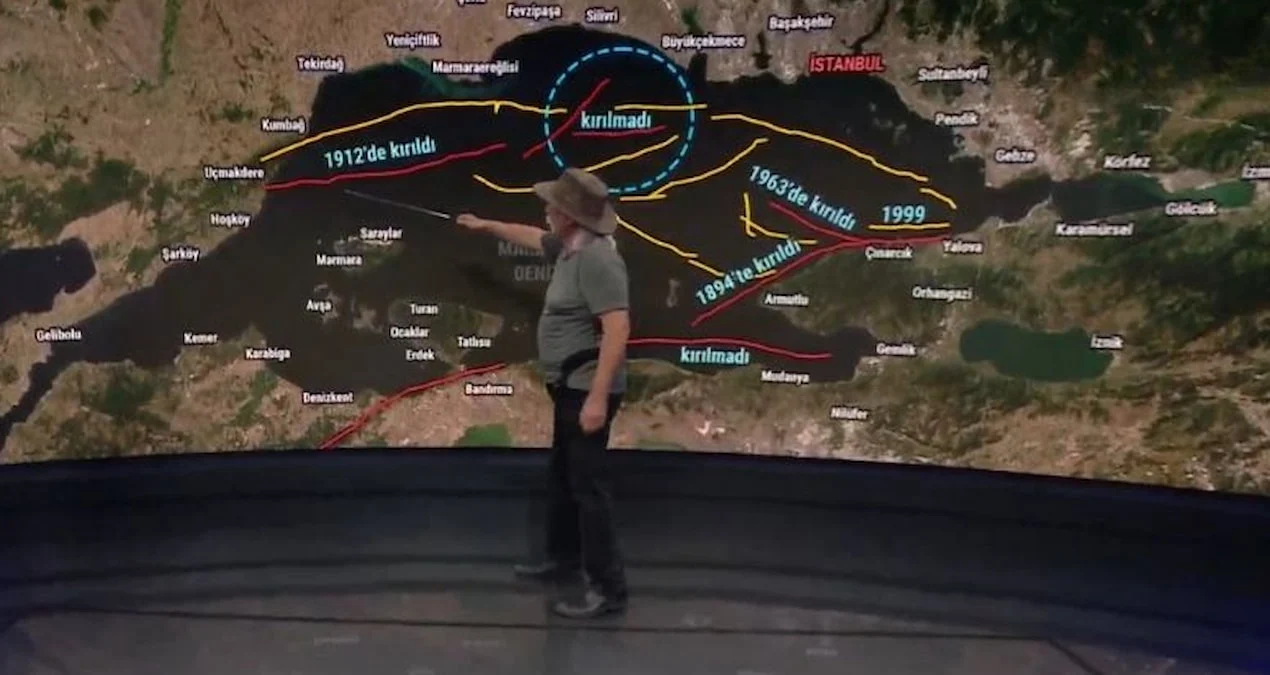

In a recent interview, earthquake scientist Prof. Dr. Şener Üşümezsoy addressed several prevalent myths about fault lines and seismic risks in the Marmara region of Turkey. He emphasized that significant threats of major earthquakes, particularly around the Yalova–Çınarcık–Esenköy line, are overstated. Moreover, he highlighted critical areas where actual seismic activity could occur, while also clarifying misinterpretations regarding a potential rise in earthquake activity following recent events.
| Article Subheadings |
|---|
| 1) Understanding the Existing Fault Lines |
| 2) Clarifying Earthquake Risks in Iznik |
| 3) Addressing Misconceptions about Media Reports |
| 4) The Science Behind Major Earthquakes |
| 5) The Future of Seismic Research |
Understanding the Existing Fault Lines
Prof. Dr. Şener Üşümezsoy has underscored the importance of accurately representing fault lines to prevent unnecessary panic among the public. During his interview, he highlighted specific lines, particularly the Yalova–Esenköy–Çınarcık line, which have been the subject of much speculation. He clarified that while the fault line is indeed present, it currently lacks the accumulated stress to trigger a significant earthquake. This assertion directly challenges persistent rumors regarding an imminent seismic event based on the conditions of these fault lines.
Üşümezsoy detailed that the geological attributes of the Esenköy-Bozburun line can technically facilitate an earthquake of up to 6.5 magnitude. However, the necessary energy accumulation to catalyze such an earthquake is nonexistent at present. He pointed out that following the 1912 earthquake, which impacted the region substantially, the residual effects diminished the likelihood of subsequent large-scale seismic events. This insight aims to provide a clearer understanding of the seismic landscape in the region and alleviate localized fears.
Clarifying Earthquake Risks in Iznik
In his discussion, Prof. Üşümezsoy addressed misinformation specifically targeting the fault lines around Lake Iznik, which gained attention during a recent visit from a notable figure. He stated that the fault line in this area runs directly along the lake’s shoreline and is influenced by geological activities, including changes in elevation. This interaction raises concerns regarding the stability of the lake’s conditions, but he maintained that the risks should not be sensationalized without substantial evidence of impending activity.
The professor’s insights suggest a measured approach when considering seismic threats in Lake Iznik. While he acknowledged the physical presence of a fault line, he reiterated that there is no imminent danger of a catastrophic event affecting the local population. This perspective encourages community awareness without creating undue alarm regarding latitude on possible future seismic occurrences.
Addressing Misconceptions about Media Reports
An essential part of Prof. Üşümezsoy’s interview revolved around clarifying the impact of media on public perception of seismic risks. He expressed concern over how the media has historically misinterpreted his expert opinions, particularly regarding the potential for earthquakes in specific fault lines. In one instance, he was quoted regarding the danger of a significant earthquake occurring in the region; he emphasized that such assertions were not a reflection of his views.
He elaborated on a past incident involving his participation in reality television, which further exacerbated the misunderstandings about his professional stances. Referring to how these non-scientific contexts can skew public perception, he stressed the importance of having knowledgeable individuals relay accurate information to the community and prevent misinformation from clouding vital discussions regarding earthquake preparedness.
The Science Behind Major Earthquakes
The narrative developed by Prof. Üşümezsoy regarding major earthquakes is rooted in a deep understanding of geological principles. He articulated that a fault that has been active does not typically reactivate after its energy has been depleted. Citing historical events, he pointed out that the substantial earthquakes of 1894 and 1999 led to significant ruptures in the region’s fault lines, effectively relieving stress in those areas. Thereby, he inferred, the likelihood of a severe earthquake in Marmara might be diminished due to this historical context.
Notably, he mentioned the fault line running from Silivri to Büyükçekmece as the only remaining segment posing a potential risk. His stance is built on years of observational data and insights he has collated since the late 1990s. The message he seeks to convey is one of caution, urging people not to overlook the scientific aspects behind earthquakes, thus enhancing their preparedness for any future seismic activity.
The Future of Seismic Research
Looking ahead, Prof. Üşümezsoy indicated that ongoing research into the region’s seismic activity remains crucial. With advancements in technology and geological understanding, scientists are better equipped to monitor and assess the conditions of fault lines more accurately. Continuous studies are essential for maintaining an updated risk profile of earthquake threats, especially in densely populated regions like Istanbul.
He advocates for more public engagement and educational outreach centered on earthquake preparedness and awareness. Being proactive rather than reactionary can significantly influence how communities adopt safety measures that mitigate risks. As earthquake science evolves, he envisions greater collaboration among experts in various fields to foster a comprehensive strategy toward risk management.
| No. | Key Points |
|---|---|
| 1 | Prof. Şener Üşümezsoy emphasizes that the Yalova–Esenköy–Çınarcık fault line currently lacks the accumulated energy for a major earthquake. |
| 2 | The potential for a 6.5 magnitude earthquake exists, but the necessary energy has not been accumulated in the region. |
| 3 | Misinterpretations by the media have led to unnecessary fears regarding specific fault lines, including those around Lake Iznik. |
| 4 | A fault that has ruptured does not typically reactivate, reducing the likelihood of future earthquakes in previously affected areas. |
| 5 | Prof. Üşümezsoy advocates for public engagement and education on earthquake preparedness as the scientific understanding of earthquakes evolves. |
Summary
The insights provided by Prof. Şener Üşümezsoy highlight the intricate relationship between public awareness and scientific knowledge regarding earthquake risks. By accurately depicting the state of fault lines in the Marmara region, he aims to dispel myths that cause unnecessary anxiety among residents. Furthermore, his emphasis on proactive communication and education may serve to better prepare communities for potential future seismic threats, ultimately fostering a safer environment.
Frequently Asked Questions
Question: What are the main misconceptions about the Yalova–Esenköy–Çınarcık fault line?
Many believe that this fault line is set to produce a significant earthquake, but Prof. Üşümezsoy clarifies that it currently lacks the accumulated energy needed for such an event.
Question: Why did Prof. Üşümezsoy address issues related to Lake Iznik?
He aimed to correct misinformation regarding the fault lines in that area and emphasized that while a fault runs along the shore of the lake, there is no immediate threat of a major earthquake.
Question: What is the significance of understanding historical earthquake patterns?
Understanding the historical patterns helps in assessing current seismic risks, as a fault that has ruptured typically does not repeat activity, thereby reducing the potential for future earthquakes in the same area.
