

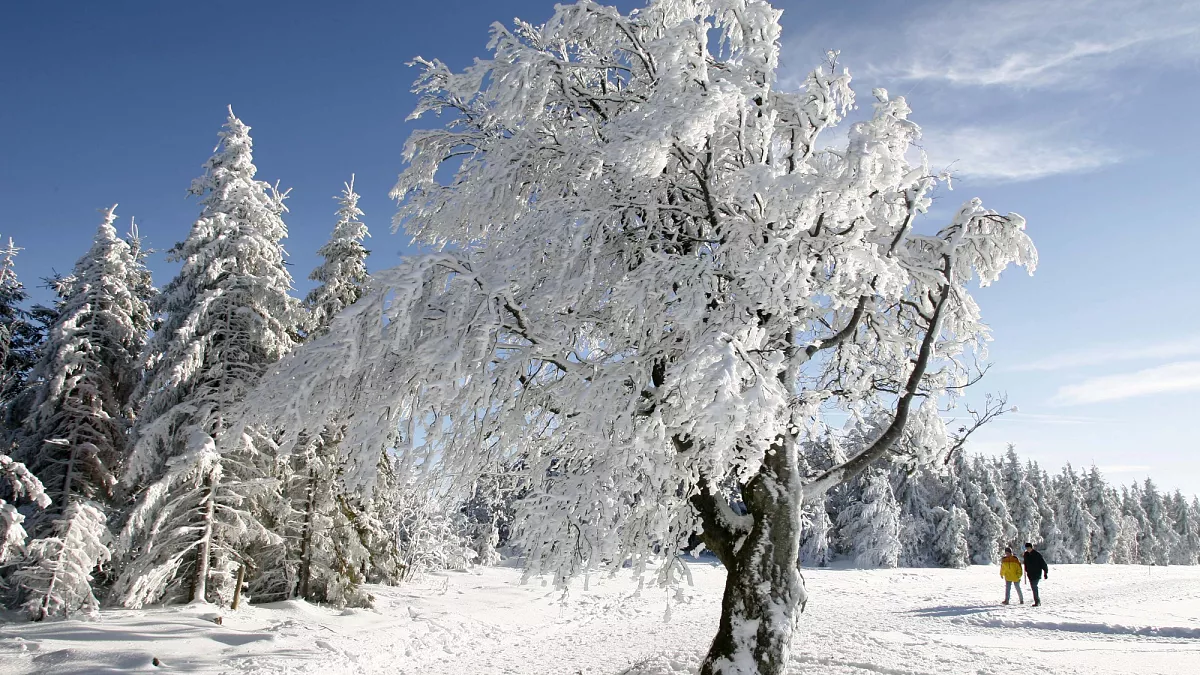

Meteorologists have issued forecasts indicating that the polar vortex is expected to be weaker than usual this winter, which could result in a cold season for Germany with Arctic temperature spells. The implications of this seasonal phenomenon evoke memories of the historic winter of 1978/79, marked by significant snowfall and frigid temperatures. This year’s initial predictions surrounding Christmas indicate relatively mild conditions with some cold deviations, yet the forecasts for January suggest a possibility of either mild weather or a return to colder conditions.
| Article Subheadings |
|---|
| 1) Expectations from the Polar Vortex |
| 2) Holiday Weather Predictions |
| 3) January Weather Outlook |
| 4) Impact of La Niña |
| 5) Historical Context: Past Winters |
Expectations from the Polar Vortex
Meteorologists are closely monitoring the polar vortex, a critical weather pattern that influences temperatures across Europe, including Germany. Traditionally, during winter, a strong polar vortex helps keep Arctic air contained near the poles. However, this year’s projection suggests a weakening of this phenomenon, leading experts to predict a colder winter interspersed with Arctic air outbreaks. The polar vortex can drastically impact the climate by directing cold Arctic air down into Europe, and while current models do not indicate a significant disruption in the vortex, the emerging high-pressure systems could facilitate colder conditions over time.
This expectation of a weaker polar vortex raises questions about the overall temperature balance in Germany. The implications extend beyond just chilly temperatures; severe cold spells can disrupt daily life, affecting transportation and heating. Understanding how the polar vortex’s dynamics shift will be crucial in accurately forecasting the winter season, as even minor fluctuations can lead to drastic weather changes across the continent.
Holiday Weather Predictions
As the festive season approaches, the current weather models indicate a mixed outlook for Christmas. Preliminary forecasts suggest generally mild weather for the days surrounding Christmas, although there may still be isolated cold spells that could affect holiday plans. According to the European Weather Centre’s long-term model, any significant cooling is not anticipated until after the holidays, leaving room for a relatively pleasant climate during this significant time.
On the contrary, the American National Oceanic and Atmospheric Administration (NOAA) anticipates a significant increase in average temperatures for the month. This projection, while centered around broader climate trends, does not exclude the possibility of a subsequent cooling phase. The consensus among weather experts suggests that conditions remain somewhat uncertain, leaving Christmas weather open to change. Individuals should remain vigilant about weather updates as the holiday draws near, as the situation is fluid and subject to sudden shifts in temperature and precipitation.
January Weather Outlook
Looking ahead to January, meteorologists indicate that the month may trend towards changeable weather patterns characterized by mild conditions with short-lived winter characteristics. The potential for an extended period of grey weather, with minimal snowfall, is becoming increasingly likely. While winter enthusiasts might hope for a heavy snowfall, indications suggest that warmer fluctuations may dominate.
The NOAA model echoes these sentiments, emphasizing a mild January with little semblance of traditional winter. However, the European Forest Fire Information System (EFFIS) has released models suggesting a slightly cooler, drier January, indicating a stable high-pressure system over Central Europe. While this may create pleasant daytime conditions, it can also lead to the formation of fog and frost at night, creating deceptive winter scenarios.
Impact of La Niña
Adding complexity to the winter weather predictions is the influence of La Niña, which has been confirmed by NOAA’s Climate Prediction Centre. This phenomenon occurs when sea surface temperatures in the Pacific Ocean fall below average, leading to colder temperatures primarily across Western Europe. The conditions are not just a local anomaly; they fit into a larger climate cycle that resonates widely across global weather patterns. La Niña conditions are expected to persist until early 2026, intensifying colder conditions and possibly affecting precipitation levels in various regions, including the Alps.
For winter sports enthusiasts, La Niña can be a double-edged sword. While it could enhance snowfall in regions like the Alps, thereby improving skiing conditions, the broader impact could vary across Europe. Therefore, while colder and wetter conditions might be welcome news for skiers, it also raises the specter of extreme weather events affecting other regions disproportionately. In summary, La Niña’s influence on this winter deserves close attention as it has the potential to reshape weather across Europe significantly.
Historical Context: Past Winters
The implications of the current forecasts take us back to the winter of 1978/79, one of the coldest winters recorded in Germany. That year was marked by unprecedented snowfall and prolonged cold conditions, leading to significant disruptions throughout the country. Experts point out that the current atmospheric patterns, while markedly different, could lead to similar outcomes if the polar vortex behaves unpredictably.
This historical perspective serves as a reminder of the potential volatility of winter weather in Germany, where conditions can evolve rapidly and dramatically. While it might be tempting to look at current models and view them as definitive, the complexity of weather systems makes it essential to remain aware of changing patterns. The atmospheric dynamics underpinning weather changes can create echoes of past winters, leading to significant and sometimes surprising weather outcomes.
| No. | Key Points |
|---|---|
| 1 | A weaker polar vortex is forecasted to affect winter temperatures in Germany. |
| 2 | Christmas weather predictions suggest milder conditions with potential cold spells. |
| 3 | January may feature mild weather punctuated by grey conditions. |
| 4 | La Niña is expected to linger, impacting temperatures and precipitation across Europe. |
| 5 | Historical context reveals weather volatility in past winters, heightening current uncertainty. |
Summary
The forecast for this winter is characterized by uncertainty and variability, stemming from a weaker polar vortex and the ongoing effects of La Niña. As the holiday season approaches, predictions suggest mild weather with the possibility of cold deviations. With January looming, experts remain cautious yet hopeful, as weather dynamics may shift unexpectedly. Ultimately, staying informed on evolving weather patterns will be vital for residents and winter enthusiasts alike.
Frequently Asked Questions
Question: How does the polar vortex affect winter weather?
The polar vortex is a large area of low pressure and cold air surrounding the Earth’s poles. When it is strong, it helps contain cold air at the poles, but when it weakens, Arctic air can push down into lower latitudes, leading to colder winter temperatures.
Question: What is La Niña, and how does it impact weather?
La Niña is a climate pattern characterized by cooler-than-average sea surface temperatures in the central and eastern Pacific Ocean. It can influence global weather, often resulting in colder and wetter conditions in Western Europe, particularly during winter.
Question: How often do these weather phenomena occur?
Both La Niña and the polar vortex can vary year to year. La Niña typically lasts for several months to a couple of years, while the polar vortex’s strength can fluctuate seasonally, impacting winter weather unpredictably.
