

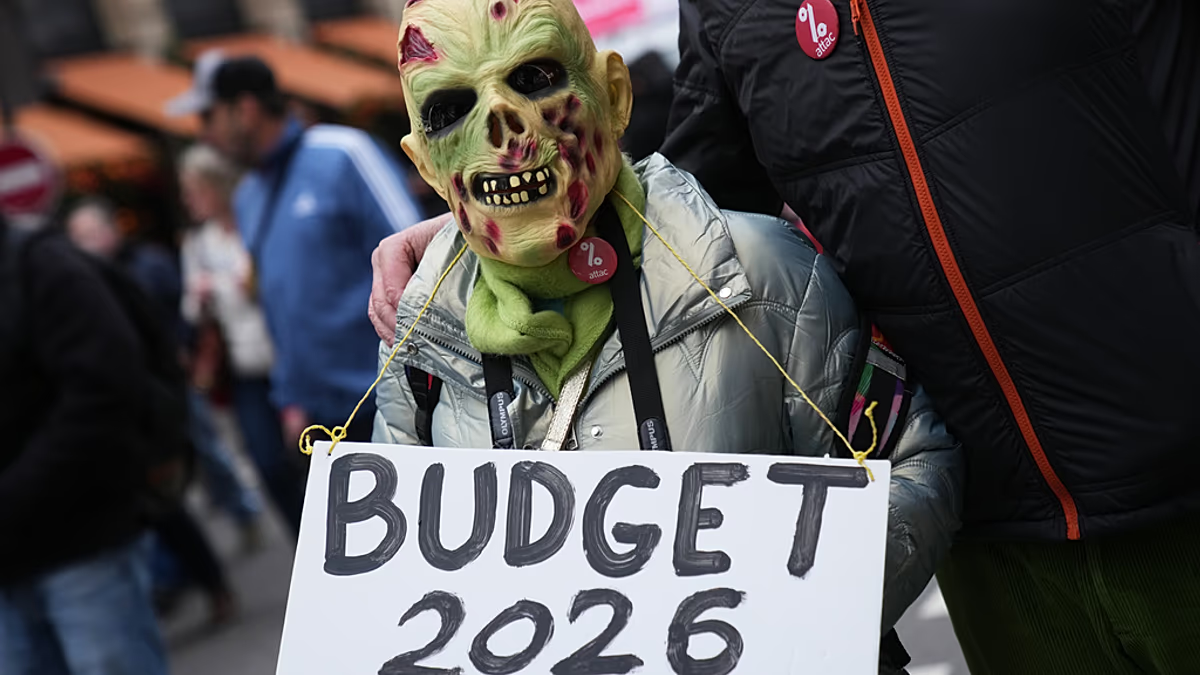

On Tuesday, three prominent French unions initiated a nationwide day of strikes and demonstrations aimed at protesting government austerity measures, stagnant wages, and anticipated cuts to essential public services. Despite extensive preparations, participation in these protests was notably lower than previous rallies conducted earlier in the fall season. The unions—CGT, FSU, and Solidaires—highlighted their grievances during discussions in the National Assembly regarding the 2026 Social Security budget, which they claim proposes detrimental changes for workers, pensioners, and the public sector.
| Article Subheadings |
|---|
| 1) Understanding the Core Issues Driving the Protests |
| 2) The Limited Impact on Transportation and Education |
| 3) An Overview of the March in Paris |
| 4) Public Reaction and Government Response |
| 5) Future Implications of the Union Actions |
Understanding the Core Issues Driving the Protests
The protests primarily stem from demands for wage increases, calls for enhanced fiscal and social justice, and a push for more robust investment in public services. Of particular concern are the nation’s hospitals and care homes, which union leaders assert are already overwhelmed. An official statement issued by the CGT on November 18 expressed significant frustration with the government’s tactics, accusing officials of “running down the clock” on critical budget discussions while bigger economic interests remain insulated from necessary reforms.
A representative from the CGT union, Axel, who works at the Goethe Institute in Paris, shared his perspectives, stating that he felt the financial burdens of austerity measures “falling disproportionately on working people.” In his view, a lack of fairness exists when people like him, who contribute significantly through taxes, still see the government targeting their financial well-being instead of addressing the wealth held by the affluent.
The Limited Impact on Transportation and Education
Despite the union’s calls for widespread action, the actual disruption to transport and educational services remained minimal. According to the national rail operator, SNCF, rail traffic operated at “almost normal” levels, with delays mainly felt in the central Centre-Val de Loire and southern Occitanie regions. The Education Ministry noted that only 5.27% of teachers participated in the strike, demonstrating a relatively limited impact.
Participation levels in the wider civil sector were also low, recording a strike rate of 3.43% in state administration and 1.84% in local government. This raises questions about the effectiveness of the union strategy, given that mobilization efforts have not generated the same fervor observed during previous significant rallies.
An Overview of the March in Paris
In Paris, the turnout was significantly lower than expected. A march set off at 2 PM, but reports indicated that by 3:30 PM, many participants had already left. A subsequent protest announced for 4 PM saw only a dozen attendees by 4:45 PM. The CGT union estimated that there were approximately 17,000 demonstrators in the capital, marking a steep decline in participation compared to earlier protests.
Nationally, the Interior Ministry reported around 31,900 participants in the strike, a figure which was notably lower than earlier mobilizations, such as the 55,000 protesters on September 18 or 24,000 participants on October 2, when various unions had collaboratively organized the events.
Public Reaction and Government Response
The response from the wider public appears to be mixed. Many sympathize with the unions’ causes but express frustration over the minimal effects these protests have on the government’s policies. While the unions rally to raise awareness about austerity, officials remain firm on their budgetary strategies, asserting that difficult choices are necessary for economic stability.
Government officials have emphasized the importance of balancing fiscal responsibility with maintaining social services. They argue that the long-term health of the economy depends on difficult decisions that may not always align with public demands for immediate relief. Therefore, the atmosphere is charged with a sense of urgency among union members, but also a reticence among the public to fully engage with the demonstrations.
Future Implications of the Union Actions
Looking ahead, the unions have stated that they will continue to advocate for workers’ rights and push back against government austerity measures, even in the face of dwindling public turnout. The underlying sentiment among union leaders is that significant change requires sustained pressure over time.
However, the challenge will be to galvanize public support and participation in future actions, especially when the initial engagement has shown a significant drop. The unions are expected to reassess their strategies in the coming weeks, potentially tapping into new grassroots movements or broader coalitions to regain momentum.
| No. | Key Points |
|---|---|
| 1 | The nationwide day of strikes was called by three major unions in France. |
| 2 | Union leaders emphasize calls for wage increases and better public services. |
| 3 | The protests saw significantly lower participation than earlier demonstrations. |
| 4 | Minimal disruption to transportation and schools observed during the strikes. |
| 5 | Unions plan future actions to maintain pressure on the government’s austerity measures. |
Summary
The recent nationwide day of strikes and demonstrations orchestrated by French unions reveals significant public frustration with government austerity measures and their impact on workers. However, the low turnout signifies challenges the unions may face in mobilizing broader public support in the future. This ongoing struggle underscores the complex dynamics between economic policies and social equity, emphasizing the need for continued advocacy and strategic adjustments moving forward.
Frequently Asked Questions
Question: What are the unions protesting?
The unions are protesting against government austerity measures, wage stagnation, and cuts to public services, particularly affecting healthcare and education.
Question: Which unions are involved in the protests?
The major unions involved in the protests are CGT, FSU, and Solidaires, each calling for action based on concerns about workers’ rights and public service budgets.
Question: How did the protests impact transportation and education?
The protests resulted in minimal disruptions, with rail services reported as almost normal and only a small percentage of teachers participating in strikes.
