

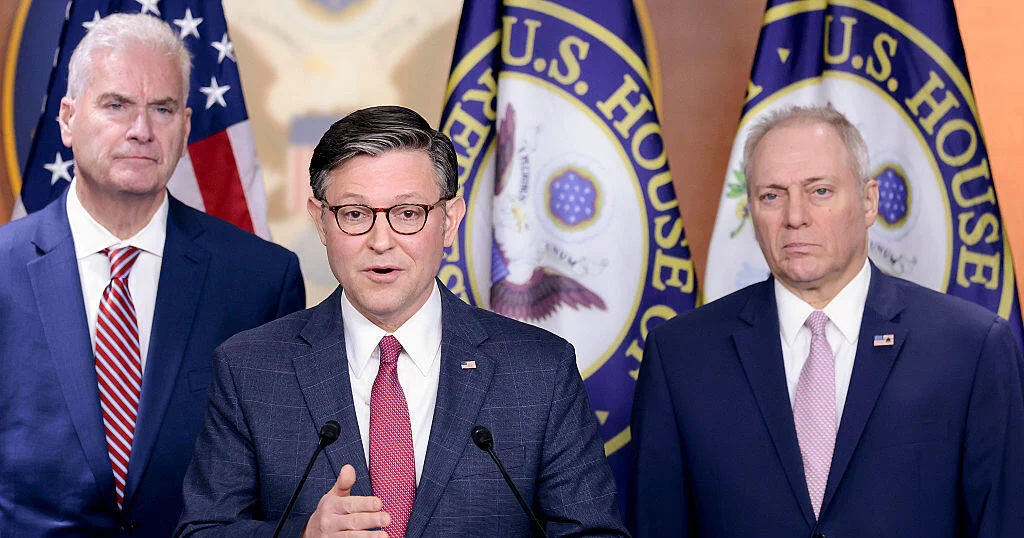

On Friday, House Republican leaders introduced a plan aimed at addressing escalating health care costs amid impending expirations of Affordable Care Act tax credits. This proposal does not include a direct extension of these tax credits but allows for a vote on an amendment to prolong them, targeting moderate Republicans who are advocating for their continuation. The GOP’s strategy reflects internal party divisions and the broader political clash as Democrats push for a more expansive extension without reforms, which Republicans have deemed unacceptable.
| Article Subheadings |
|---|
| 1) Overview of the Republican Health Care Plan |
| 2) Internal Party Divisions and the Role of Moderates |
| 3) Response from Democratic Leaders |
| 4) Legislative Process Ahead |
| 5) Broader Implications for Health Care Policy |
Overview of the Republican Health Care Plan
The newly unveiled Republican health care plan aims to tackle rising medical expenses while addressing the upcoming lapse of tax credits affecting over 20 million Americans. The proposal includes several key components designed to enhance access and affordability. Notably, it proposes the expansion of association health plans, allowing multiple employers to merge resources to secure better coverage options at lower costs. This approach seeks to unite small businesses and enhance their bargaining power against insurance providers, ultimately benefiting consumers by delivering more competitive rates.
Additionally, the proposal addresses cost-sharing reduction payments, which provide financial support to some Affordable Care Act (ACA) enrollees, potentially helping to reduce their monthly premiums. Another significant aspect is the push for greater transparency among pharmacy benefit managers—a step that could lead to decreased drug costs, benefiting patients suffering from high prescription expenses.
House Speaker Mike Johnson, representing Louisiana, emphasizes that while Democrats aim for taxpayer-funded subsidies for insurance companies, Republicans are focusing on the foundational aspects of health care costs to enhance the integrity of the nation’s health system. “We’re restoring integrity to our nation’s health care system for all Americans,” Johnson stated, highlighting the intent to create a solution addressing the underlying drivers of health care expenses rather than merely extending existing programs.
Internal Party Divisions and the Role of Moderates
The Republican plan reflects notable internal divisions within the party regarding the extension of the ACA tax credits. Moderates within the House Republican Conference are pushing for a longer extension alongside reforms, advocating for a discharge petition to ensure a vote on this critical issue. This dynamic underscores a broader struggle for party unity as moderate factions seek to counter more conservative members who are staunchly against any further subsidies.
Those opposing the extension of tax credits argue that they are vulnerable to fraud and maintain that affluent families should not qualify for these benefits. This perspective represents a significant ideological divide within the party, framing the upcoming votes as a critical battleground for shaping the future of health care policy. The proposal’s failure to directly extend tax credits may be seen as a tactic to sidestep the contentious discussions that have often led to impasses within the GOP.
Response from Democratic Leaders
In response to the Republican proposal, Democratic leaders have expressed skepticism and have characterized it as a last-minute measure lacking substantive solutions. House Minority Leader Hakeem Jeffries criticized the GOP’s bill, branding it as “toxic legislation” that prioritizes ideological goals over the healthcare needs of Americans. He emphasized the importance of collaborating in good faith to prevent the expiration of ACA tax credits, which many see as a safety net for millions of vulnerable individuals and families.
The Democrats’ approach advocates for a straightforward three-year extension of the tax credits without additional reforms, a proposal that has been dismissed by Republicans as untenable. This political standoff highlights the stark differences between the two parties regarding both health care policy and broader fiscal strategies, setting the stage for fierce debates in the House.
Legislative Process Ahead
As the legislative process unfolds, the House Rules Committee is scheduled to discuss the Republican health care package early next week. This session will pave the way for a potential floor vote, which could occur as early as Tuesday evening or Wednesday. However, the uncertainty surrounding whether the proposal will garner enough support to pass remains a point of contention.
GOP leaders are actively rallying support, particularly among moderate Republicans, to ensure they have the backing necessary to advance the plan. However, the internal contradictions within the party regarding the extension of tax credits make the outcome unpredictable, leaving many political observers questioning the viability of the proposed legislation.
Broader Implications for Health Care Policy
The ongoing debate surrounding the health care plan underscores a critical tension in American health policy—whether to extend financial support mechanisms like ACA tax credits or to pursue reforms aimed at reducing costs in alternative ways. As discussions evolve, the implications extend far beyond the current legislative session; they can shape the trajectory of future health care debates and policies.
Proponents of the Republican plan assert that addressing systemic issues within the health care system is the most sustainable path forward. Conversely, opponents warn that failing to extend tax credits risks jeopardizing access to health care for millions of Americans. This fundamental debate encapsulates the broader ideological schism between the two parties, reflecting divergent views on the role of government in providing health care.
| No. | Key Points |
|---|---|
| 1 | House Republicans introduced a plan to address health care costs without extending ACA subsidies directly. |
| 2 | The plan includes provisions to expand association health plans and increase transparency from pharmacy benefit managers. |
| 3 | Moderate Republicans are pushing for the extension of ACA tax credits, creating division within the party. |
| 4 | Democrats criticize the GOP proposal as insufficient and have proposed their own extension of tax credits. |
| 5 | The outcome of the proposed measure remains uncertain as the House prepares for potential votes. |
Summary
The Republican health care proposal represents a significant attempt to address rising costs and impending tax credit expirations amidst ongoing political conflict. While the plan includes measures aimed at enhancing access and affordability, the lack of direct extension of ACA subsidies has created deep divisions within the party. As the legislative process unfolds, the dynamics of this proposal may hold considerable implications for the future of health care policy in the United States.
Frequently Asked Questions
Question: What is the main goal of the Republican health care plan?
The primary aim of the Republican health care plan is to address escalating costs while providing options for better insurance coverage and increasing transparency in drug pricing.
Question: What are the key points of contention between Republicans and Democrats regarding health care?
The key disagreements revolve around the extension of ACA tax credits, with Republicans opposing further subsidies, while Democrats advocate for their continuation without reforms.
Question: When is the House expected to vote on the health care proposal?
The House Rules Committee is set to discuss the Republican proposal early next week, with potential votes scheduled for Tuesday evening or Wednesday.
