

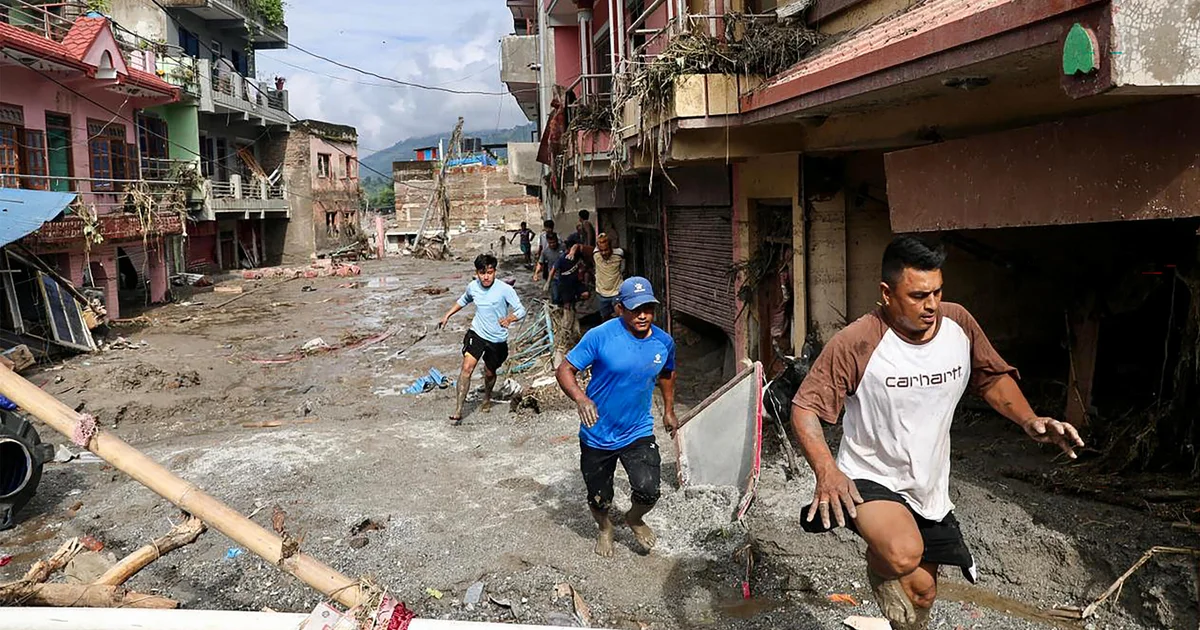

As rescue efforts continue along the Nepal-China border, the death toll has risen significantly following catastrophic floods caused by a glacial collapse. On Thursday, reports indicated that 826 people are missing within Nepal, while 165 fatalities have been confirmed. In neighboring Tibet, authorities are also dealing with the disastrous aftermath, where over 558 individuals are unaccounted for, prompting officials to intensify search and rescue operations in the hardest-hit districts.
| Article Subheadings |
|---|
| 1) Scale of the Disaster and Current Situation |
| 2) Search and Rescue Operations Intensified |
| 3) Causes of the Disaster Exposed |
| 4) Rising Threats from Climate Change |
| 5) Global Responses to the Catastrophe |
Scale of the Disaster and Current Situation
The recent glacial collapse has caused unprecedented devastation along the Nepal-China border, particularly affecting the Nuwakot and Rasuwa districts in Nepal. Following the disaster, officials from the National Disaster Risk Reduction and Management Authority reported that 826 individuals are currently missing. This has escalated the total number of fatalities to at least 165. In Tibet, the Chinese state broadcaster disclosed that 558 people are also unaccounted for, including 260 foreigners, highlighting how widespread the catastrophe has become.
Videos and aerial footage reveal that entire villages were submerged under torrents of muddy water that surged violently through valleys. Roads, bridges, and power plants have been smashed, and rescue operations are being hampered by the extent of the damage. Many areas remain isolated as travel routes have been blocked, leaving residents cut off from emergency assistance. Local eyewitnesses describe the chaos that unfolded, noting the brief window of time they had to react before the floodwaters struck.
Search and Rescue Operations Intensified
In the aftermath of this natural disaster, search and rescue efforts are being conducted with increasing urgency. Helicopters operated by the Nepalese army have been deployed since early Thursday morning to assist in evacuating those trapped in the flood-affected areas. Brigade General Raja Ram Basnet reported that over 100 people have already been rescued from perilous conditions. Among those airlifted were at least eight foreign nationals, who were brought safely to Kathmandu for further medical and logistical support.
Rescue teams have discovered bodies approximately 62 miles downstream from the disaster epicenter, showcasing the lethal force of the floodwaters. Many of the injured have been transported to hospitals in the capital for advanced medical treatment. The urgent nature of these operations cannot be overstated, as new obstacles continue to arise. For example, reports have emerged from Tibet that mudslides and severe damage to key roadways have further complicated rescue efforts, necessitating the deployment of military assets by Chinese authorities.
Causes of the Disaster Exposed
Initial assessments from the U.S. Geological Survey suggested that a magnitude-4.4 earthquake might have occurred near the disaster zone, but subsequent analysis revised this view. They concluded that the devastation was attributed to a glacial collapse rather than seismic activity. The event unleashed a massive surge of debris and water that overwhelmed local communities, underscoring the inherent dangers of living in such a precarious landscape.
Experts from the International Centre for Integrated Mountain Development in Kathmandu have echoed these findings, pointing to a probable avalanche from a melting glacier as the trigger that transformed the region into a torrent. A significant increase in water levels, reported to have risen as much as 27 feet in a brief timeframe, adds to the alarming conditions experienced in the area adjacent to the Trishuli river.
Rising Threats from Climate Change
The incident raises an important discussion about the increasing risks posed by climate change in the Himalayan region. The Lhende Khola river, which has flooded twice in 14 months, experienced its latest upheaval due to a glacier collapse that blocked the river, creating treacherous conditions downstream. Climate researchers have warned that rising temperatures are destabilizing the already delicate glacial systems, leading to more frequent and severe natural disasters.
The Himalayas serve as a crucial water resource for millions of people across South Asia. However, experts have found that glaciers in the region are melting at an alarming rate, with figures indicating that the rate of ice loss has doubled since 2000. As extreme weather events become more common—often precipitated by climate change—the risk of disasters like the recent floods is set to increase, threatening communities, infrastructure, and livelihoods.
Global Responses to the Catastrophe
In response to the crisis, military and diplomatic efforts have emerged from various nations, with officials in the U.S. expressing solidarity with the Nepalese people. The State Department has indicated that it is closely monitoring the situation and is prepared to offer humanitarian assistance as needed. A grant of $500,000 has been pledged to assist in recovery efforts through Catholic Relief Services.
Furthermore, notable figures, including spiritual leaders, have publicly expressed their condolences and prayers for those affected. The Dalai Lama stated his sympathies for the victims and their families, calling for a collective response to aid in recovery efforts. With the international community closely observing the situation, there is hope for a coordinated approach to restoring stability and addressing imminent humanitarian needs arising from this catastrophe.
| No. | Key Points |
|---|---|
| 1 | 826 individuals are missing in Nepal, with the death toll at 165. |
| 2 | Rescue operations are underway with army helicopters evacuating trapped individuals. |
| 3 | The disaster was triggered by a glacial collapse, not an earthquake. |
| 4 | Climate change is heightening the risks of glacial collapses and flash floods in the region. |
| 5 | International aid efforts are mobilizing to assist with humanitarian needs following the disaster. |
Summary
The devastating floods triggered by a glacial collapse not only caused significant loss of life but also underscored the increasing vulnerability of communities living in high-risk, climate-affected regions. As rescue efforts continue, the extensive damage emphasizes the need for long-term solutions to mitigate the risk of future disasters and improve emergency preparedness in the face of climate change. The global response to this catastrophe illustrates a collective humanitarian effort to support those impacted and restore stability to the affected areas.
Frequently Asked Questions
Question: What are the current rescue efforts in place?
Rescue operations involve the deployment of army helicopters and teams to evacuate individuals trapped in affected areas. Over a hundred rescues have already been reported.
Question: What caused the recent floods in Nepal and Tibet?
The flooding was primarily caused by a glacial collapse, which released a massive surge of water and debris into nearby communities, rather than seismic activity.
Question: How is climate change affecting the Himalayan region?
Climate change is leading to accelerated glacial melting, increasing the frequency of natural disasters such as floods and landslides, posing risks to infrastructure and livelihoods.
