

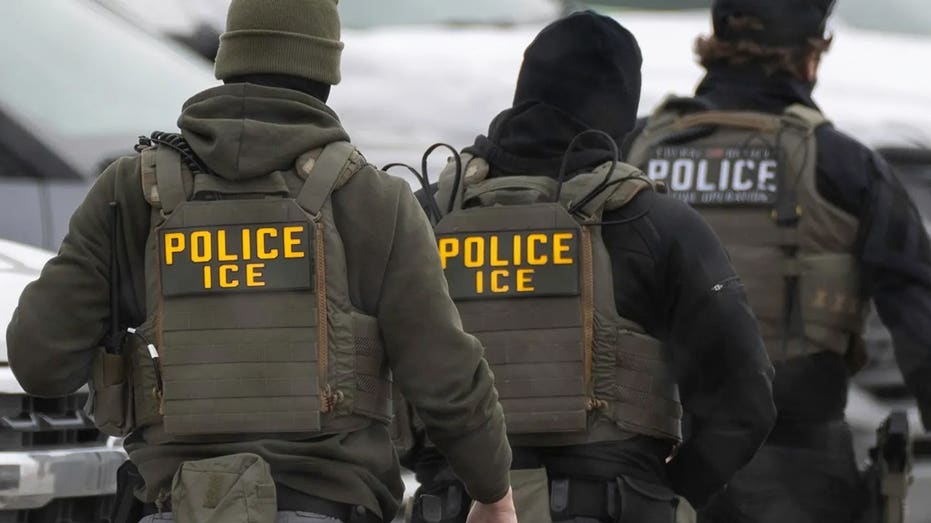

U.S. Immigration and Customs Enforcement is considering spending up to $20 million on gloves designed to deliver an electrical charge through physical contact. New York Gov. Kathy Hochul and Attorney General Letitia James warned that officers could face legal consequences if the devices are used in the state. The dispute comes as New York officials pursue limits on cooperation between local law enforcement agencies and federal immigration authorities.
Federal procurement records describe the equipment as conductive distraction and de-escalation devices. ICE says it evaluates officer safety, training requirements and applicable law enforcement standards before adopting new technology.
| 1) | ICE considers an electric shock glove purchase |
| 2) | New York officials warn of possible legal consequences |
| 3) | ICE defends its equipment review process |
| 4) | Manufacturer demonstrations show the device in use |
| 5) | Equipment dispute adds to wider New York conflict |
ICE considers an electric shock glove purchase
The Department of Homeland Security is moving toward acquiring thousands of devices identified in federal procurement records as conductive distraction and de-escalation devices. The potential purchase, which could total as much as $20 million, involves the G.L.O.V.E., short for Generated Low Output Voltage Emitter.
The device is designed to transmit an electrical charge when the wearer makes contact with another person. The procurement records indicate that ICE is assessing the equipment for use by federal officers, although the available information does not establish that a final purchase has been completed or that the gloves have been deployed.
New York officials warn of possible legal consequences
The proposed equipment prompted warnings from Kathy Hochul and Letitia James on Wednesday. The governor said state protections should apply in New York and argued that federal officers could be held accountable if the devices were used in a way that violated constitutional rights or caused undue harm.
“You cannot trample on someone’s constitutional rights, and you cannot cause them undo harm. You will be held accountable,” Kathy Hochul said.
Letitia James said her office was reviewing the DHS proposal and considering whether use of the technology could violate New York law, including the State Administrative Procedure Act. She also said the state would pursue legal action against DHS if someone in New York were injured by the devices.
ICE defends its equipment review process
ICE defended its approach to evaluating new tools, saying the agency considers officer safety and established law enforcement standards. A DHS spokesperson said the agency continually assesses the needs of officers in the field and reviews each technology for compliance with applicable policies and standards.
“Every decision is made with careful consideration and appropriately reviewed to ensure that any technology ICE utilizes is consistent with all applicable law enforcement policies and standards,” the spokesperson said.
The agency also said its officers receive de-escalation instruction and continuing use-of-force training. ICE characterized the equipment review as part of its broader effort to provide officers with tools for arrests and immigration enforcement operations.
Manufacturer demonstrations show the device in use
The gloves are manufactured by Compliant Technologies, a company based in Lexington, Kentucky. Demonstration videos released by the company show test subjects falling to the ground after contact with a person wearing the gloves, illustrating the intended electrical effect.
Jeff Niklaus, the company’s founder and chief executive, declined to discuss the potential federal purchase. In an email, he said the company was unable to comment on the matter. No details were provided about the potential number of devices, the timeline for acquisition or specific deployment conditions.
Equipment dispute adds to wider New York conflict
The disagreement over the gloves is part of a broader conflict between New York officials and the federal government over immigration enforcement. Kathy Hochul and Letitia James are also seeking to reduce cooperation between local law enforcement agencies and ICE.
New York law enforcement agencies have until Aug. 24 to end civil immigration enforcement agreements with ICE or potentially face legal consequences. Letitia James said about a dozen agencies had such agreements as of July, including Nassau County. The equipment proposal has therefore intensified an existing debate over federal authority, state protections and the limits of local participation in immigration enforcement.
| Number | Key Point |
|---|---|
| 1 | ICE could spend up to $20 million on G.L.O.V.E. devices. |
| 2 | New York officials are reviewing possible violations of state law. |
| 3 | ICE says new equipment undergoes policy and safety reviews. |
| 4 | The gloves are made by Compliant Technologies in Kentucky. |
| 5 | The dispute coincides with a deadline for local agencies to end civil immigration agreements. |
Summary
ICE is evaluating a potentially $20 million purchase of electric shock gloves while New York officials assess whether their use could violate state law. The competing positions reflect a continuing dispute over federal immigration enforcement, officer equipment and state authority. No final deployment details have been announced.
Frequently Asked Questions
What equipment is ICE considering?
ICE is considering the G.L.O.V.E., or Generated Low Output Voltage Emitter, a glove designed to deliver an electrical charge through contact.
How much could the purchase cost?
Federal procurement records indicate that the potential purchase could cost up to $20 million.
Why are New York officials objecting?
Gov. Kathy Hochul and Attorney General Letitia James say use of the devices could violate constitutional protections or New York law, and they warned of possible legal action if someone were injured.
