

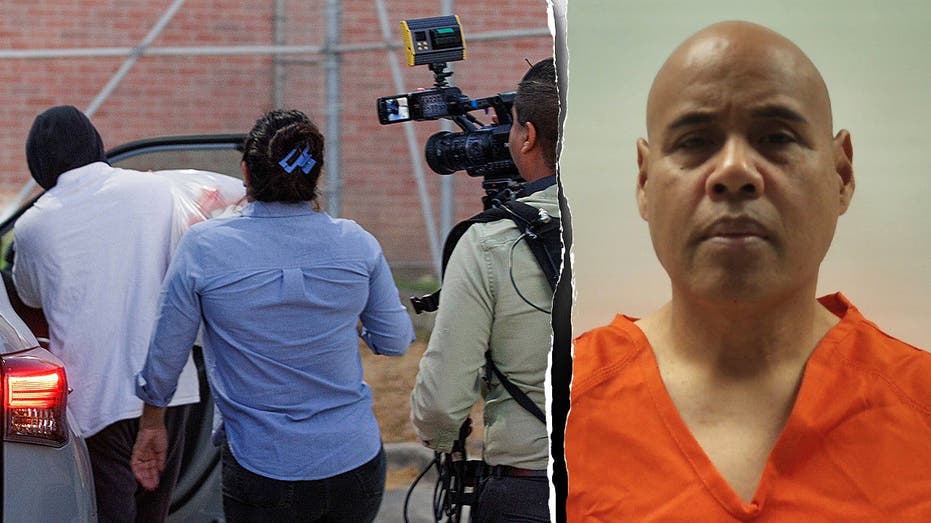

ICE officer Christian Castro was released from a Texas detention facility on Thursday after a federal judge declined Minnesota’s request to prevent his release. Minnesota prosecutors have charged Castro in connection with a January shooting involving a Venezuelan migrant in Minneapolis. The state had sought to keep him detained while pursuing extradition from Texas. The ruling leaves the extradition dispute unresolved.
Cameron County Sheriff Manuel Trevino said Castro was released at 6:59 a.m. on August 27, 2026. Castro had been arrested in Texas in late May under a nationwide warrant issued after Minnesota filed criminal charges. Minnesota officials warned that he could flee to Mexico if released, but the federal court found that the state had not met the legal requirements for a temporary restraining order.
| 1) | Release follows failed emergency court request |
|---|---|
| 2) | Minnesota charges stem from Minneapolis shooting |
| 3) | Texas detention deadline shaped the dispute |
| 4) | Federal judge rejects Minnesota’s temporary restraining order |
| 5) | Extradition fight remains unresolved after release |
Release follows failed emergency court request
Christian Castro, an ICE officer charged in Minnesota, left the Carrizalez-Rucker Cameron County Detention Center in Brownsville, Texas, on Thursday, August 27. His release followed a federal judge’s decision not to order Texas to continue holding him. Minnesota had asked the court to intervene before the detention period expired and to require further action on the state’s extradition request.
The case involved competing responsibilities among Minnesota officials, Texas authorities and the federal court. Minnesota sought custody for prosecution, while Texas had detained Castro under the authority of a Minnesota warrant. The court’s decision allowed the Texas detention to end without resolving whether Castro must ultimately return to Minnesota.
Minnesota charges stem from Minneapolis shooting
Hennepin County Attorney Mary Moriarty announced in May that Castro faced four counts of second-degree assault and one count of falsely reporting a crime. The charges arose from a January incident in Minneapolis during Operation Metro Surge, when Castro allegedly fired his service weapon at the front door of a home.
Moriarty alleged that people had recently entered the residence and posed no threat. The bullet struck Julio Sosa-Celis in the leg and later lodged in the wall of a child’s bedroom, according to her account.
“Mr. Castro fired his service weapon at the front door of a home knowing there were people who had just run inside that presented absolutely no harm to him or anyone else,” Moriarty asserted.
The allegations remain the basis of the Minnesota prosecution and have not been resolved at trial.
Texas detention deadline shaped the dispute
After Castro left Minnesota, a Hennepin County judge issued a nationwide warrant. Texas authorities arrested him in late May, and Minnesota Governor Tim Walz began seeking his return under the Extradition Act of 1793 and the Uniform Criminal Extradition Act.
The federal court said the Uniform Criminal Extradition Act allowed Castro to remain detained on the Minnesota warrant only until August 27, 2026. As that date approached, Minnesota made repeated inquiries to Texas about the status of the extradition request. The state said it feared Castro would flee into Mexico if released.
Federal judge rejects Minnesota’s temporary restraining order
Minnesota filed its federal action on August 18, alleging that Texas Governor Greg Abbott had refused to sign a rendition warrant. The state argued that the refusal violated the U.S. Constitution’s Extradition Clause, federal law and the Uniform Criminal Extradition Act.
U.S. District Judge Fernando Rodriguez, Jr. held a hearing on August 25. In a Wednesday order, he concluded that Minnesota had not satisfied the requirements for a temporary restraining order. The decision declined to block Castro’s release or compel Texas to maintain custody while the extradition dispute continued.
“Based on the record and the applicable law, the Court concludes that Minnesota fails to satisfy the requirements for the issuance of a temporary restraining order,” the order stated.
Extradition fight remains unresolved after release
Castro’s release does not determine whether Minnesota can eventually obtain custody through the extradition process. It means only that Texas could not continue holding him under the existing detention authority after August 27 without further legal action.
The immediate outcome is a setback for Minnesota officials, who had pressed for Castro to remain detained and be returned to Hennepin County. The criminal charges remain pending, while the states continue to dispute the legal steps required for extradition.
| Number | Key Point |
|---|---|
| 1 | Christian Castro was released in Texas on August 27, 2026. |
| 2 | Minnesota charged him with four counts of second-degree assault and one count of falsely reporting a crime. |
| 3 | The charges relate to a January shooting in Minneapolis. |
| 4 | A federal judge declined to issue a temporary restraining order blocking Castro’s release. |
| 5 | The extradition dispute between Minnesota and Texas remains unresolved. |
Summary
Christian Castro was released from Texas custody after the court determined that Minnesota had not shown grounds to extend his detention through an emergency order. Minnesota’s criminal case remains pending, and officials continue to seek a legal path to bring him back to the state. The ruling addressed custody and extradition procedure, not the merits of the shooting allegations.
Frequently Asked Questions
Why was Christian Castro arrested in Texas?
Castro was arrested under a nationwide warrant after Minnesota charged him in connection with a January shooting in Minneapolis.
What charges does Castro face?
He faces four counts of second-degree assault and one count of falsely reporting a crime in Hennepin County.
Why did the judge allow his release?
The judge found that Minnesota had not met the legal requirements for a temporary restraining order and that the applicable detention period was ending on August 27, 2026.
Does the release end the Minnesota case?
No. The release ended the Texas detention described in the court proceedings, but the Minnesota criminal charges and the broader extradition dispute remain unresolved.
