

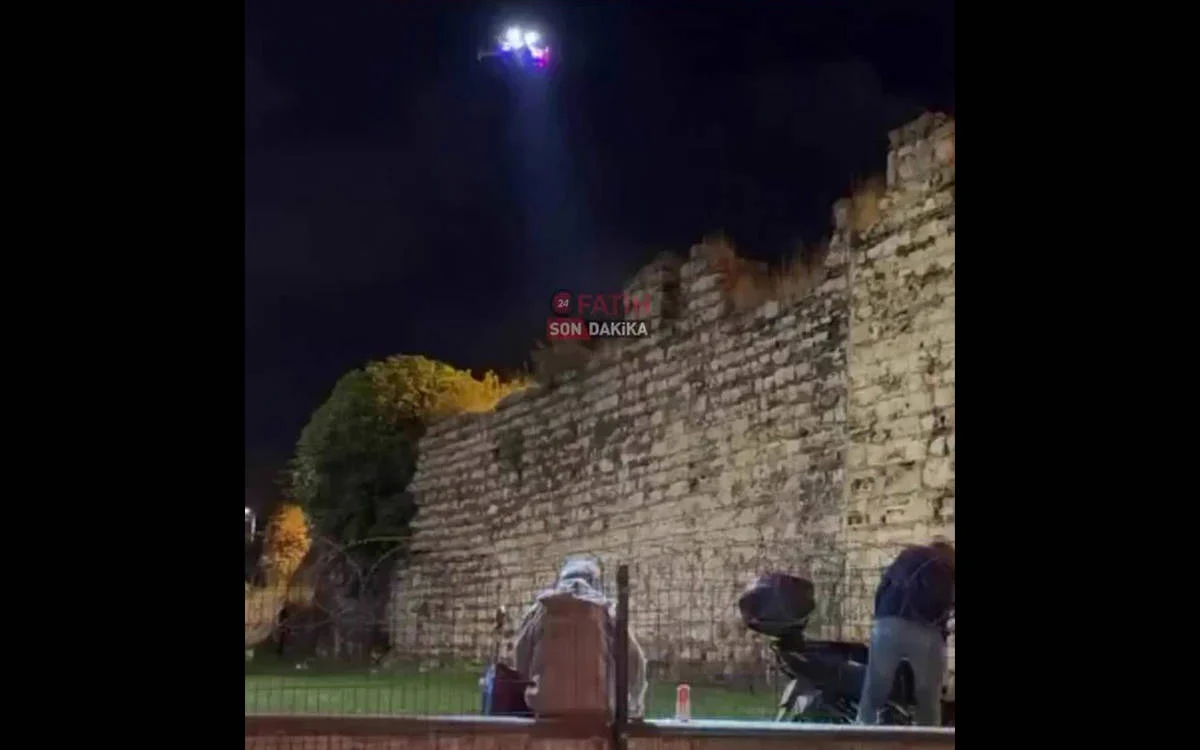

In a striking display of modern policing, İstanbul police have introduced aerial drones equipped with cutting-edge technology to monitor public spaces and enforce regulations, particularly concerning alcohol consumption. This initiative has garnered significant attention, prompting discussions around the implications of mass surveillance in urban environments. Drones have been seen patrolling areas like Narlikapi Avenue, warning citizens against drinking alcohol in public, which has led to a blend of fascination and concern among residents and observers alike.
| Article Subheadings |
|---|
| 1) Introduction of Drone Technology in Policing |
| 2) Impact on Public Perception and Privacy Concerns |
| 3) Operational Details of Drones Used by İstanbul Police |
| 4) Mass Surveillance Trends in İstanbul |
| 5) Future Implications of Drone Surveillance |
Introduction of Drone Technology in Policing
The İstanbul police force has increasingly relied on drone technology in its operations, marking a significant evolution in law enforcement practices. Reports indicate that a police drone was deployed on Narlikapi Avenue, generating attention after it issued warnings against consuming alcohol in designated areas. This incident not only highlights the practical applications of drone surveillance but also raises questions regarding government oversight and individual freedoms in public spaces.
The police stated that the initiative aims to enhance public safety and reduce incidents of violence associated with public drinking. However, the real-time monitoring capabilities of these drones suggest a shift towards proactive rather than reactive law enforcement. Critics argue that this enforcement method could lead to an infringement on personal liberties and an increase in the already heightened surveillance state.
Impact on Public Perception and Privacy Concerns
Following the recent drone operations, social media platforms have been flooded with reactions from citizens who expressed feelings of unease. Terms such as “dystopian” have arisen in conversations about the implications of such technology in daily life. Many fear a future where privacy is significantly compromised, and citizens are continuously under the watchful eye of law enforcement.
This concern is especially pronounced among marginalized groups who already feel targeted by police initiatives. Critics argue that a system that surveils communities disproportionately affects individuals from lower-income demographics or those belonging to the LGBTI+ community. As a result, mass surveillance raises ethical questions about the balance between safety and civil liberties.
Operational Details of Drones Used by İstanbul Police
The drones employed by the İstanbul police are equipped with advanced technology including thermal imaging and night vision capabilities. This allows them to operate effectively during both day and night. Their unique ability to track vehicles through an object tracking system enhances the police’s operational efficiency during various enforcement activities.
In a recent operation dating back to July 18, 2025, drones were deployed in Beyoğlu to oversee activities related to trans sex workers. The police conducted street closures while drones provided aerial surveillance, recording occurrences throughout the operation. Such actions exemplify the dual role of drones in both monitoring and enforcing laws, raising concerns over surveillance misuse.
Police Chief Selami Yıldız spoke about the state-of-the-art surveillance capabilities the department has acquired. He emphasized a proactive approach toward monitoring the city, ensuring safety in urban spaces while underlining the technological advancements that support these operations.
Mass Surveillance Trends in İstanbul
The introduction of drone surveillance coincides with a broader trend of mass surveillance in İstanbul, characterized by an increasing number of ID checks and police presence across public areas. For instance, during a single night in June 2025, police conducted ID checks on approximately 450,000 residents, highlighting the extensive reach of law enforcement initiatives. This effort closely correlates with general measures aimed at managing urban crime and maintaining order.
Such operations are particularly concentrated in poorer neighborhoods and areas with high concentrations of marginalized communities. By using drones, the police have enhanced their capacity to conduct these checks more effectively, yet the resulting fear and anxiety within the community suggest that this approach may further alienate already vulnerable populations.
Future Implications of Drone Surveillance
Looking ahead, the implications of drone technology in policing extend beyond immediate safety concerns. As advancements in surveillance technology continue, so too does the potential for its misuse in policing practices. The normalization of drones may lead to broader acceptance of surveillance techniques that infringe upon civil rights and privacy.
Activists and civil rights organizations are likely to challenge these practices, advocating for clearer regulations on the use of such technologies. The ongoing debate will involve discussions on accountability, transparency, and the ethical use of surveillance equipment in public spaces.
This issue of surveillance is anticipated to come into sharper focus in legislative discussions aimed at establishing guidelines governing the use of drones in policing, balancing public safety interests with individual rights to privacy.
| No. | Key Points |
|---|---|
| 1 | İstanbul police have begun using drones for real-time surveillance, particularly to enforce restrictions on public drinking. |
| 2 | Public reaction has been mixed, with notable concerns regarding civil liberties and the ethical implications of surveillance technology. |
| 3 | Drones are equipped with advanced features such as thermal imaging and tracking capabilities, improving police operational capabilities. |
| 4 | The trend of mass surveillance is prevalent in İstanbul, with police conducting extensive ID checks in certain neighborhoods. |
| 5 | Future implications of drone use in policing are anticipated, prompting discussions on regulations and the potential for misuse. |
Summary
The deployment of drone technology by İstanbul police marks a significant shift in the relationship between law enforcement and citizens. While proponents argue that it enhances public safety and operational efficiency, critics highlight several ethical concerns related to privacy and surveillance. As the technology continues to evolve, both societal attitudes and legal frameworks will need to keep pace to mitigate the risks associated with increased surveillance while protecting individual liberties.
Frequently Asked Questions
Question: What are the capabilities of the drones used by İstanbul police?
The drones used by İstanbul police are equipped with thermal imaging, night vision capabilities, and object tracking systems, allowing them to operate effectively in various conditions and monitor activities in real time.
Question: How has the public reacted to the introduction of drones in policing?
Public reaction has been mixed, with many expressing concerns about civil liberties and viewing the presence of drones as a step towards a more dystopian surveillance state.
Question: What trends in mass surveillance are evident in İstanbul?
Mass surveillance in İstanbul has manifested through extensive police ID checks and the use of advanced surveillance technology, particularly targeting certain neighborhoods and demographic groups.
