

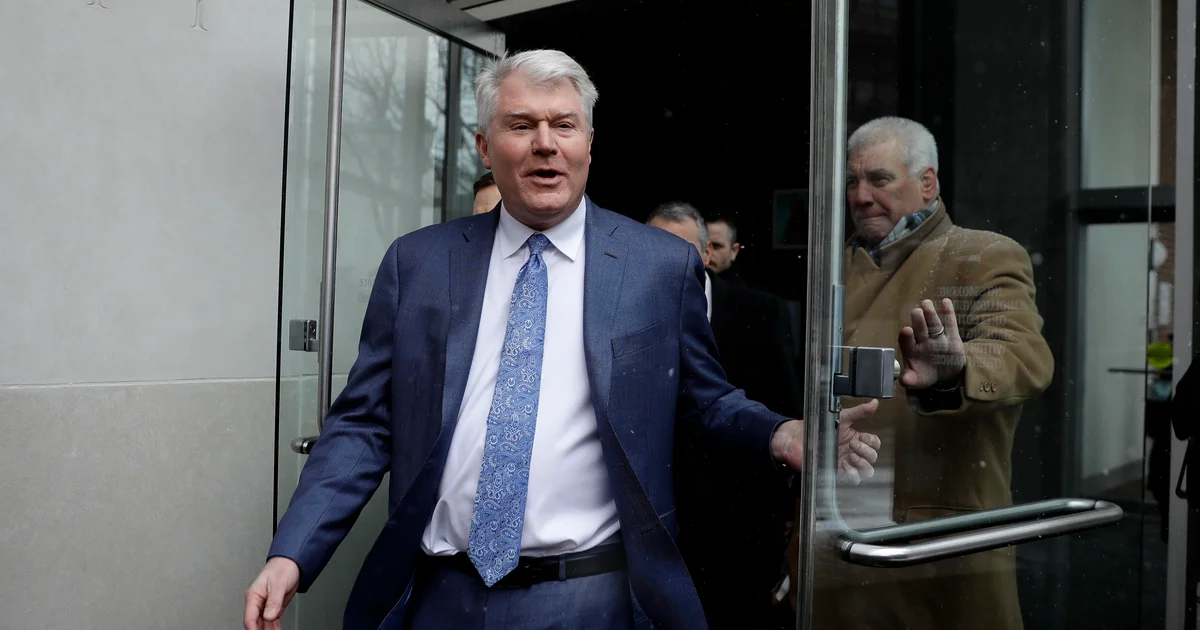

Former Philadelphia labor leader John “Johnny Doc” Dougherty has been granted an early release from prison following President Donald Trump‘s decision to sign a commutation order. This significant turning point allows Dougherty to leave prison earlier than initially sentenced for his crimes, which included bribery and embezzlement. His release is particularly notable as it comes at a time when his wife urgently requires care due to severe health issues.
| Article Subheadings |
|---|
| 1) Overview of John Dougherty’s Criminal Background |
| 2) The Circumstances Surrounding the Commutation |
| 3) The Response from Legal Officials and the Community |
| 4) The Impact of Dougherty’s Release |
| 5) Future Implications in Pennsylvania Politics |
Overview of John Dougherty’s Criminal Background
John “Johnny Doc” Dougherty, who led the International Brotherhood of Electrical Workers (IBEW) Local 98 for nearly 30 years, gained notoriety for his deep ties to the political fabric of Pennsylvania. In 2023, he was convicted of bribing a city council member and stealing approximately $600,000 from the union he directed. His trial also included findings from an earlier conviction in November 2021, where he faced similar charges involving bribery and fraud with former Councilmember Bobby Henon.
Dougherty was sentenced to serve six years in federal prison in July 2024. With four years remaining on his sentence following the president’s commutation, this development sheds light on his controversial legacy in labor and politics. Given his previous prominence, his criminal actions prompted discussions on ethical practices within labor unions and political dealings in the state.
The Circumstances Surrounding the Commutation
The decision to grant Dougherty a commutation was spurred by the urgent need for him to support his ill wife, Cecilia Dougherty. His attorney, George Bochetto, emphasized that her health situation had deteriorated significantly, leaving her in dire need of care that was no longer affordable without Dougherty’s presence. Bochetto noted, “Cecilia Dougherty is in desperate need of care. Her money has run out for private nursing, and she desperately needs John by her side.” This appeal aimed to highlight the humanitarian angle of Dougherty’s case.
Following a phone call from the White House, Bochetto confirmed that President Trump agreed to sign the commutation, allowing Dougherty to be released from prison. As of the evening following the announcement, official records had not yet reflected the commutation approval; however, Bochetto expressed hope that Dougherty would be released by Friday morning. The situational context underscored a blend of personal, political, and legal considerations that characterize high-profile commutations.
The Response from Legal Officials and the Community
Reactions to Dougherty’s release were mixed, underscoring the contentious nature of his public persona. Prosecutors opposed the commutation, arguing that Dougherty had not served enough time for the severity of his crimes. They maintained that releasing him early could set a dangerous precedent concerning accountability for white-collar crime. The Department of Justice emphasized their belief that his prior convictions warranted a more substantial confinement duration.
Conversely, Dougherty’s supporters expressed overwhelming gratitude for the president’s decision. Bochetto remarked, “We are all just so grateful to President Trump, who really has risen above politics. John Dougherty is an icon of Democratic politics in Philadelphia and Pennsylvania.” This sentiment was echoed by union members and local political figures who viewed Dougherty’s contributions to labor movements as substantial, despite his criminal convictions. The polarized reactions reveal the complexities involved in judicial matters where personal issues intersect with political implications.
The Impact of Dougherty’s Release
Dougherty’s release is set against the backdrop of public sentiments related to justice and rehabilitation. Advocates for criminal justice reform may view the commutation as a positive step in acknowledging the need for compassion in legal proceedings, particularly concerning familial obligations. The case is likely to reignite debates about the influence of wealth and power in securing favorable judicial outcomes, especially within political circles.
Moreover, the early release of such a high-profile figure like Dougherty may have implications for union politics in Pennsylvania. His return could reinvigorate his past relationships and influence within the IBEW and local political arenas. The responses from unions and political players may shift significantly depending on how his reentry into the community is perceived concerning his past actions.
Future Implications in Pennsylvania Politics
As a long-standing figure in Pennsylvania’s political landscape, Dougherty’s commutation may have lasting effects on future labor and political relations. His blending of union leadership with political influence raises questions about ethical governance and public trust. Observers will keenly watch how Dougherty navigates his reentry into the public sphere and whether he seeks to reclaim any of his former political stature.
The potential for revitalized influence in local and state elections cannot be dismissed, particularly given the relationships he forged over decades of service in the labor movement. Moving forward, factions within the Democratic Party and labor communities may recalibrate their strategies, given Dougherty’s controversial yet impactful history, influencing both public sentiment and political candidacies in the region.
| No. | Key Points |
|---|---|
| 1 | Former labor leader John Dougherty was granted an early release from prison due to President Trump’s commutation. |
| 2 | Dougherty was convicted of bribery and embezzlement from the IBEW Local 98. |
| 3 | His attorney cited the urgent health needs of his wife as a reason for the commutation. |
| 4 | The response to his release has been polarized among legal officials and the community. |
| 5 | Dougherty’s reentry could influence future labor politics and debates on ethical governance. |
Summary
The commutation granted to John Dougherty serves as a quintessential case at the intersection of labor, politics, and moral considerations in the justice system. His release brings forth pressing questions regarding the implications for both union practices and political accountability in Pennsylvania. As he re-enters society, the unfolding of these events will be closely monitored by both supporters and opponents, observing how his situation impacts the dynamics of organized labor and political maneuvering within the state.
Frequently Asked Questions
Question: Who is John Dougherty?
John Dougherty, also known as “Johnny Doc,” is a former leader of the International Brotherhood of Electrical Workers Local 98 and a prominent figure in Pennsylvania’s labor and political scene.
Question: What was Dougherty convicted of?
Dougherty was convicted of bribery and embezzlement, having misappropriated funds from the IBEW, and using his position to influence city council decisions.
Question: Why was Dougherty granted a commutation?
He was granted a commutation primarily due to his wife’s critical health issues, which required his presence and support at home when her private nursing care became unaffordable.
