

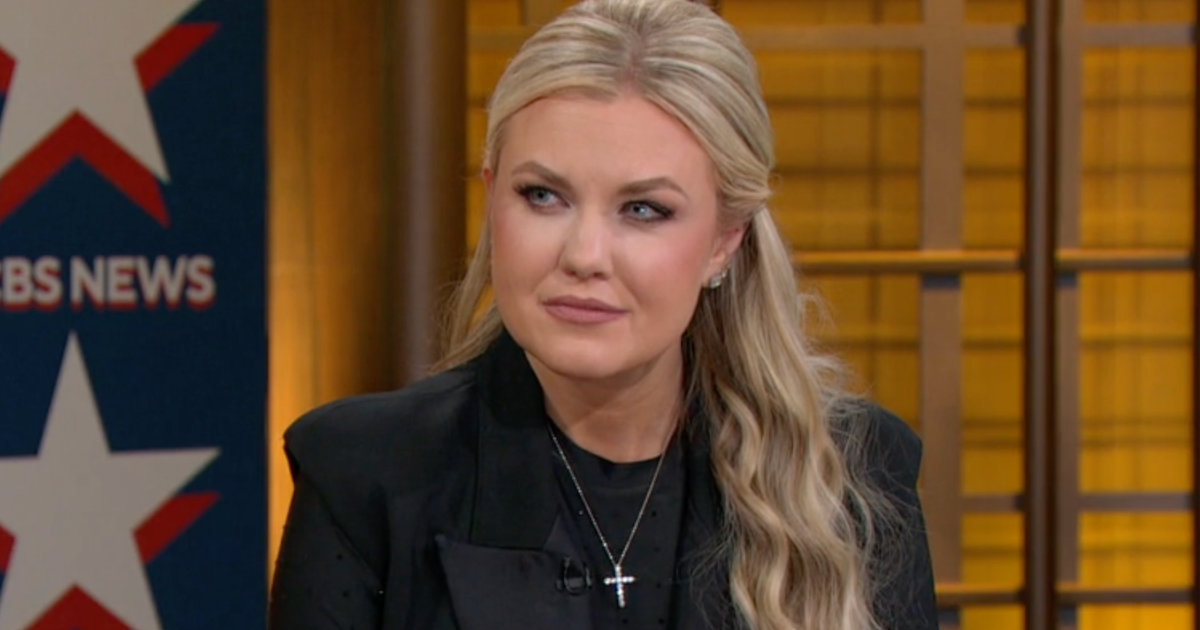

In a compelling town hall hosted by CBS News, Erika Kirk, the widow of the late conservative activist Charlie Kirk, shared her reflections on grief, forgiveness, and her late husband’s legacy. Following his assassination at a university event three months prior, she joined a discussion moderated by journalist Bari Weiss, alongside attendees including college students and the father of a shooting victim. The conversation spanned various themes including the impact of political rhetoric and the public’s responses to tragedy, emphasizing the need for humane discourse in society.
| Article Subheadings |
|---|
| 1) Erika Kirk’s message to people who sought to justify assassination: “Tell that to my 3-year-old daughter” |
| 2) Erika Kirk: Charlie never incited violence |
| 3) Erika Kirk: Charlie shouldn’t be “deteriorated” to “out-of-context” clips |
| 4) The last student to talk to Charlie Kirk asks: Will you condemn President Trump’s rhetoric? |
| 5) Dad of Israeli Embassy staffer killed in shooting asks: Will you condemn antisemitism? |
Erika Kirk’s message to people who sought to justify assassination: “Tell that to my 3-year-old daughter”
During the town hall, Erika Kirk expressed deep sorrow and outrage towards anyone who attempted to rationalize her husband’s brutal assassination. She referred to these justifications as “sick” and highlighted the dehumanizing nature of online discourse surrounding violent incidents. Her poignant statement underscored her personal anguish, especially for the impact his death has on their young daughter.
She challenged those who make light of such tragedies, inviting them to consider their statements from a personal perspective. “He’s a human being. You think he deserved that? Tell that to my 3-year-old daughter,” she remarked, emphasizing the emotional toll such violence takes on families. Kirk’s message served not only as a personal plea but as a broader critique of societal desensitization to violence through digital platforms.
Erika Kirk: Charlie never incited violence
As she defended her husband’s legacy, Kirk clarified that her late husband was never one to encourage violence. She recounted how he engaged young people in debates, frequently inviting them to voice their opinions in a respectful manner. “He would say, ‘I’ll put my mic down. Tell me why you believe that. That’s interesting. I never thought of that. But have you thought of this?'” she recalled, reflecting on her husband’s commitment to fostering dialogue and understanding.
Kirk emphasized that recent statistics indicating a growing belief among young adults that “words can be violence” do not align with her husband’s approach to open conversation. She affirmed, “He never once said, ‘Go after them because they’re saying X, Y, Z and they deserve to die.'” This was her attempt to reclaim the narrative that has emerged since his death, highlighting instead the importance of civil discourse in political discussions.
Erika Kirk: Charlie shouldn’t be “deteriorated” to “out-of-context” clips
In her poignant remarks, Erika Kirk called for a more nuanced understanding of her husband’s viewpoints, arguing that he should not be reduced to short, often out-of-context quotes. During the discussion, she addressed controversial comments made by her husband that had gained significant attention following his assassination. “I would love for people to watch the full clips instead of taking comments out of context,” she urged, underlining the importance of context in interpreting his words.
She asserted, “My husband is not to be deteriorated to two sentences. He’s not. He is a thought leader.” By defending her late husband’s legacy and character, she aimed to shift public perception and encourage people to engage with his ideas fully, rather than through fragmented and often misleading snippets. Kirk explained that any misunderstanding has overshadowed the principles he stood for and the positive message he sought to convey.
The last student to talk to Charlie Kirk asks: Will you condemn President Trump’s rhetoric?
In a pivotal moment, Hunter Kozak, the last student to debate with Charlie Kirk before his assassination, posed a significant question during the town hall. As a self-identified liberal, Kozak has been vocally advocating for civil political discourse and inquired whether Erika Kirk would condemn the rhetoric of former President Donald Trump. He referenced specific incendiary remarks made by Trump that have raised concerns about political incitement.
Erika Kirk’s response was carefully crafted, indicating that such discussions extend beyond any one individual. “The issue is so much deeper than one person,” she stated, suggesting that societal attitudes toward debate and conflict begin much closer to home. Her focus on parental responsibility for shaping the future generation aimed to highlight the need for constructive conversations rather than perpetuating a cycle of hate and division.
Dad of Israeli Embassy staffer killed in shooting asks: Will you condemn antisemitism?
During the town hall, Robert Milgrim, whose daughter was one of the victims of a shooting incident at the Capitol Jewish Museum, inquired about Erika Kirk’s stance on antisemitism and whether she would openly condemn it. In her response, Erika Kirk articulated a firm position against all forms of hate, stating, “Hate is hate. It’s evil.” She delineated her beliefs regarding the importance of standing against antisemitism and underscored that both she and her late husband had always been clear supporters of Israel and the Jewish community.
This moment in the discussion highlighted the pervasive issue of rising antisemitism in the United States, particularly in light of statistics revealing a near 900% increase in incidents over the last decade. By addressing this critical subject, Erika Kirk sought to foster a broader dialogue centered on compassion and understanding within her community and beyond.
| No. | Key Points |
|---|---|
| 1 | Erika Kirk calls for empathy in the wake of her husband’s assassination. |
| 2 | She defends Charlie Kirk’s legacy as a proponent of civil discourse. |
| 3 | Kirk emphasizes the importance of context in interpreting her husband’s statements. |
| 4 | She addresses the impact of political rhetoric on societal behavior. |
| 5 | Antisemitism and rising hate crimes are critical issues emphasized in the discussion. |
Summary
The CBS News town hall featuring Erika Kirk served as a poignant and powerful reminder of the personal toll of political violence, echoing the urgent need for civil discourse and compassionate understanding in polarized times. Kirk’s reflections not only defended her husband’s controversial views but also urged society to confront deeper, systemic issues surrounding hate and injustice. As discussions continue about the intersection of politics and violence, her message resonates as a call for kindness and dialogue amidst the chaos.
Frequently Asked Questions
Question: What is the significance of Erika Kirk’s statement on forgiveness?
Erika Kirk’s statement on forgiveness highlights her commitment to healing and represents a broader spiritual principle she believes her husband would have endorsed. Rather than embracing anger or vengeance, she chooses forgiveness as a pathway to peace, emphasizing its transformative potential.
Question: How does Erika Kirk view public discourse following her husband’s death?
Erika Kirk believes that public discourse must shift towards empathy, understanding, and constructive conversation. She emphasizes that societal attitudes should prioritize compassion over hostility, especially in the wake of violence and tragedy.
Question: What impact did Charlie Kirk have on his audiences?
Charlie Kirk was known for engaging young audiences through open debates, encouraging participants to articulate their viewpoints. His belief in the power of dialogue aimed to foster understanding and spark meaningful exchanges across differing perspectives.
