

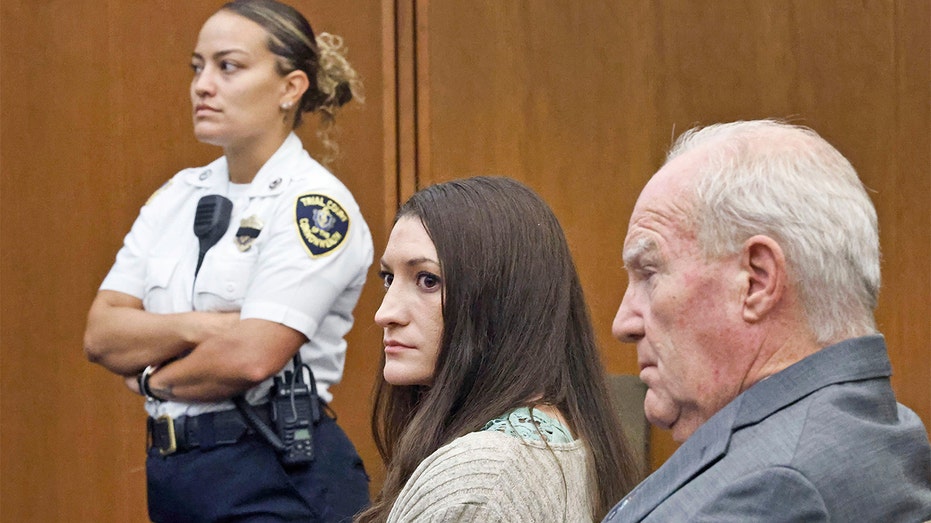

Three jurors who served in the Lindsay Clancy murder trial have spoken publicly after a Massachusetts jury failed to reach a unanimous verdict. The foreperson said one juror acknowledged having reasonable doubt but still refused to find Clancy not guilty by reason of insanity. The jury deadlocked after about 40 hours of deliberations over six and a half days, prompting a judge to declare a mistrial. It remains unclear whether prosecutors will seek a retrial.
Clancy, a Massachusetts mother, is accused of killing her three young children in January 2023. She admitted to the killings but pleaded not guilty by reason of insanity, while prosecutors argued that she was criminally responsible for the deaths.
| 1) | Jury deadlock and mistrial |
|---|---|
| 2) | Foreperson’s account of reasonable doubt |
| 3) | Clancy’s insanity defense |
| 4) | Jurors’ concerns about the holdout |
| 5) | Next steps in the case |
Jury deadlock and mistrial
The mistrial was declared in Plymouth, Massachusetts, after jurors told the court they were hopelessly deadlocked. The panel had deliberated for roughly 40 hours across six and a half days before concluding that it could not produce a unanimous verdict. The judge’s decision ended the trial without a determination of whether Clancy was criminally responsible for the deaths of her children.
The deadlock followed a closely watched prosecution in which the central question was Clancy’s mental state at the time of the January 2023 killings. A mistrial does not resolve the criminal charges. Instead, it leaves the case open to possible further proceedings, depending on the decision of prosecutors and the court.
Foreperson’s account of reasonable doubt
The foreperson said one juror, identified by other members as the lone holdout, acknowledged having reasonable doubt during deliberations. According to the foreperson, that admission initially appeared to move the panel toward completing the verdict forms. The juror then changed course on the specific question of whether Clancy should be found not guilty by reason of insanity.
“He admitted he had reasonable doubt and I started filling out the forms, I was so excited,” the foreperson said.
“But I’m still not going to say that she’s not guilty by reason of insanity,” the foreperson recalled the juror saying.
The account was provided in interviews by three jurors who served on the panel, including the foreperson. Their descriptions offer an account of the deliberations but do not replace the court’s formal finding that the jury could not reach a unanimous verdict.
Clancy’s insanity defense
Clancy admitted to killing her three young children but entered a plea of not guilty by reason of insanity. Her defense argued that she was suffering from severe mental illness when the killings occurred in January 2023 and therefore should not be held criminally responsible.
Prosecutors disputed that position and maintained that Clancy was responsible for the deaths. The insanity issue required jurors to assess the evidence concerning her mental condition at the time of the alleged crimes, rather than deciding only whether the killings occurred. The disagreement over that legal conclusion became the decisive issue described by the jurors after the mistrial.
Jurors’ concerns about the holdout
The three jurors said they became increasingly frustrated with the holdout during the deliberations. They alleged that the juror refused to fully consider the views of the rest of the panel, leaving the group unable to reach agreement despite extended discussions in the Plymouth courtroom case.
The foreperson said she wrote a note to the judge expressing concern that one juror had acknowledged reasonable doubt but would not agree to a verdict. The note was part of the events leading to the court’s recognition that the jury remained deadlocked. The juror identified by the others as the holdout did not respond to an effort to obtain comment.
Next steps in the case
The immediate legal consequence of the mistrial is that the case ended without a unanimous verdict. Prosecutors must now determine whether to pursue a new trial, while the defense may continue challenging the case and its handling in court. No decision on a retrial had been publicly confirmed in the account provided.
Kevin Reddington, Clancy’s attorney, has indicated that he is open to a possible resolution and has urged prosecutors to reconsider the case. Any future proceeding would again focus on the charges, the evidence about Clancy’s mental condition and the legal standard for an insanity verdict.
| Number | Key Point |
|---|---|
| 1 | The Massachusetts jury deadlocked after about 40 hours of deliberations over six and a half days. |
| 2 | The foreperson said a juror acknowledged reasonable doubt but rejected a not guilty by reason of insanity verdict. |
| 3 | Prosecutors have not confirmed whether they will seek a retrial. |
Summary
The mistrial in the Lindsay Clancy case followed prolonged deliberations and a reported dispute over the insanity verdict. Jurors described a lone holdout who expressed reasonable doubt but would not support the defense’s proposed outcome. The case remains unresolved, with any retrial decision still pending.
Frequently Asked Questions
Why was the Lindsay Clancy trial declared a mistrial?
The judge declared a mistrial after the jury reported that it was hopelessly deadlocked and could not reach a unanimous verdict.
What did the foreperson say about the holdout juror?
The foreperson said the juror acknowledged having reasonable doubt but still refused to find Clancy not guilty by reason of insanity.
Will prosecutors retry the case?
It remains unclear whether prosecutors will seek a new trial. No decision on a retrial had been publicly confirmed.
