

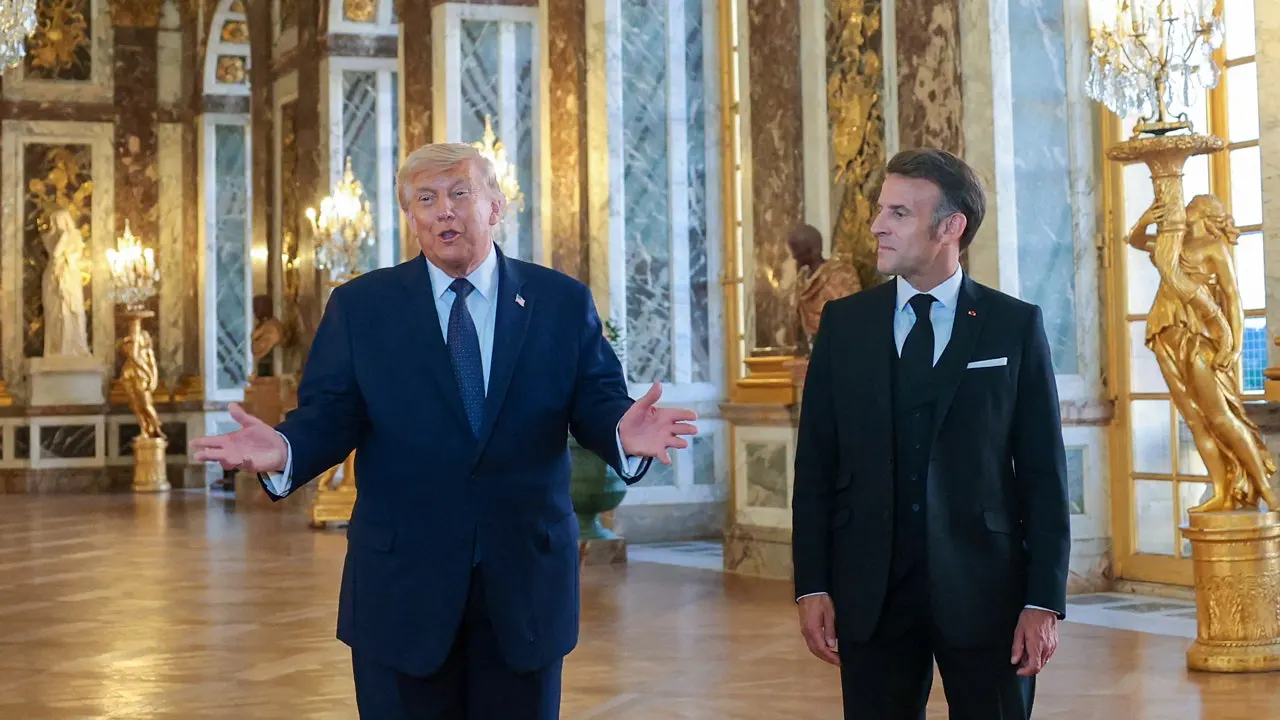

In response to escalating riots across France, President Emmanuel Macron attributed some of the unrest to the ongoing U.S. war against Iranian forces, citing its impact on fuel prices and the cost of living within the country. During a televised address, Macron expressed understanding for the demonstrators’ grievances while announcing his impending travels to the Gulf in search of solutions to the energy crisis. Critics, however, questioned the validity of his claims, suggesting that the riots are part of a larger, organized rebellion involving various groups within France.
| Article Subheadings |
|---|
| 1) Macron Blames U.S. Actions for Domestic Unrest |
| 2) The Background of the Protests |
| 3) Perspectives from Experts |
| 4) Political Reactions and Consequences |
| 5) Future Implications for France |
Macron Blames U.S. Actions for Domestic Unrest
In a televised speech, French President Emmanuel Macron conveyed his deep concern regarding the protests erupting across France, linking the unrest to the broader geopolitical consequences of the U.S. military actions against Iranian forces. He said, “demonstrators expressed concern about the cost of living and the price of fuel. Both are driven by the conflict launched in the Persian Gulf, a conflict in which France has taken no part but whose consequences we are suffering.” Macron’s comments appeared to be an attempt to contextualize the turmoil while absolving his government of direct culpability in the rising costs plaguing everyday citizens.
The timing of the president’s remarks comes during an explosive period when over 200,000 individuals took to the streets, indicating a collective frustration primarily rooted in economic hardship. Macron acknowledged that this sentiment was not isolated to France, mentioning similar protests unfolding throughout various European capitals. His acknowledgment of an external influence on internal affairs has further ignited debate about the effectiveness of his administration’s policies in addressing systemic issues that have long plagued the nation.
The Background of the Protests
The recent protests, marked by violence and unrest, were primarily catalyzed by a rising cost of living crisis prevalent throughout France. Spanning multiple demographics, these protests attracted a diverse array of participants, including students, environmental activists, former members of the “Yellow Vests” movement, and agricultural workers. On October 17, 2026, an estimated 200,000 demonstrators filled the streets, calling attention to soaring fuel prices and inflationary pressures that have hit households particularly hard.
The focal point of the demonstrations has revolved around the cost of essentials like fuel and groceries. Many participants expressed that their mounting frustrations were in fact tied to the policy failures of the current administration. Visual evidence from multiple cities showed clashes between the police and protesters leading to scenes of chaos, including looting and arson, indicating that these protests were not merely spontaneous outbursts of dissent, but rather organized movements fueled by deep-seated grievances.
Perspectives from Experts
Experts have raised concerns regarding Macron’s narratives. Lisa Daftari, a noted scholar on Iranian affairs, pointed out that while Macron attempted to implicate foreign conflicts for domestic strife, the reality on the ground suggests a more systemic issue. “Macron is pointing at the Iran war, but fuel is expensive because Iran’s regime closed the Strait of Hormuz and held the world’s energy supply hostage,” she stated. Daftari underscored that the depth of the riots, characterized by significant property damage and arrests, suggests they go beyond mere economic protests.
Daftari contended that the riots are indicative of an organized movement aimed at destabilizing the current French regime, with various factions leveraging the civil unrest for their own agendas. Meanwhile, Barak Seener, an associate research fellow, described these actions as symptomatic of a larger trend wherein illegal immigration and radical ideologies threaten European stability, raising alarms about the long-term consequences for the continent’s sociopolitical landscape.
Political Reactions and Consequences
Macron’s administration has not been passive in the face of protests. Prime Minister Sébastien Lecornu publicly accused the “ultra-left movement” of exacerbating disorder leading up to the presidential elections. The government’s response has included more robust law enforcement measures to quell riots, yet the political fallout remains significant. Critics from various political factions, including former President Donald Trump, who remarked on France’s deteriorating situation, have questioned the ability of Macron to rein in the escalating chaos.
Trump, while addressing reporters, declared, “I said the first time I met Macron, I said, you got to close up your borders. You’re going to ruin your country.” His comments highlight the international scrutiny France faces regarding its immigration policies and their societal repercussions, suggesting that Macron’s approach may need reevaluation as domestic tensions rise.
Future Implications for France
As France grapples with unrest attributed both to global conflicts and domestic policy failures, the future of the nation remains uncertain. Observers note that forthcoming elections may catalyze further political division, particularly if the government fails to address the genuine concerns of its citizens. The idea that Macron’s administration can effectively bridge the gap between economic discontent and political stability is increasingly being questioned.
Moreover, the ongoing unrest raises pertinent questions about the social fabric of France. Are these protests merely economic in nature, or do they signal a deeper ideological shift? The answer to this could determine the trajectory of not only French politics but potentially European stability at large.
| No. | Key Points |
|---|---|
| 1 | President Macron connected the riots to foreign conflicts, as he blamed the U.S. sanctions against Iran for fuel price hikes. |
| 2 | The protests represent discontent surrounding living conditions, with diverse groups uniting to express their grievances. |
| 3 | Experts suggest that the unrest is part of an organized rebellion rather than mere economic frustration. |
| 4 | Political fallout includes accusations against leftist movements and calls for a reevaluation of immigration policies. |
| 5 | Future elections may be pivotal in determining political stability and addressing social divides in France. |
Summary
The protests ravaging France seem to be multifaceted, blending economic distress with deeper socio-political tensions. While President Macron attempts to frame the unrest within the context of international conflicts, critics argue that it points to systemic issues rooted in domestic policy failures. As tensions rise and the country approaches crucial elections, understanding the roots of this unrest will be essential for ensuring France’s future stability. Without addressing the underlying concerns of the populace, the risks of prolonged chaos and political instability could be imminent.
Frequently Asked Questions
Question: Why are protests erupting across France?
Protests are largely driven by escalating costs of living, particularly rising fuel prices, which many believe are linked to broader geopolitical conflicts and government policies.
Question: What is President Macron’s stance on the protests?
President Macron has attributed some of the unrest to the U.S. war against Iran, suggesting its consequences are felt in France, although many critics argue that domestic issues are at the core of the protests.
Question: How have experts reacted to Macron’s claims?
Experts are skeptical of Macron’s narrative, asserting that the protests reflect organized dissent rather than simple economic grievances, indicating a more extensive ideological struggle within the country.
