

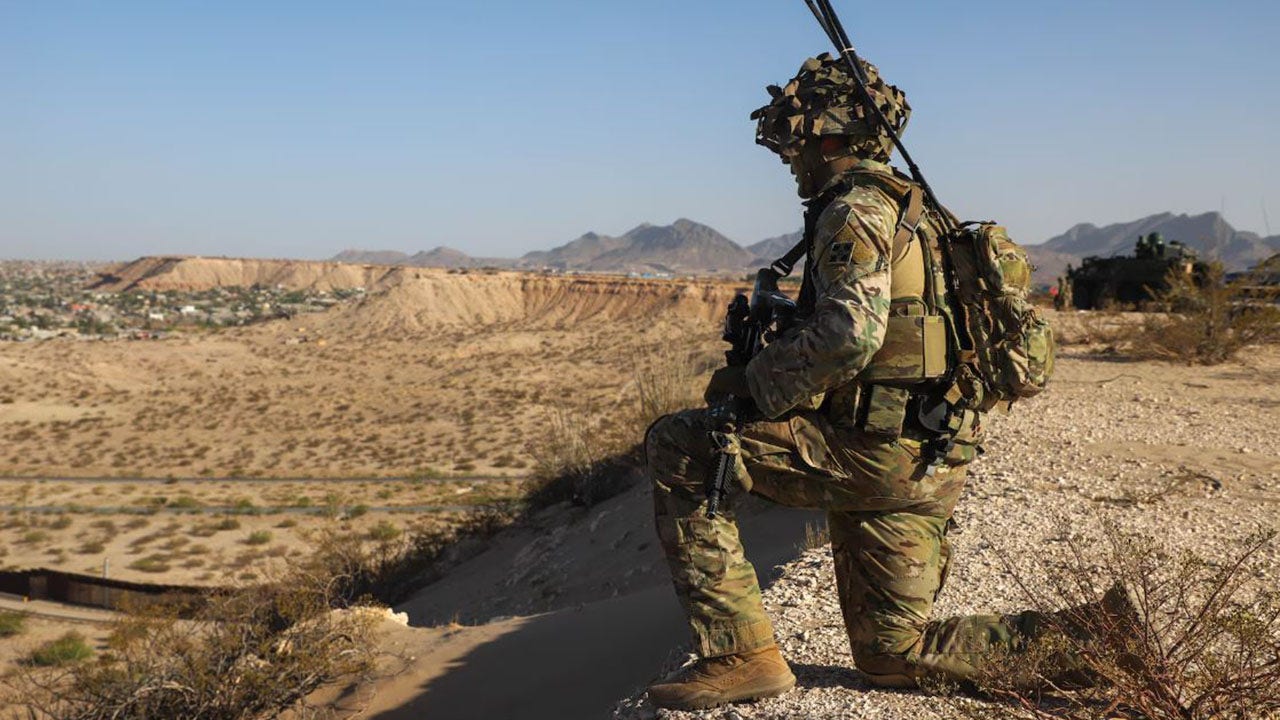

Military personnel stationed at the southern border have received new authority to detain and search illegal migrants within specific areas. The decision, made by U.S. Northern Command, grants service members from the Joint Task Force-Southern Border (JTF-SB) the ability to perform security tasks in the New Mexico National Defense Area (NMNDA), which is part of the Army’s Fort Huachuca. This significant shift enables the military to engage more actively in law enforcement roles, a move that could impact immigration control measures along the border.
As part of their new mandates, military personnel can implement various security measures including temporary detention of individuals trespassing, with the intent to assist civil authorities. This decision comes amid ongoing efforts to reinforce border security, and follows an executive directive aimed at curbing illegal immigration and trafficking concerns across the U.S.-Mexico boundary.
According to officials, this increased role signifies a shift in military engagement concerning domestic law enforcement, particularly amid ongoing debates on immigration policy. In this context, the actions undertaken by U.S. Northern Command hold potential legal and logistical implications for border operations moving forward.
| Article Subheadings |
|---|
| 1) The New Role of Military at the Border |
| 2) Historical Context of Military Engagement |
| 3) Specific Measures Authorized |
| 4) Implications for Law Enforcement |
| 5) Future Perspectives on Border Security |
The New Role of Military at the Border
The Joint Task Force-Southern Border has been granted new authority, allowing military members to temporarily detain and search illegal migrants in specific areas, particularly within the New Mexico National Defense Area (NMNDA). This decision is executed under the direction of U.S. Northern Command, which has taken a more prominent role in shaping border security measures in light of recent executive actions. The NMNDA, part of the larger Fort Huachuca military installation, becomes a key area where military personnel can engage in previously restricted activities.
This shift in policy marks a significant expansion of military involvement in law enforcement roles, particularly concerning immigration efforts. Historically, the military has been restricted from engaging directly in civilian law enforcement due to legal boundaries, primarily aimed at preventing misuse of military authority. However, this current directive allows for a more coordinated and responsive approach, aimed at detaining individuals involved in illegal crossings.
Historical Context of Military Engagement
The involvement of the U.S. military in domestic law enforcement activities has undergone significant scrutiny and evolution over the decades. Traditionally, the military’s role has been limited by the Posse Comitatus Act, which restricts the use of federal troops for domestic policing unless expressly authorized by Congress or the Constitution. Previous administrations have also employed various strategies when addressing border security, often invoking national emergencies or significant changes in migration patterns.
Before this recent shift, military roles at the border were primarily focused on logistical support, intelligence sharing, and surveillance, rather than direct law enforcement actions. For instance, National Guard troops were deployed in various capacities, but without the authority to arrest or detain individuals. This latest directive fundamentally transforms the scope of military engagement along the southern border, leading to discussions regarding the trade-offs between security and the preservation of civil rights.
Specific Measures Authorized
Under the new authorization, military personnel are empowered to conduct searches and temporarily detain individuals trespassing within the NMNDA, provide medical care, and execute crowd control measures until civil law enforcement can take over. This expanded mandate includes assisting with the installation of temporary fencing, signage, and barriers, enhancing the perceived deterrence along key areas of the border.
The intention behind these enhancements is to ensure that individuals who illegally trespass areas such as the NMNDA are swiftly handed over to Customs and Border Protection (CBP) or other relevant law enforcement agencies. General Gregory Guillot of U.S. Northern Command emphasized the importance of these operations to improve monitoring and detection capabilities against unauthorized entries.
Implications for Law Enforcement
The ramifications of military involvement in this capacity raise important questions regarding the interaction between military and civilian law enforcement operations. While this approach may enhance the efficacy of border protection, it also blurs the lines traditionally maintained between the two entities. Critics argue that this could lead to potential overreach by military personnel into civilian matters, creating legal complications.
Furthermore, these operations necessitate clear communication and collaboration frameworks between military units and domestic law enforcement agencies. The Department of Defense has clarified that any apprehension actions must still be led by non-Department of Defense personnel, maintaining a safeguard on the nature of civilian operations. Balancing the requirements for effective border security while ensuring civil liberties remains a contentious issue that may have lasting impacts on policy and public perception.
Future Perspectives on Border Security
Looking ahead, the evolving role of the military in border security is likely to continue shaping discussions on immigration policy and border enforcement strategies. As the geopolitical landscape changes and migration pressures evolve, the military’s expanded authority may remain a focal point for policymakers aiming to address both security and humanitarian concerns.
The transfer of nearly 110,000 acres of federal land to the Army for three years is indicative of an urgent need to bolster operational capabilities at the border. While this decision aims at improving protective measures over sensitive natural resources, it equally reinforces a long-standing debate over the militarization of domestic security efforts. As these policies unfold, it is imperative that stakeholders remain vigilant about the potential implications for human rights, environmental considerations, and the effectiveness of immigration strategy in a multifaceted context.
| No. | Key Points |
|---|---|
| 1 | Military personnel are authorized to detain and search illegal migrants in specific border areas. |
| 2 | This decision marks a shift in military engagement, allowing for more active law enforcement roles. |
| 3 | New duties include crowd control, medical care provision, and installation of barriers. |
| 4 | Concerns over the balance between effective border security and preservation of civil liberties are raised. |
| 5 | Long-term implications for immigration policy and border enforcement strategies are a subject of ongoing debate. |
Summary
The recent authorization permitting military personnel to engage in active border control efforts reflects a significant change in the operational landscape at the U.S.-Mexico border. With a focus on security measures designed to address illegal immigration, this policy shift raises important questions regarding the interplay between military authority and civilian law enforcement. The forthcoming months will determine the operational efficacy and broader social implications of this new approach to border security.
Frequently Asked Questions
Question: What authority has been granted to military personnel at the southern border?
Military personnel are now authorized to temporarily detain and search illegal migrants within designated areas such as the New Mexico National Defense Area.
Question: Why is this change significant for military involvement in law enforcement?
This marks a shift in the traditional limitations placed on military roles, allowing for active engagement in civilian law enforcement, which has historically been restricted.
Question: What are the potential concerns regarding this new policy?
Concerns include the ability of military personnel to overreach into civilian law enforcement matters and the implications for civil liberties and human rights in the context of immigration enforcement.
