

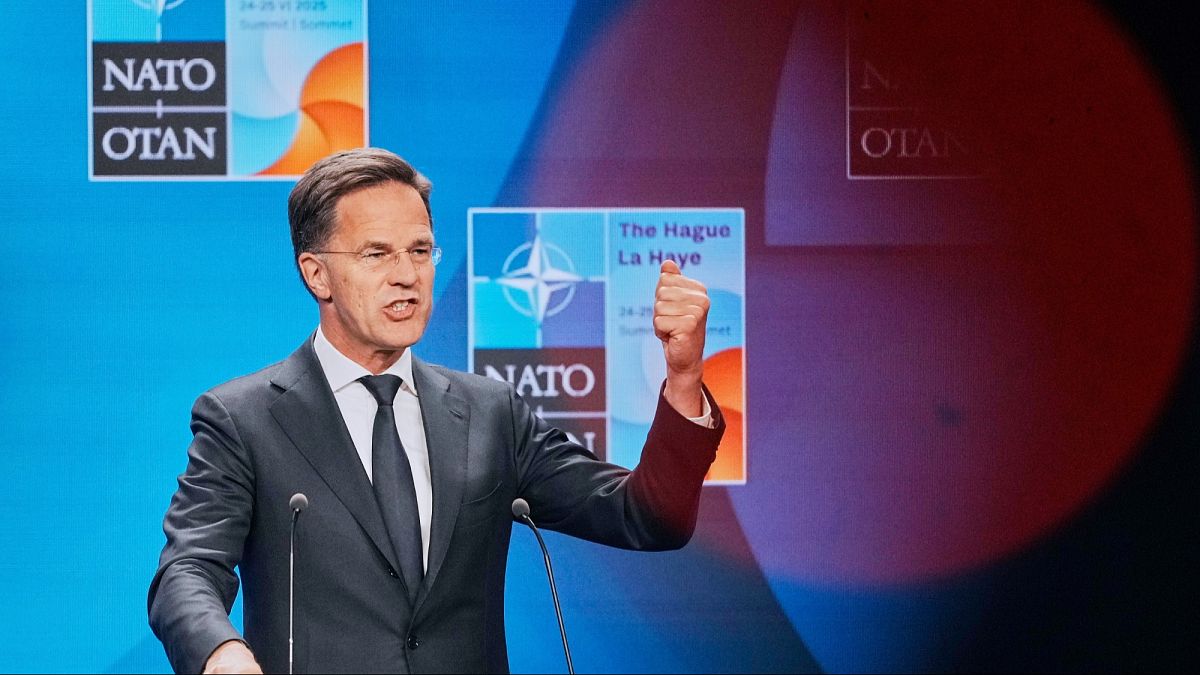

In a significant move to bolster its defense capabilities, NATO officials have announced a new spending target of 5% of GDP, more than double the previous target set in 2014. This directive, unveiled by NATO Secretary General Mark Rutte, aims to enhance air defense capabilities, increase armament stockpiles, and accelerate military investments. Leaders from the 32 allied nations will formally adopt this target at an upcoming summit in The Hague, reflecting the changing security landscape and the urgent need for a more fortified military stance against emerging threats, notably from Russia.
| Article Subheadings |
|---|
| 1) New Defense Spending Target Unveiled |
| 2) The Structure of the New Spending Plan |
| 3) Importance of Timely Implementation |
| 4) NATO’s Ongoing Support for Ukraine |
| 5) Regional Concerns and Global Impact |
New Defense Spending Target Unveiled
NATO is set to officially adopt a new defense spending target of 5% of GDP, as announced by Mark Rutte. This comes in anticipation of a summit organized in The Hague, where leaders from the 32 member countries are expected to gather. Initially established during a 2014 summit in Wales, the previous target of 2% has been deemed insufficient by officials, particularly in light of rising regional tensions stemming from Russian military actions.
The announcement of this ambitious goal marks a transformational shift in NATO’s defense strategy, reflecting a unified response to emerging threats. Rutte stressed the necessity of this increase, describing it as “a quantum leap that is ambitious, historic, and fundamental to securing our future.” His remarks underscore the urgency of reforming NATO’s defense posture in order to maintain a credible deterrent against potential aggressors.
During his address, Mark Rutte also emphasized that the security environment has drastically changed, urging the alliance to adapt swiftly to the current geopolitical landscape. With heightened threats from Russia, he cautioned that NATO’s deterrence capabilities could diminish if spending and production do not increase.
The Structure of the New Spending Plan
The 5% GDP target will be split into two distinct segments to facilitate more targeted investments. A substantial 3.5% will focus on core military spending, which covers critical military equipment and operational readiness. The remaining 1.5% is earmarked for defense-related investments that enhance military mobility, cybersecurity initiatives, and civilian cooperation, as well as developing strategies to bolster resilience against hybrid threats.
Such a strategic bifurcation allows NATO members flexibility in determining how to fulfill their commitments, thus addressing the varied economic landscapes and resource realities faced by different nations. Despite the specific allocations, the complete details of the spending plan have remained classified, making it challenging for external observers to assess the specifics of the proposed enhancements.
Negotiations leading to this new target have been contentious, with discussions culminating in an agreement reached just last Thursday, highlighting the diplomatic complexities involved in achieving consensus among the diverse member states.
Importance of Timely Implementation
Under the new spending target, member nations are expected to meet the GDP requirement by 2035 at the latest. This timeline has been viewed as a priority by senior officials, particularly from the United States, known for urging rapid enhancements in allied defense budgets. Matthew Whitaker, the U.S. ambassador to NATO, underscored the urgency of this initiative, indicating that adversaries “will not wait for us to be ready.”
To ensure accountability and track progress, NATO plans to conduct a comprehensive review of each nation’s spending and capabilities in 2029. Rutte noted that this review process, along with the annual reporting requirement, represents a significant departure from the previous pledge, emphasizing a more transparent and measurable accountability framework.
This enhanced scrutiny aims to build trust among allies that each country is making concerted efforts to enhance their military capabilities. Significant failures to meet these commitments could evoke ramifications within the alliance, leading to discussions about compliance and collective responsibility.
NATO’s Ongoing Support for Ukraine
In addition to bolstering defense efforts against Russia, NATO’s commitment to supporting Ukraine remains unwavering. As this critical topic looms over the summit, it is expected that leaders will reconvene to discuss the ongoing situation in Ukraine, reaffirming solidarity with the war-torn country. However, Mark Rutte stated that while support for Ukraine is resolute, there will not be direct reaffirmation regarding its “irreversible path” to NATO membership, unlike previous years.
This nuanced stance aims to maintain diplomatic flexibility while acknowledging the ongoing challenges facing Ukraine. Nevertheless, allies have proactively increased their financial aid to Ukraine, significantly rising from an earlier commitment of $20 billion to $35 billion this year. This financial backing is indicative of NATO’s deepened dedication to ensuring Ukraine’s self-defense capabilities in the face of aggression from Russia.
Despite concerns about diminishing support for Ukraine, Rutte firmly rejected any such insinuations, reinforcing the message that NATO’s support is robust and will continue to adapt to the evolving geopolitical context.
Regional Concerns and Global Impact
The summit is expected to be overshadowed by the recent crises unfolding in the Middle East. Acknowledging the regional dynamics, Mark Rutte highlighted NATO’s stance regarding Iran’s nuclear ambitions, stating that NATO allies unanimously agree that Iran must not develop a nuclear weapon.
Furthermore, Rutte pointed out the “close connection” between Iran and Russia, emphasizing that Tehran’s involvement in supplying arms to Russia, especially drone technology used against Ukraine, also affects NATO’s strategic calculations.Rutte stressed that understanding this relationship is crucial as it represents a multifaceted challenge for NATO, adapting its strategy to face evolving threats from both Iran and Russia.
The interconnected nature of these geopolitical developments illustrates NATO’s challenge in addressing a broad spectrum of security threats, from European territorial integrity to threats emanating from the Middle East.
| No. | Key Points |
|---|---|
| 1 | NATO is adopting a new defense spending target of 5% of GDP. |
| 2 | The spending plan allocates 3.5% for core military spending and 1.5% for investments in resilience and cybersecurity. |
| 3 | Nations are expected to meet the target by 2035, with an accountability review planned for 2029. |
| 4 | NATO’s commitment to Ukraine remains firm, with increased financial aid amidst ongoing wartime challenges. |
| 5 | Regional threats from the Middle East and Iran’s nuclear ambitions are influencing NATO’s security strategies. |
Summary
The forthcoming NATO summit signifies a historic pivot in the alliance’s defense policy, driven by evolving security threats and the need for collective deterrence. The introduction of a 5% GDP spending target represents a substantial commitment to strengthening NATO’s military capabilities and enhancing its collective response to contemporary geopolitical challenges. With ongoing support for Ukraine and addressing the intricate dynamics of threats from Iran, NATO is positioning itself to navigate an increasingly complex security environment in Europe and beyond.
Frequently Asked Questions
Question: What prompted NATO to increase its defense spending target?
The increase in NATO’s defense spending target is primarily driven by the changing security environment, particularly heightened threats from Russia and a desire to bolster military capabilities to ensure effective deterrence.
Question: How will the new spending allocation be divided?
The new 5% GDP spending target will be divided into two portions: 3.5% dedicated to core military spending and 1.5% focused on defense-related investments aimed at enhancing resilience and cybersecurity.
Question: What is NATO’s current stance on support for Ukraine?
NATO continues to provide unwavering support for Ukraine, having increased its financial aid from an initial commitment of $20 billion to $35 billion this year, despite not reiterating its previous stance on membership paths for the war-torn country.
