

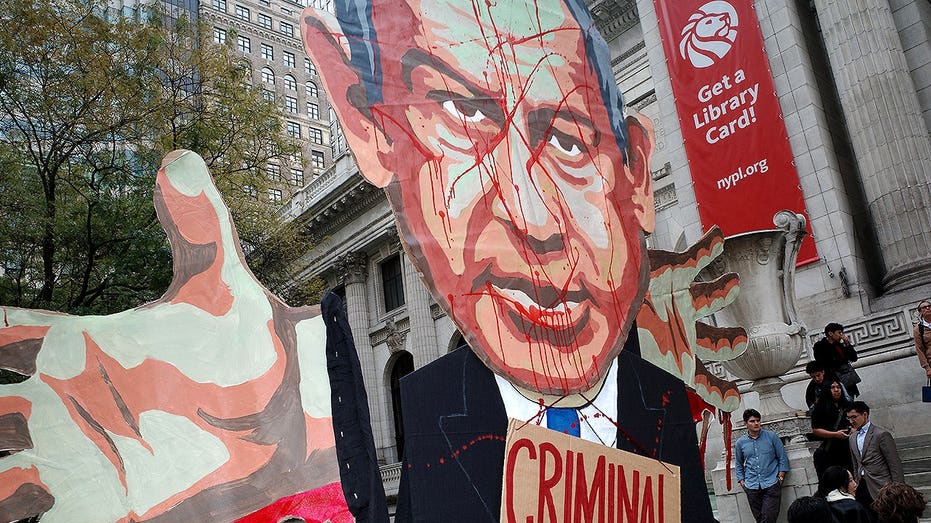

Israeli Prime Minister Benjamin Netanyahu faced a mass walkout by international delegates as he addressed the United Nations General Assembly in New York on September 24, 2026. He condemned the departing diplomats as “moral cowards” and defended Israel’s military actions against threats linked to Iran. The newsletter also highlighted a diplomatic dispute involving France, alleged Hamas weapons caches in Europe and criticism of the United Nations’ association with the 2001 Durban Conference. The developments came as protests took place in New York ahead of Netanyahu’s speech.
| 1) | Walkout disrupts Netanyahu’s General Assembly address |
| 2) | Protests in New York frame the UN appearance |
| 3) | France faces criticism over comments about Hamas |
| 4) | German indictment details alleged European weapons plot |
| 5) | Calls grow to reassess the Durban Conference legacy |
Walkout disrupts Netanyahu’s General Assembly address
Dozens of global delegates left the General Assembly chamber as Benjamin Netanyahu began speaking at United Nations headquarters in New York on September 24. The walkout occurred during the annual gathering of world leaders, which was addressing issues including artificial intelligence and the wars in Ukraine and Gaza.
Netanyahu responded by criticizing the officials who departed and those who remained. He argued that the reaction reflected hypocrisy and failed to recognize what he described as the wider threat posed by Iran. He also defended Israel’s military strikes during the address.
“Before I begin, just a quick announcement, if there are any other moral cowards who haven’t yet left this hall, please do so now.”
Protests in New York frame the UN appearance
Large anti-Israel protests were reported in New York ahead of the Israeli prime minister’s speech. The demonstrations formed part of the tense public setting surrounding his appearance at the General Assembly.
The protests and the walkout underscored the political divisions surrounding Israel’s conduct in the Gaza war and its broader confrontation with regional opponents. The events took place while leaders were gathered for the United Nations’ 81st session.
France faces criticism over comments about Hamas
U.S. Ambassador Mike Huckabee and Israeli officials criticized French President Emmanuel Macron over remarks concerning Hamas. The comments triggered a diplomatic dispute involving Israel, the United States and France.
Huckabee said France should consider setting aside part of the French Riviera, a pointed response to what he viewed as Macron’s controversial position. French diplomats then sought to reduce the dispute, saying the uproar resulted from a misunderstanding related to translation. The episode added a second diplomatic flashpoint to the week’s discussions about Israel and Hamas.
German indictment details alleged European weapons plot
German authorities indicted seven alleged Hamas operatives accused of storing automatic rifles and handguns in concealed weapons caches across Europe. Prosecutors said the alleged network focused on weapons stockpiling and planned attacks against Jewish and Israeli targets.
The alleged targets were in Berlin and Vienna, and the reported timing was connected to the approaching anniversary of the October 7 attacks. Investigative files also indicated that one suspect had been working as a confidential informant for German intelligence. The allegations remain part of a criminal case described by German prosecutors.
Calls grow to reassess the Durban Conference legacy
Ambassador Jeff Bartos, the U.S. representative for United Nations management and reform, called for the organization to dismantle what he described as the legacy of the 2001 Durban Conference. He argued that the conference helped formalize radical anti-Western, antisemitic and anti-American sentiment.
Bartos also linked that legacy to the origins of the Boycott, Divestment and Sanctions movement. His proposal was for the United Nations to stop commemorating the conference and use that step to restore international credibility. The position places institutional reform alongside security concerns in the wider debate over antisemitism.
| Number | Key Point |
|---|---|
| 1 | Dozens of delegates walked out during Netanyahu’s UN address. |
| 2 | Anti-Israel protests preceded the speech in New York. |
| 3 | France defended its remarks about Hamas as a translation misunderstanding. |
| 4 | German prosecutors indicted seven alleged Hamas operatives over weapons caches. |
| 5 | A U.S. diplomat urged the UN to end commemorations tied to the Durban Conference. |
Summary
The UN appearance highlighted sharp international disagreement over Israel, Hamas and antisemitism. A mass walkout and protests challenged Netanyahu, while he used the address to defend Israel and condemn his critics. Separate diplomatic and law-enforcement developments involving France and Germany broadened the focus beyond the General Assembly chamber.
Frequently Asked Questions
What happened during Netanyahu’s UN address?
Dozens of delegates walked out as Benjamin Netanyahu began speaking, and he criticized those who left as “moral cowards.”
What did German authorities allege?
German prosecutors indicted seven alleged Hamas operatives over concealed weapons caches and alleged plans targeting Jewish and Israeli figures in Berlin and Vienna.
Why was the Durban Conference discussed?
Ambassador Jeff Bartos argued that the 2001 conference left a harmful legacy of antisemitism and anti-Western sentiment and urged the United Nations to stop commemorating it.
