

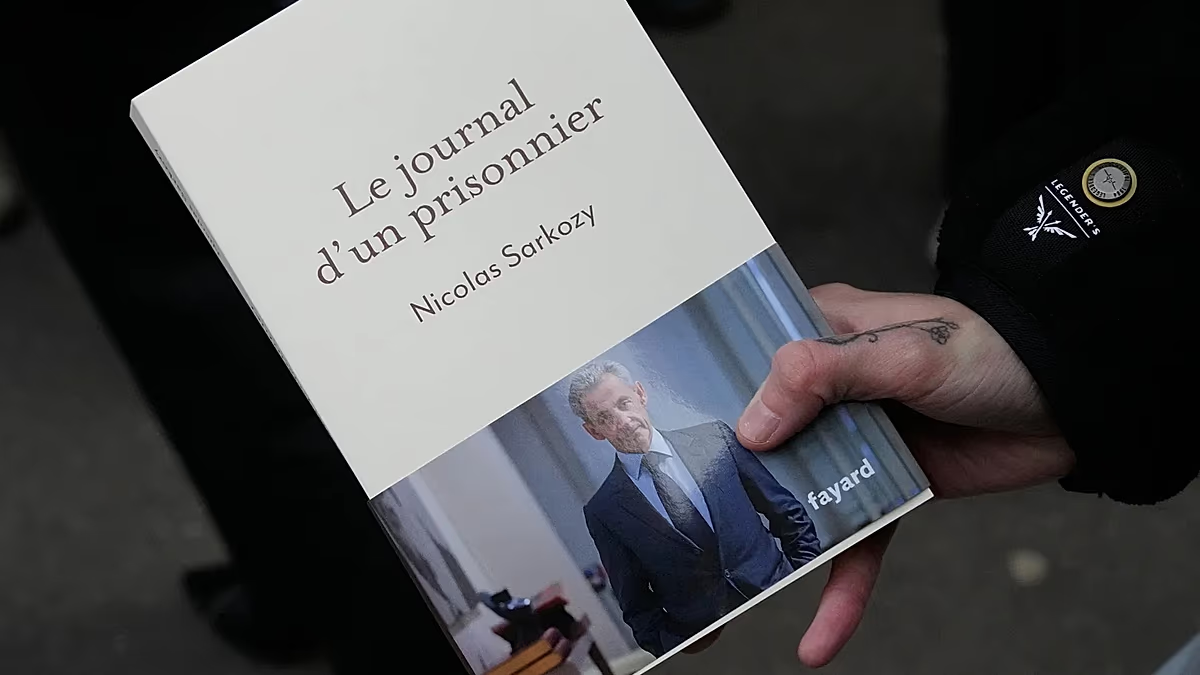

The publication of former French President Nicolas Sarkozy‘s memoir, “Diary of a Prisoner,” has quickly garnered widespread attention, rocketing to the top of Amazon’s pre-order charts. Launched during a contentious event in Paris, the memoir details Sarkozy’s unique experience as a president who served time in prison, a situation unprecedented in modern French political history. This book is not merely a personal account but a part of a broader strategy aimed at reshaping public opinion and influencing upcoming judicial proceedings.
| Article Subheadings |
|---|
| 1) Launch Event Sparks Controversy |
| 2) A Strategic Narrative |
| 3) Public Reception of the Memoir |
| 4) The Role of Curiosity |
| 5) Future Implications |
Launch Event Sparks Controversy
Hundreds of supporters of Nicolas Sarkozy gathered outside the Lamartine bookshop in Paris’ upscale 16th arrondissement for the launch of his memoir. This event, however, was not without its challenges. The large turnout led to a shutdown of the surrounding streets, drawing attention not just to the former president’s new book but also to the protest initiated by the feminist organization, Femen, which vocally opposed Sarkozy’s return to the political conversation. As the lines of supporters stretched for hours, the atmosphere was charged with both enthusiasm and tension, which is emblematic of Sarkozy’s polarizing figure in French politics.
A Strategic Narrative
For Nicolas Sarkozy, the release of “Diary of a Prisoner” is part of a calculated effort to control the narrative surrounding his recent political and legal troubles. This memoir emerges on the heels of his conviction for accepting illegal campaign financing from the regime of the late Libyan dictator, Muammar Gaddafi, during the 2007 election. Sarkozy’s sentence of five years, which includes a prohibition from holding political office, represents a significant chapter in a political career that has been both illustrious and controversial. As he contests these charges, with an appeal trial set for next March, the timing of this book’s release serves to pre-empt public discourse and frame perceptions in his favor.
Public Reception of the Memoir
Despite the general trend of poor sales for political memoirs in France, Sarkozy’s book has sparked considerable interest. Observers note that his ability to attract a dedicated base of supporters, despite not being a universally popular figure, contributes to the memoir’s commercial viability. Arnaud Benedetti, the editor-in-chief of the “Political and Parliamentary Review,” posits that Sarkozy’s personality and direct communication style enhance his appeal as an author, making the memoir a compelling read for both supporters and critics alike. The extraordinary nature of a former president detailing life behind bars further amplifies public curiosity, setting the stage for what could be a significant publishing event.
The Role of Curiosity
Notably, this memoir capitalizes on a rare opportunity in French political history: the chance to understand the life of a former president while incarcerated. Philippe Moreau-Chevrolet, an esteemed professor of political communication, emphasizes that this interest reflects a broader societal fascination—readers are drawn to the unique insights into incarceration not typically shared by political leaders. The book presents a form of voyeurism, where the audience yearns to “peek through the keyhole” of a turbulent experience in a life defined by power and prestige. This curiosity magnifies the memoir’s marketability, rendering it an exceptional product in the literary marketplace.
Future Implications
Looking ahead, the implications of “Diary of a Prisoner” extend beyond mere sales figures. While Nicolas Sarkozy aims to seize control of his public and media narrative, the effectiveness of this strategy remains uncertain. As Moreau-Chevrolet suggests, the campaign surrounding this memoir is aggressive and meticulously planned. However, the true impact will depend on how public perception evolves in the wake of the upcoming appeal trial. Additionally, Benedetti cautions that a successful book does not inherently translate into political capital. The intricate relationship between media portrayal and judicial outcomes will continue to play a crucial role in determining Sarkozy’s future in the complex landscape of French politics.
| No. | Key Points |
|---|---|
| 1 | The memoir “Diary of a Prisoner” is a strategic move by Sarkozy to control his narrative amid legal troubles. |
| 2 | Sarkozy’s book launch drew both large crowds and protests, highlighting his polarizing status. |
| 3 | Curiosity regarding a former president’s experience in prison is a driver for the book’s commercial success. |
| 4 | The effectiveness of Sarkozy’s communications strategy remains to be seen amid ongoing judicial proceedings. |
| 5 | A memoir’s commercial success does not assure political future stability for the former president. |
Summary
The release of “Diary of a Prisoner” represents not only a significant moment in Nicolas Sarkozy‘s life but also a noteworthy event in French political history. As he navigates the complexities of his legal challenges, the memoir serves as both a literary project and a strategic endeavor aimed at reshaping public perception. With a combination of curiosity, controversy, and significant media coverage, this book has positioned itself as a critical talking point in the evolving landscape of French politics.
Frequently Asked Questions
Question: What are the main themes of Sarkozy’s memoir?
The main themes of “Diary of a Prisoner” include personal reflection on his time in prison, efforts to control public narrative, and insights into the political and legal challenges he faces.
Question: What legal issues is Sarkozy currently facing?
Sarkozy is contesting a five-year prison sentence related to illegal campaign financing, and an appeal trial is set for March.
Question: How has the public reacted to Sarkozy’s memoir?
The public has responded with significant interest, evidenced by high pre-order sales and a large turnout for the launch event, despite the ongoing controversies surrounding his political career.
